
US redirects 48 vessels
Iran FM briefs global counterparts on new proposal to end conflict
Published : 03 May 2026, 01:06
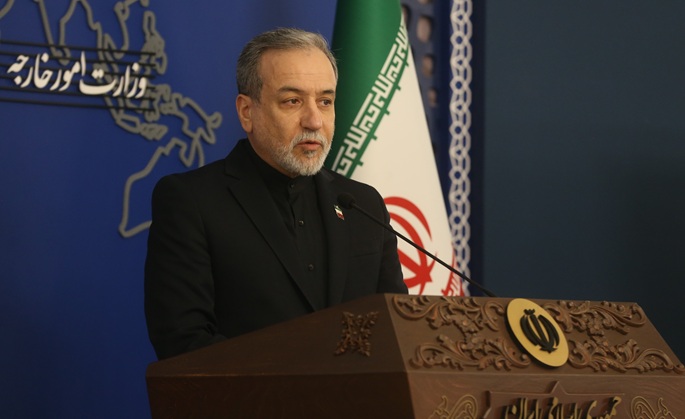
Iranian Foreign Minister Seyed Abbas Araghchi has briefed Asian and European counterparts on Tehran's latest proposal to end its conflict with the United States, reported Xinhua.
In separate calls on Friday and Saturday, Araghchi discussed regional developments and a ceasefire with Washington with officials from Türkiye, Qatar, Saudi Arabia, Egypt, Iraq, Azerbaijan, Russia, South Korea, Japan, France, Italy, and EU foreign policy chief Kaja Kallas.
Araghchi said U.S. and Israeli "military aggression" was driving insecurity in the Gulf and the Strait of Hormuz, according to Iranian Foreign Ministry statements.
Araghchi said Iran did not start the war and remains open to diplomacy if the United States drops its "maximalist approach," threats, and provocative actions.
He added that Iran's armed forces are fully prepared to defend the country against any threat.
Araghchi also praised the "constructive" role of some regional states in promoting diplomacy and preventing further escalation.
State news agency IRNA reported Friday that Iran delivered a new proposal for talks to Pakistan a day earlier.
Meanwhile, Iran has submitted a 14-point counterproposal to the United States calling for a permanent end to hostilities and a full withdrawal of U.S. forces from the region, semi-official Tasnim news agency reported Saturday, said Xinhua.
The plan was delivered through Pakistani intermediaries in response to a nine-point U.S. proposal, said Tasnim.
While Washington's plan calls for a two-month ceasefire, Tehran is pushing for a 30-day timeline to resolve key issues, insisting that talks focus on "ending the war" rather than a temporary truce, Tasnim reported.
Iran's demands include the withdrawal of U.S. forces from areas near its borders and guarantees of non-aggression, along with economic steps such as lifting a naval blockade, releasing frozen Iranian assets, easing sanctions, and paying compensation.
The proposal also calls for an end to hostilities across multiple fronts, including in Lebanon, and the establishment of a new governing mechanism for the Strait of Hormuz, a key global oil shipping route.
Iran is awaiting a formal response from U.S. officials, the report said.
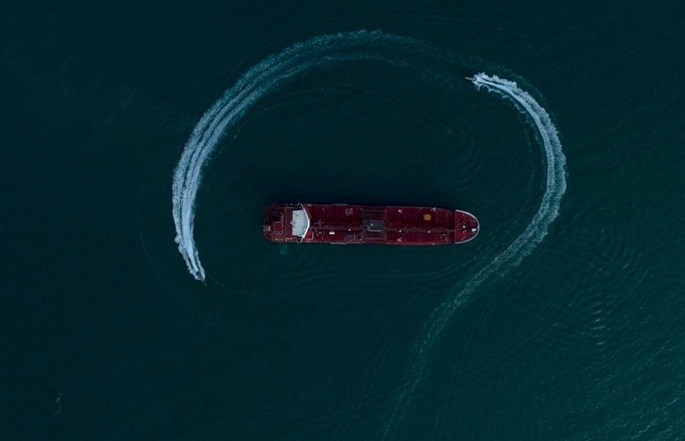
Meanwhile, the U.S. military has forced 48 vessels to redirect during the U.S. blockade of Iranian ports as of Tuesday, the U.S. Central Command said Saturday.
The ships "have been redirected to ensure compliance with the blockade," the command said in a post on social media platform X.
U.S. President Donald Trump said Wednesday that he will keep Iran under the U.S. naval blockade until Tehran agrees to a deal with Washington on its nuclear program.
The United States has imposed a blockade on the Strait of Hormuz, preventing ships from transiting to and from Iranian ports, following the failure of Iran-U.S. negotiations in Islamabad, Pakistan, on April 11-12 to reach an agreement.
No vessel can transit Hormuz without Iran's permission: army
Iran's army spokesman Mohammad Akraminia said on Saturday the country's armed forces are controlling the Strait of Hormuz, and no friendly or hostile vessel can transit the waterway without their permission.
Controlling the Strait of Hormuz is "an inherent right" of Iran, of which the country had not made use for years, Akraminia said, according to footage of his remarks carried by Iranian media.
"At present, Iran's Islamic Revolution Guard Corps in the west and the country's army in the east are controlling the strait with power, and no ship, friend or foe, will have the right to pass without the permission and authorization of our forces," he said.
Meanwhile, "different countries are anxiously and urgently requesting Iran through telexes and letters to let their ships pass through the Strait of Hormuz," the semi-official Fars news agency quoted Iranian Deputy Foreign Minister Hamid Ghanbari as saying.
Iran tightened its grip on the Strait of Hormuz beginning Feb. 28, when it barred safe passage to vessels belonging to or affiliated with Israel and the United States following joint strikes on Iranian territory.
Trump brags US Navy acting "like pirates" in blockade
U.S. President Donald Trump on Friday bragged that the U.S. Navy acted "like pirates" in its blockade of Iranian ports, as the war against Iran reached a 60-day legal deadline.
"We took over the ship, we took over the cargo, we took over the oil. It's a very profitable business," Trump said at an event in Florida on Friday.
"We're like pirates. We're sort of like pirates, but we are not playing games," Trump said.
Trump told lawmakers earlier on Friday that the war against Iran has "terminated," an effort to quelch the fight over the need for Congress to approve the conflict, Politico said.
Under the War Powers Resolution adopted in 1973, the U.S. president -- after notifying Congress of the use of military force -- must terminate the action within 60 days, unless Congress authorizes continued military action.
The United States and Israel launched major combat operations against Iran on Feb. 28. The Trump administration formally notified Congress on March 2 of the military action, meaning the 60-day legal deadline would expire on May 1.
Senior Iranian military official Mohammad Jafar Asadi said on Saturday that a return to war was "likely," according to Iranian semi-official Fars news agency.
According to a statement released by the U.S. Department of Defense, the U.S. Navy intercepted and boarded two oil tankers in the Indian Ocean on April 20 and April 22, respectively. The tankers were alleged to be transporting oil from Iran.
7 Palestinians killed in Israeli attacks across Gaza
9 killed in shooting in US Pennsylvania
Abbas postpones Palestinian presidential, legislative elections to Sept. 11, 2027
12 killed, 309 injured in attack on Riyadh airport
Opposition leader announces INDIA bloc protest against CEC on Oct 12
Trump suggests ´new President´ for Ukraine, day after diesel deal with Russia

Editor-in-Chief Ofiul Hasnat
Published by Finnish News Network (FNN)
Heporinne 4 B 45
01200 Vantaa, Finland.
E-mails : [email protected]