
Iran relays ´red lines´ to US, Trump says not to send delegations to talk
Published : 27 Apr 2026, 00:39
Updated : 27 Apr 2026, 00:45
U.S. President Donald Trump said Sunday that he will no longer send delegations to talk with Iran, reported Xinhua.
"If they (the Iranians) want to talk, they can come to us, or they can call us," Trump told Fox News.
"If they want, we can talk. But we're not sending people to travel 18 hours to meet," he said.
Trump said that he has great respect for Pakistan, which had been hosting U.S.-Iranian talks in Islamabad, and that Pakistan will stay involved.
He repeated that Iran cannot have nuclear weapons. "So if they want, they can call us. But again, they know what has to be in the agreement. Very simple: they cannot have a nuclear weapon. Otherwise, there's no reason to meet," said Trump.
Iranian President Masoud Pezeshkian said U.S. pressure and hostile actions are undermining trust and making progress toward renewed talks more difficult, according to a statement from his office early Sunday.
He added that Washington cannot pursue negotiations while increasing pressure on Iran, saying such actions "disrupt the necessary atmosphere" for diplomacy.
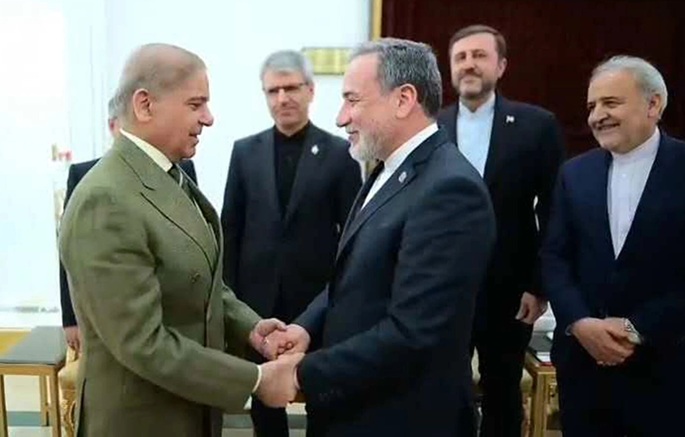
Meanwhile, Iranian Foreign Minister Seyed Abbas Araghchi conveyed Tehran's "red lines" to the United States through Pakistan during his recent visit, the semi-official Fars news agency reported on Sunday, said Xinhua.
The report said that the "red lines," relayed to the U.S. side in the form of written messages, pertain to Tehran's nuclear program and the Strait of Hormuz.
The exchange of messages was not related to negotiations but rather part of an initiative by Iran to clarify the situation in the region and explicitly announce its red lines, said the report.
Araghchi on Sunday traveled to the Pakistani capital Islamabad for the second visit since Friday, following a brief stop in Oman.
On Feb. 28, Israel and the United States launched joint attacks on Tehran and other Iranian cities, killing Iran's then-Supreme Leader Ali Khamenei, senior commanders, and civilians. Iran responded with waves of missile and drone strikes targeting Israel and U.S. bases in the Middle East, and tightened control over the Strait of Hormuz, blocking passage by vessels belonging to or affiliated with Israel and the United States.
An April 8 ceasefire was followed by Iran-US talks in Islamabad on April 11 and 12. After the negotiations collapsed, the United States imposed a blockade on the Strait of Hormuz, preventing ships to and from Iranian ports from transiting.
7 Palestinians killed in Israeli attacks across Gaza
9 killed in shooting in US Pennsylvania
Abbas postpones Palestinian presidential, legislative elections to Sept. 11, 2027
12 killed, 309 injured in attack on Riyadh airport
Opposition leader announces INDIA bloc protest against CEC on Oct 12
Trump suggests ´new President´ for Ukraine, day after diesel deal with Russia

Editor-in-Chief Ofiul Hasnat
Published by Finnish News Network (FNN)
Heporinne 4 B 45
01200 Vantaa, Finland.
E-mails : [email protected]