
US-Iran talks end in Islamabad without deal
Published : 12 Apr 2026, 23:59
Updated : 13 Apr 2026, 00:05
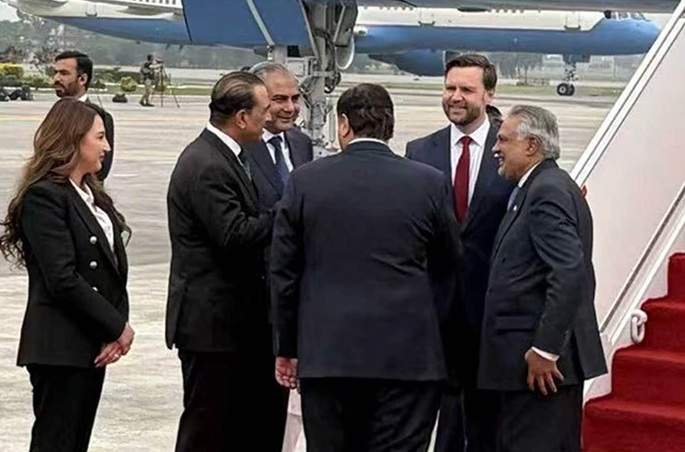
The high-stakes U.S.-Iran talks in Islamabad concluded without a deal on Sunday, with Washington citing "extensive flexibility" and "good-faith negotiations" but no consensus, while Tehran blamed U.S. "excessive demands" for blocking progress toward a common framework and agreement, reported Xinhua.
The meeting followed a two-week ceasefire that paused nearly 40 days of intense hostilities and briefly opened a narrow window for diplomacy. Held in Pakistan, a key regional mediator, the talks marked the highest-level face-to-face engagement between the United States and Iran since 1979, a relationship long defined by decades of sanctions, periodic confrontation, and deep mistrust.
Analysts said the failure to reach an agreement underscores entrenched structural divisions between the two sides, while noting that the very fact that the talks took place signals limited but meaningful diplomatic progress.
They added that domestic political pressures, economic risks linked to potential instability in the Middle East, and signs of growing war fatigue may continue to encourage both sides to keep diplomatic channels open despite the current deadlock.
NO DEAL REACHED
Speaking at a press conference in Islamabad on Sunday, U.S. Vice President JD Vance said he was returning "without an agreement," adding that Iran had not accepted U.S. terms despite what he described as "a good-faith engagement."
Vance said the Iranian nuclear program remained at the center of the dispute, reiterating that Washington requires an "affirmative commitment" from Tehran not to pursue nuclear weapons or the capability to rapidly develop them. Iran, however, has consistently maintained that its uranium enrichment activities are a sovereign right and has rejected externally imposed restrictions.
Iranian officials, in turn, blamed the impasse on what they described as "excessive and unreasonable demands" from the United States, arguing that Washington's conditions failed to respect Iran's "legitimate rights," including enrichment activities and meaningful sanctions relief.
Iranian Foreign Ministry spokesman Esmail Baghaei said that while the two sides had reached understandings on several issues, they remained far apart on two to three key points, preventing a final agreement.
Despite the lack of a breakthrough, Tehran signaled that dialogue could continue. Quoted by Iran's Mehr News Agency, Baghaei said it would be unrealistic to expect a deal in a single round of talks, adding that Tehran remained "confident that contacts between us and Pakistan and our other friends in the region will continue."
Pakistani security analyst Tughral Yamin noted that Pakistan had provided a platform for dialogue rather than a venue for a final settlement, suggesting the Islamabad talks may represent only an initial step in a longer diplomatic process.
For Pakistan, which facilitated the negotiations, officials indicated their role was far from over. Deputy Prime Minister and Foreign Minister Mohammad Ishaq Dar said Islamabad would continue to play a constructive role in supporting engagement between Iran and the United States in the days ahead.
TESTING RED LINES
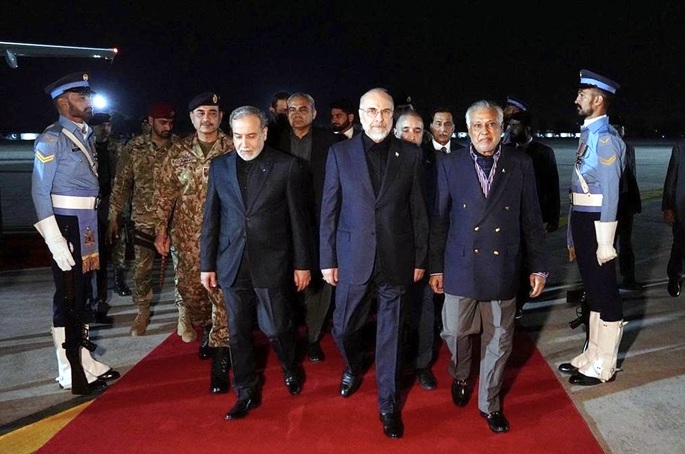
In the early hours of Saturday, a 71-member Iranian delegation led by Parliament Speaker Mohammad Bagher Ghalibaf and Foreign Minister Abbas Araghchi arrived in Islamabad. Later that day, a much larger U.S. delegation headed by Vance also reached the Pakistani capital, with the American side numbering around 300 people.
Before formal negotiations began, Pakistani Prime Minister Shehbaz Sharif held a meeting with the Iranian side, during which Tehran laid out several preconditions for engaging with Washington, including the unfreezing of all Iranian overseas assets and accounts and an immediate halt to all attacks, particularly those targeting Lebanon. Iranian officials have repeatedly stressed that stopping strikes on Lebanon is an integral component of any broader ceasefire arrangement.
However, the fragile ceasefire between the United States and Iran has been further complicated by continued Israeli strikes against Hezbollah, the Iran-backed group in Lebanon.
On Saturday evening, Israeli Prime Minister Benjamin Netanyahu said in a statement that the elimination of Hezbollah was a precondition for any ceasefire agreement between Israel and Lebanon.
Tensions also flared during more than 20 hours of negotiations over developments in the Strait of Hormuz.
The United States announced on Saturday that two U.S. Navy destroyers had passed through the strategic waterway, a claim Iran denied, saying its forces had forced the vessels to withdraw.
ENTRENCHED DEADLOCK
Analysts believed that the unsuccessful talks highlight the persistence of deep strategic divisions between the two sides, stressing that the gap is not merely tactical but structural.
The positions of both countries are highly divergent, with maximalist demands that remain far apart and are further complicated by deep-rooted mistrust, former Pakistani diplomat Masood Khalid said.
This divergence is reflected across multiple core issues. According to another former Pakistani diplomat, Naghmana Hashmi, the impasse centers on several key areas: the control of the Strait of Hormuz, the nuclear issue where both sides maintain hardline positions, military arrangements including Iran's demand for a U.S. withdrawal from the region, compensation claims for damages suffered by Iran, sanctions relief -- particularly frozen assets -- and the situation in Lebanon.
Addressing these complexities remains a formidable challenge, as Mohamed Benaya, an expert on Iranian and Gulf affairs at Al-Azhar University in Egypt, said that "bridging these gaps will be difficult without phased, reciprocal concessions."
GLIMMERS OF HOPE
Despite these significant hurdles, analysts believe that the mere occurrence of these talks signifies progress.
Hashmi observed that both parties' willingness to remain at the negotiating table indicates a "positive mindset" focused on finding a solution, adding that the priority now is to maintain diplomatic momentum.
Khalid echoed this sentiment, suggesting that in the current high-tension climate, the fact that dialogue happened at all is an achievement in itself.
Looking ahead, analysts said that a combination of domestic and global pressures may push the dialogue to continue despite the deadlock.
Aizaz Ahmad Chaudhry, former Pakistani ambassador to the United States, noted that for U.S. President Donald Trump, the risks of a prolonged military confrontation and its potential fallout on upcoming midterm elections create a strong incentive for diplomacy.
Furthermore, experts said long-term economic risks, specifically the threat of instability in the Middle East disrupting global energy markets and trade flows, have strengthened international calls for de-escalation.
Battlefield dynamics may also be shaping diplomatic calculations. Said Nazir, a Pakistani defense analyst, pointed to growing "war fatigue" on both sides after weeks of confrontation and demonstrations of military capability, saying this could push Washington and Tehran to avoid a costly, open-ended conflict by keeping diplomatic channels open.
Trump announces Hormuz naval blockade
U.S. President Donald Trump announced on Sunday that the U.S. Navy would begin blocking ships trying to enter or leave the Strait of Hormuz, after peace talks with Iran failed to produce a deal.
"Effective immediately, the United States Navy, the Finest in the World, will begin the process of BLOCKADING any and all Ships trying to enter, or leave, the Strait of Hormuz," Trump said in a post on Truth Social.
"I have also instructed our Navy to seek and interdict every vessel in International Waters that has paid a toll to Iran," Trump continued, adding that "no one who pays an illegal toll will have safe passage on the high seas."
"We will also begin destroying the mines the Iranians laid in the Straits," he added.
On peace talks, Trump said that the meeting "went well," with most points agreed to, but "the only point that really mattered, NUCLEAR, was not."
Trump's remarks came a few hours after U.S.-Iran talks in Islamabad, Pakistan, concluded without a deal on Sunday.
After Trump's statement on Strait of Hormuz naval blockade, Iran's Islamic Revolutionary Guard Corps Navy Command warned Sunday that any "wrong move" in the Strait of Hormuz would trap its enemies in "deadly whirlpools."
Iran warns any wrong move by "enemy" in Hormuz to have consequences
The Navy of Iran's Islamic Revolution Guard Corps (IRGC) said on Sunday any "erroneous" move by the "enemy" in the Strait of Hormuz will have deadly consequences.
It issued the warning in a post on social media platform X, sharing "drone surveillance footage of the real situation in the Strait of Hormuz."
The IRGC's Navy said all movements and non-movements in the Strait of Hormuz are under complete control of the Iranian armed forces, adding that, "Any erroneous maneuver will trap the enemy in deadly whirlpools in the strait."
U.S. Central Command (CENTCOM) said Saturday that two U.S. warships transited the Strait of Hormuz and began mine-clearing operations in the Gulf. Iran's main military command, Khatam al-Anbiya Central Headquarters, rejected that account, "strongly" denying CENTCOM's claim that American vessels had entered the strait.
In an exclusive report on Sunday, Iran's state-run Press TV said the U.S. military's attempt to sail two destroyers through the Strait of Hormuz on Saturday "ended as a failed propaganda stunt timed to coincide with (Tehran-Washington) talks in Islamabad."
The Press TV identified the U.S. destroyers as USS Michael Murphy and USS Frank E. Peterson, saying they were forced to retreat by Iran's naval forces.
Also on Sunday, the IRGC said in a statement that any military vessels that intend to approach the Strait of Hormuz under any title or pretext will be considered a ceasefire violation and will be dealt with severely.
On Feb. 28, Israel and the United States launched joint attacks on Tehran and several other Iranian cities, killing Iran's then Supreme Leader Ali Khamenei, along with senior military commanders and civilians. Iran responded with waves of missile and drone strikes targeting Israel and U.S. assets in the Middle East, and tightened control over the Strait of Hormuz by restricting passage by vessels belonging to or affiliated with Israel and the United States.
A two-week ceasefire between Iran and the United States took effect on Wednesday, followed by the holding of lengthy talks between the Iranian and U.S. delegations in Islamabad, which failed to lead to an agreement.
Iran's president says Tehran ready to reach "balanced, fair" deal
Iran's President Masoud Pezeshkian said on Sunday his country is fully ready to achieve a "balanced and fair" agreement with the United States that guarantees lasting peace and security in the West Asia region.
He made the remarks in a phone call with his Russian counterpart, Vladimir Putin, in which the two sides discussed the latest regional developments, and the Tehran-Washington talks in the Pakistani capital Islamabad over the weekend, according to a statement published on the website of his office.
Pezeshkian said Iran's red lines are its national interests and people's rights, adding if the United States remains committed to international legal frameworks, an agreement will be within reach.
He voiced Iran's readiness to cooperate with its neighbors to ensure peace and security in the region without transregional states' presence and interference.
Putin, for his part, highlighted his country's support for diplomatic processes to politically resolve the ongoing crisis, expressing Russia's readiness to use its capacities to help find a political and diplomatic solution to the tension in the region and continue active contacts and consultations to that end.
The Russian president underlined the Iranian side's "rightful" demands, including the need for receiving compensation for the damages sustained during the war with the United States and Israel as well as long-term security guarantees for the non-repetition of the "aggression."
Gaining Iran's trust sole way for US to find exit from current situation: Iranian speaker
Iran's Parliament Speaker Mohammad Baqer Qalibaf said on Sunday that the only way for the United States to find an exit from the current situation is to make its decision and gain the Iranian nation's trust.
He made the remarks in an address to reporters on the way back to Iran from his trip to Pakistan, where he, along with his accompanying team, took part in peace talks with the U.S. delegation.
"The United States is indebted to Iranian people and needs to work hard to indemnify them," Qalibaf said.
"If they fight, we will fight; and if they come forth with logic, we will react with logic. We will not surrender to any threat," the parliament speaker added. "They can test our will once again and we will teach them a greater lesson."
Qalibaf described the talks with the U.S. delegation in Pakistan's capital Islamabad as very "intensive, serious and challenging," saying benefiting from capable experts and with a comprehensive and diverse perspective, Iran's delegation designed "excellent initiatives" to demonstrate the country's goodwill, "which led to progress in the negotiations."
"We announced from the very beginning that we do not trust the Americans. Our wall of distrust dates back to 77 years ago. This comes as in less than 12 months, they attacked us two times in the middle of negotiations. Thus, they are the ones who must earn our trust," he stressed.
Qalibaf dismissed recent threats by U.S. President Donald Trump against Iran, saying such threats fail to have any impact on Iranian people.
Netanyahu says "war continues" during visit to S. Lebanon
Israeli Prime Minister Benjamin Netanyahu said "the war continues" during a visit to southern Lebanon on Sunday, where Israeli ground forces invaded last month and are fighting Hezbollah.
In a video statement, Netanyahu described the Lebanese territory as a buffer zone, saying: "The war continues, including inside the security zone in Lebanon."
Israeli ground forces moved into southern Lebanon in March, amid a U.S.-Israeli conflict with Iran. Netanyahu said troops there had "thwarted the invasion threat, pushing back the danger of anti-tank fire and also dealing with rockets, but there is still work to be done."
Netanyahu was accompanied by Defense Minister Israel Katz and military Chief of Staff Eyal Zamir.
Katz said the military has launched a new operation to demolish all homes in the villages along the Israel-Lebanon border, adding Israeli forces would not withdraw unless Hezbollah's rocket fire toward northern Israel stops. "We decided that we are not leaving the north anymore," he said. "We will continue this, and the goal is to disarm Hezbollah."
Their visit came ahead of peace talks with the Lebanese government due to begin later this week in the United States.
Hezbollah entered the conflict involving the United States, Israel and Iran on March 2 by launching rockets from southern Lebanon toward Israel for the first time since a ceasefire on Nov. 27, 2024, prompting Israel to carry out an intensified military campaign targeting multiple areas across the country.
7 Palestinians killed in Israeli attacks across Gaza
9 killed in shooting in US Pennsylvania
Abbas postpones Palestinian presidential, legislative elections to Sept. 11, 2027
12 killed, 309 injured in attack on Riyadh airport
Opposition leader announces INDIA bloc protest against CEC on Oct 12
Trump suggests ´new President´ for Ukraine, day after diesel deal with Russia

Editor-in-Chief Ofiul Hasnat
Published by Finnish News Network (FNN)
Heporinne 4 B 45
01200 Vantaa, Finland.
E-mails : [email protected]