
Trump says US will leave Iran in 2-3 weeks, Iran to target US tech firms
4 Israeli soldiers killed in Lebanon
Published : 01 Apr 2026, 03:30
Updated : 01 Apr 2026, 03:35
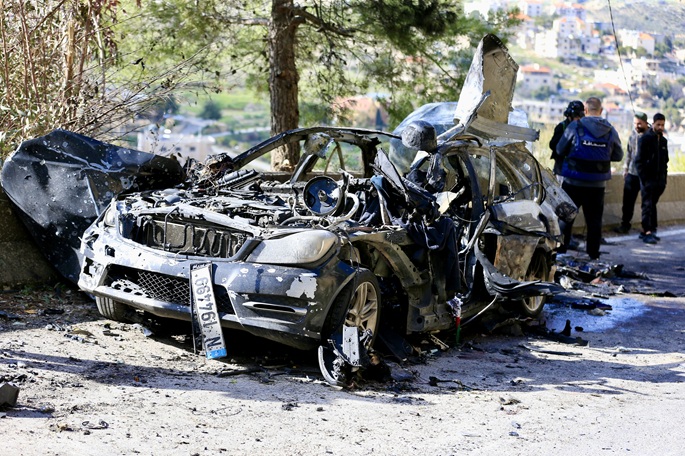
U.S. President Donald Trump said Tuesday that the U.S. military will leave Iran in two or three weeks, reported Xinhua.
"We leave because there's no reason for us to do this," Trump told reporters at the White House.
"All I have to do is leave Iran, and we'll be doing that very soon, and they'll become tumbling down," Trump said when asked about his plan for lowering gas prices. The U.S. national average gasoline price rose above 4 U.S. dollars per gallon on Tuesday for the first time in more than three years, according to the American Automobile Association.
The U.S. president, facing mounting pressure from energy market volatility and investor concerns over a prolonged conflict, has issued a number of conflicting remarks on the timeline of the war since the U.S. and Israel launched massive attacks on Iran on Feb. 28.
Trump said the U.S. and Iran are negotiating, and it's possible that the war will come to an end sooner if the two countries reach a deal.
"It's possible that we'll have a deal because they want to make a deal. They want to make a deal more than I want to make a deal. But in a fairly short period of time, we'll be finished," Trump said.
"Now we have a group of people that's very -- that are very different. They're much more reasonable," Trump added.
Trump reiterated that it will be up to other countries to reopen the Strait of Hormuz and secure the crucial global energy waterway.
"If France or some other country wants to get oil or gas, you go up through the strait and -- the Hormuz Strait -- they'll go right up there and they'll be able to fend for themselves," Trump said.
In phone interviews with U.S. media outlets on Tuesday, Trump said the U.S.-Israeli war with Iran is likely to end soon.
"We won't have to be there much longer -- but we have more work to do in terms of killing their offensive, whatever offensive capability they have left," Trump told the New York Post.
He also told CBS News on Tuesday that the war against Iran "won't be long," while insisting that U.S. military operations "are two weeks ahead of schedule." He had initially said the war would last four to six weeks after it began on Feb. 28. It is now entering its fifth week.
On Tuesday morning, U.S. Defense Secretary Pete Hegseth said that the coming days of the U.S.-Israeli war with Iran "will be decisive," admitting that Iran retains the ability to retaliate.
Brad Cooper, chief of U.S. Central Command, said in an update on Tuesday that there are 50,000 U.S. troops deployed in the Middle East.
Meanwhile, Trump said on Tuesday he is not ready "quite yet" to withdraw U.S. military support from efforts to force Iran to reopen the Strait of Hormuz, a critical artery for global oil and fuel flows, while urging allies to take on a greater role.
Trump said this during a phone interview with CBS News, reiterating his frustration that key U.S. allies like Britain had refused to take part in the U.S.-Israeli war with Iran. "Countries have to come in and take care of it," he said.
Trump repeatedly downplayed risks in the crucial global energy waterway, arguing there was "no real threat," despite ongoing retaliatory Iranian strikes across the region. He also sharply criticized North Atlantic Treaty Organization (NATO) allies, saying countries seeking oil supplies should "come up and grab it" themselves.
During the phone interview with CBS News, Trump also declined to say whether Washington could declare victory without eliminating Iran's stockpile of enriched uranium.
"I don't even think about it," said Trump, noting that the uranium "is so deeply buried it's gonna be very hard for anybody."
The remarks appear to undercut Trump's earlier justification for the military campaign against Iran, which he framed as addressing an "imminent threat" from Iran's nuclear program, raising questions about the consistency of U.S. war aims.
Asked when the U.S.-Israeli war with Iran may end, Trump just said, "It won't be long," insisting that the U.S. military operations "are two weeks ahead of schedule." He had initially said the war would last four to six weeks after it began on Feb. 28. It is now entering its fifth week.
The U.S. national average gasoline price rose above 4 U.S. dollars per gallon on Tuesday for the first time in more than three years, the American Automobile Association said.
Meanwhile, Iran's Islamic Revolution Guard Corps (IRGC) on Tuesday warned that companies it accused of involvement in "terrorist espionage" could be targeted, naming several major U.S. technology firms and urging employees and nearby residents to leave the areas.
In a statement published on its official news outlet Sepah News, the IRGC said institutions it claims contribute to intelligence operations, communications technology, and artificial intelligence used in attacks on Iran would be considered "legitimate targets."
The IRGC listed 18 companies, namely Cisco, HP, Intel, Oracle, Microsoft, Apple, Google, Meta, IBM, DEL, Palantir, Nvidia, JP. Morgan, Tesla, GE, Spire Solution, G42 and Boeing, saying as of 20:00 local time (1630 GMT) Wednesday, they must await Iran's devastating attacks.
It warned employees of these companies to immediately leave their workplaces and urged civilians within a 1 km radius of the firms across the Middle East to move to safety.
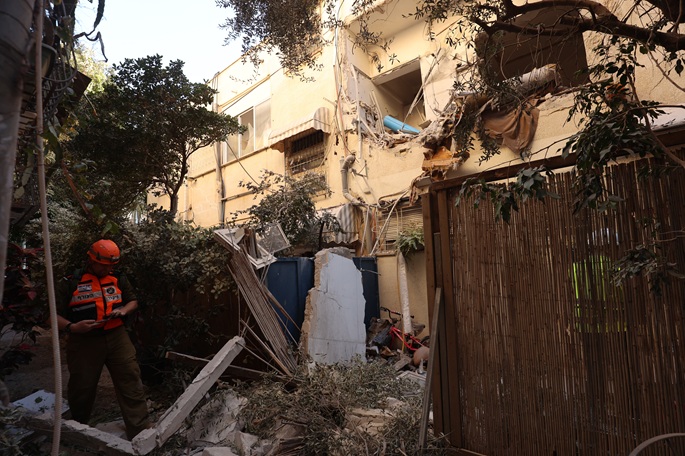
Meanwhile, Iran's army said its forces have launched drone attacks on "important and strategic" communication, telecommunication, and industrial centers affiliated with the Israeli army since earlier in the day.
In a statement published on its website, it listed such centers as the Siemens Software Center near Ben Gurion Airport in Tel Aviv, Telecom and AT&T Communications in Haifa, saying they have been targeted with kamikaze drones.
The army said the attacks are in response to strikes carried out by Israel and the United States on Iran's infrastructure.
15 killed in US-Israeli strikes across 2 Iranian provinces
At least 15 people were killed, and 41 others injured in separate U.S.-Israeli strikes in two Iranian provinces, officials said Tuesday.
Four people were killed and 26 wounded early Tuesday in an attack on the administrative building of a religious site in Iran's northwestern Zanjan province, the semi-official Mehr news agency reported.
The strike occurred at about 5 a.m. local time (0130 GMT) and targeted the office building of the Hosseinieh Azam Zanjan mosque, Mehr quoted Ali Sadeghi, the province's deputy governor, as saying.
Sadeghi said the wounded were taken to hospitals and that debris removal and search operations were underway. He added that the attack damaged the site's inn and library, as well as nearby shops.
In a separate incident, Hassan Qamari, deputy governor of Iran's central Markazi province, said 11 people were killed and 15 others injured in a U.S.-Israeli strike on a residential area in Mahallat County, Mehr reported Tuesday. He said the attack took place Monday night and that three children and two women were among the victims.
4 Israeli soldiers killed in Lebanon
The Israel Defense Forces (IDF) said in a statement on Tuesday that four of its soldiers were killed during operations in southern Lebanon.
Their death brings the number of Israeli soldiers killed in southern Lebanon to 10 since the resumption of full-scale hostilities between Israel and Hezbollah.
The IDF added that during the incident, which occurred on Monday evening, three other Israeli soldiers were wounded -- one seriously and two moderately.
Israel's state-owned Kan TV News reported that an elite IDF reconnaissance unit had spotted Hezbollah militant squads, triggering a brief exchange of fire that resulted in Israeli casualties.
While evacuating the wounded to a designated runway, Israeli forces came under fire from an anti-tank missile, though no additional casualties were reported. The forces responded with tank shelling and airstrikes targeting the militants.
5 killed, 3 injured in Israeli airstrikes in S. Lebanon
Five people were killed and three others were injured early on Tuesday in Israeli airstrikes in southern Lebanon, according to Lebanon's National News Agency.
Two people were killed, and three others were wounded when an Israeli airstrike targeted a vehicle in the Qasmiyeh area in southern Lebanon. In another strike, two people were killed when Israeli warplanes targeted a town in the Tyre district.
Separately, an Israeli airstrike on a house in the village of Ebba killed a citizen after his home was struck shortly after midnight.
The Israeli army also issued an urgent warning to residents in south Lebanon, located south of the Zahrani River, calling on them to evacuate the area.
Cross-border fighting has continued along the Lebanon-Israel border since March 2, when Hezbollah launched rockets toward Israel for the first time since a ceasefire agreed on Nov. 27, 2024, triggering intensified Israeli airstrikes across southern and eastern Lebanon.
3 paramilitary members killed in US-Israeli airstrikes in Iraq
Iraq's paramilitary Popular Mobilization Forces (PMF) said Tuesday that three of its members were killed and several others wounded in a series of airstrikes attributed to U.S.-Israeli operations.
A PMF statement said its 17th Brigade in the Rutba area of western Anbar province was hit at 2:30 p.m. local time (1130 GMT), killing three fighters and wounding several others.
In separate strikes, the PMF said its 45th Brigade in Jurf al-Nasr, south of Baghdad, was hit by three airstrikes around midnight. Another strike targeted the 31st Brigade in western Anbar, and at 10:30 a.m., the PMF said the headquarters of its 30th Brigade in Nineveh was attacked in a "treacherous" strike.
Dozens of PMF members have been killed in similar operations over the past month, the group said.
Also Tuesday, the Islamic Resistance in Iraq, an umbrella organization for pro-Iranian militias, said it carried out 19 operations against "enemy bases" in Iraq and the region over the past 24 hours. The group has claimed hundreds of such attacks in the past month.
Iran hits Israeli container ship in Persian Gulf
Iran's Islamic Revolutionary Guard Corps (IRGC) said on Tuesday it struck an Israeli container ship in the Persian Gulf with ballistic missiles.
In a statement published by its official news outlet Sepah News, the IRGC said the ship, named "Express Halfong," was targeted earlier in the day by its navy during the 88th wave of its drone and missile attacks against the U.S. bases and assets in West Asia and Israeli targets.
It added that during its attacks, a hideout of the U.S. troops on the coasts of the United Arab Emirates, a U.S. Fifth Fleet's counter-drone system in Bahrain and two advanced American early-warning radars in Ahmad al-Jaber Air Base in Kuwait were struck by suicide drones.
Meanwhile, in a statement on its website, Iran's army said its air defense systems shot down an invading MQ-9 Reaper drone over the central province of Isfahan early Tuesday, bringing the total number of U.S. and Israeli drones downed since the beginning of the conflict to 146.
Netanyahu says Israel smashes Iran's industrial capability
Israeli Prime Minister Benjamin Netanyahu said on Tuesday that Israel has smashed Iran's industrial capability and is creating "new alliances" in the region.
In a recorded video statement, Netanyahu reviewed the "enormous achievements" of the war, saying, "Iran has the launch capability to threaten us, but they can no longer threaten our existence."
He said Israel has managed to smash Tehran's capability "to develop nuclear weapons and tens of thousands of ballistic missiles."
He also said that Israel has created conditions for expanding alliances in the region, adding that he hopes he "will soon be able to tell the citizens of Israel about our new alliances."
On Feb. 28, Israel and the United States launched joint strikes on Iran, prompting retaliatory attacks by Iran and its regional allies on U.S. and Israeli interests across the Middle East.
IRGC threatens to ''annihilate'' regional offices of 18 US tech giants
Iran's Islamic Revolution Guards Corps (IRGC) has issued a chilling ultimatum to 18 major American corporations, warning that their regional infrastructure will be targeted following allegations of their involvement in hostile operations, reported ANI.
According to a report by Iranian state media Press TV, the elite military force claimed these businesses have actively "assisted US-Israeli terror operations inside Iran by providing espionage services."
The IRGC issued a formal statement on Tuesday, declaring that these firms should prepare for retaliatory strikes. The military body specified that the planned "reprisal attacks starting at 20:00 Iran time on April 1" would be devastating.
It warned that the companies' regional "offices in the region will be 'annihilated.'"
The extensive blacklist features some of the world's most prominent technology and industrial leaders.
Among the "big tech" firms named are Apple, Google, Meta, and Microsoft.
The IRGC also identified critical hardware and infrastructure providers, including HP, Intel, IBM, and Cisco, alongside other global giants such as Tesla, Nvidia, Oracle, JP Morgan, and Boeing.
Iranian state media Press TV noted that the IRGC has categorised these organisations as "espionage entities associated with the warmongering government of the United States."
The Guards alleged that the firms' "artificial intelligence (AI) and internet communication technology (ICT) services have been the main elements in designing terror operations and tracing assassination targets by the US and Israel inside Iran."
The escalatory rhetoric follows claims from Tehran that its previous diplomatic warnings have been ignored.
The IRGC asserted that Washington and its allies in Tel Aviv continued to conduct "terror operations" regardless of Iranian protests.
This includes a reported targeted strike earlier this Tuesday, which allegedly resulted in the deaths of several Iranian nationals.
In its Tuesday broadcast, Press TV relayed the IRGC's declaration that it has shifted its military doctrine.
"In response to this terrorist operation, henceforth, the main institutions involved in terrorist activities will be considered legitimate targets," the statement read.
The military force has issued an urgent warning for personnel to vacate any potential target sites.
"We advise employees of these institutions to immediately leave their workplaces to protect their lives. Residents within a one-kilometre radius of these terrorist companies across all countries in the region are also urged to evacuate and move to safe locations," the IRGC cautioned.
The threat comes amidst a period of intense regional instability.
Press TV reports that since late February, dozens of high-ranking Iranian political and military figures, as well as their kin, have been killed in what Tehran describes as a sustained campaign of "US-Israeli aggression."
Iran has repeatedly "vowed to avenge the assassinations by targeting elements that have been influential in the attacks," marking a significant broadening of its retaliatory scope to include private-sector entities.
USS George H.W. Bush aircraft carrier, warships deploying to ME
The Nimitz-class aircraft carrier USS George H.W. Bush and its accompanying warships are deploying to the Middle East, a move that could increase the number of U.S. aircraft carriers to three in the region for the foreseeable future, The Wall Street Journal (WSJ) reported Tuesday, citing U.S. officials, reported Xinhua.
The aircraft carrier departed Naval Station Norfolk in the U.S. state of Virginia on Tuesday, according to a U.S. Navy press release.
It could take the carrier weeks to reach the Middle East region, said the WSJ report. The carrier is expected to join the USS Abraham Lincoln and the USS Gerald R. Ford carrier strike groups in the Middle East.
The Lincoln is operating in the Arabian Sea, and the Ford is at port in Croatia for repairs, two of the officials were quoted as saying.
The deployment comes as Washington weighs further military options in Iran, and as more U.S. forces flow into the region, said the report, noting that a Marine expeditionary unit embarked on amphibious warships entered Middle Eastern waters over the weekend.
However, U.S. President Donald Trump has told aides that he's willing to end the U.S.-Israeli war with Iran even if the Strait of Hormuz remains largely closed, the WSJ reported Monday, also citing U.S. administration officials.
Trump and his aides recently assessed that a mission to pry open the strait would push the war with Iran beyond his timeline of four to six weeks, said the report.
Iran's FM rules out talks with US
Iran's Foreign Minister Abbas Araghchi has dismissed the possibility of diplomatic breakthroughs with Washington, stating that the "trust level is at zero" between the two nations, reported ANI.
In an interview with Al Jazeera, Araghchi asserted that Tehran sees no "honesty" in US actions and has "never had a good experience from negotiations" with the American government.
The Foreign Minister pointed to a history of failed agreements and recent hostilities as the primary reasons for the current diplomatic impasse.
"One time, years ago, we negotiated, and we even got a deal, and then the US withdrew without any explanation. And twice last year and now this year, we negotiated with the US, and the result was an attack by them," he told Al Jazeera.
Amid the ongoing conflict, Araghchi also addressed military tensions, stating that the Iranian armed forces are "completely ready" to confront any potential US ground operation.
Describing such a move as a "mistake," he warned that Tehran is prepared for a land-based conflict.
"We are waiting for them," he said, adding, "I don't think they'd dare to do such a thing. There will be a lot of strength waiting for them."
Araghchi further claimed that US forces have already sustained significant "casualties they've faced in their assets" and personnel, specifically mentioning damage to radars, aircraft, and refuelling tankers.
"We know very well how to defend ourselves. In a ground war, we can do it even better," he told Al Jazeera, insisting that while Iran did not start the war, it has "defended ourselves" with great strength.
"Firm guarantees" required to end war: Iranian President tells Costa
Iranian President Masoud Pezeshkian has expressed Tehran's readiness to conclude the current hostilities against what he termed "US-Israeli aggression," provided the Islamic Republic receives "firm guarantees" against future domestic strikes, according to state broadcaster Press TV, reported ANI.
During a telephonic discussion on Tuesday with European Council President Antonio Costa, Pezeshkian maintained that the primary resolution for "normalising the situation" necessitated an immediate cessation of attacks by the opposing forces.
He emphasised that Iran has "never sought tension or war at any stage," but remains committed to defending its sovereignty.
Outlining the requirements for a ceasefire, the Iranian leader stated that the nation possesses the "necessary resolve to end this war if the required conditions are met," specifically highlighting the need for "necessary guarantees to prevent a recurrence of aggression."
Addressing the regional dynamics of the conflict, Pezeshkian noted that while Iran respects its neighbours' sovereignty, it felt compelled to target US military installations within those borders.
According to Press TV, he argued that these "nations have not fulfilled their international responsibility to prevent the use of their territory for attacks against Iran."
The President further directed criticism towards the European Union for failing to denounce the ongoing military actions.
He characterised the offensive as a "flagrant violation of the rule of law" and a direct "assault on all the principles and rules" traditionally upheld by the EU.
Urging a shift in European diplomacy, Pezeshkian suggested that "instead of adopting a destructive approach against Iran," the bloc should align its "policies and stances based on international law."
Press TV reported his call for a move towards "constructive and professional interaction" rather than continued confrontation.
In response, Antonio Costa reportedly assured that EU member states "never supported the aggression against Iran," viewing such actions as a breach of "international laws and regulations."
He stressed the urgency of de-escalating regional tensions to mitigate further "negative political and economic repercussions."
Trump slams Britain, France for being "unhelpful" in war
U.S. President Donald Trump on Tuesday morning slammed key European allies, accusing France of declining to allow military supply flights to Israel to cross its airspace and faulting Britain for refusing to take part in the U.S.-Israeli war with Iran, reported Xinhua.
"The Country of France wouldn't let planes headed to Israel, loaded up with military supplies, fly over French territory," Trump said in a post on his social platform Truth Social, describing the major European country as "very unhelpful."
In an earlier post, Trump said that Britain, one of the United States' closest allies since WWII, "refused to get involved in the decapitation of Iran," urging Britain and other countries affected by fuel shortages due to the closure of the Strait of Hormuz, a critical artery for global oil and fuel flows, to buy oil from the United States or "go to the (Hormuz) Strait, and just take it."
"You'll have to start learning how to fight for yourself, the U.S.A. won't be there to help you anymore, just like you weren't there for us," Trump said. "Go get your own oil!"
Trump suggested the U.S. allies should now take greater responsibility for securing energy supplies and trade routes and rely less on U.S. military support since Washington had already borne the burden of the conflict, arguing that Iran had been "essentially decimated."
Trump's remarks marked a further escalation in tensions between Washington and its European allies over the U.S.-Israeli war with Iran, raising questions about future coordination of the Transatlantic alliance on maritime security and regional stability.
European governments have been cautious about military involvement in Iran. Days after the United States and Israel launched massive attacks on Iran on Feb. 28, Kaja Kallas, the European Union's (EU's) top diplomat, said: "This is not Europe's war, but Europe's interests are directly at stake."
Britain announces additional air defense support for Gulf partners
Britain will provide additional air defense support to Gulf partners as regional tensions continue to escalate, according to a statement released by the British government on Tuesday.
British Defense Secretary John Healey confirmed a series of new deployments during a visit to Saudi Arabia, Qatar and Bahrain, the statement said.
These include an extension of the deployment of British Typhoon fighter jets in Qatar, the dispatch of the Sky Sabre air defense system to Saudi Arabia, and the integration of Britain's Lightweight Multirole Launcher into Bahrain's air defenses.
The Rapid Sentry, a ground-based air defense missile system, has arrived in Kuwait, where the Royal Air Force's ORCUS drone-detection system is already operating.
In Saudi Arabia, Healey held talks with leaders and defense officials from the three Gulf countries on the conflict in the Middle East, the situation in the Strait of Hormuz, a critical shipping route for world's oil, and broader Britain-Gulf cooperation on regional security.
The latest tensions erupted on Feb. 28 with U.S.-Israeli airstrikes on Tehran and several other Iranian cities. Since then, the attacks have continued, targeting key Iranian military command centers, missile installations, energy infrastructures and nuclear facilities.
In response, Iran has launched over 80 waves of missile and drone strikes against Israel and U.S. military facilities across the Middle East.
In a major escalation, Iran has effectively blockaded the Strait of Hormuz, allowing only ships it considers non-hostile to pass.
Iran says U.S.-Israeli strikes destroy historical sites, universities
An Iranian official said Tuesday that U.S. and Israeli airstrikes have destroyed several historic buildings and damaged universities across Iran.
Hassan Fartousi, secretary-general of the Iranian National Commission for UNESCO, detailed the losses at a press conference in Tehran, according to the Student News Network. He said the attacks damaged cultural heritage sites, historic landmarks, and educational institutions.
Some of the affected buildings dated back hundreds of years and had never required restoration, Fartousi said, calling them "completely destroyed" and saying the attacks harmed "an important part of Iran's historical identity." He cited damage to structures from the Safavid dynasty (1501-1736).
Among the sites he listed were the Asef Vaziri Monument in Sanandaj; the Governor's Palace, Museum of Decorative Arts, Ashraf Hall, Chehel Sotoon Palace, Aali Qapu Palace, Sheikh Lotfollah Mosque, and Abbasid Grand Mosque in Isfahan; Golestan Palace and the Sa'dabad Complex in Tehran; and Takyeh Beyglarbeygi and Dowlatshahi Mosque in Kermanshah.
Fartousi also reported damage to 149 universities, including Isfahan University of Technology, Isfahan University of Art, and Iran University of Science and Technology in Tehran. He said many laboratories were destroyed and that Western sanctions would make rebuilding difficult.
The commission has compiled evidence of the damage and submitted it to UNESCO, he said.
Canadian PM condemns Israeli military operation in Lebanon
Canadian Prime Minister Mark Carney on Tuesday condemned Israel's military operation in Lebanon, calling it an "illegal invasion" that violates Lebanon's territorial sovereignty and integrity.
When asked at a press conference about the Middle East conflict, Carney said, "It is an illegal invasion, it's an invasion of Lebanon. It's a violation of their territorial sovereignty, integrity."
Carney's remarks were made as the UN Security Council is set to hold an urgent meeting to address the recent deaths of three UN peacekeepers in southern Lebanon, reportedly killed by Israeli fire.
Pentagon chief says coming days "decisive" for war with Iran
U.S. Defense Secretary Pete Hegseth said on Tuesday that the coming days of the U.S.-Israeli war with Iran "will be decisive," while admitting that Iran retains the ability to retaliate after suffering several weeks of massive U.S.-Israeli attacks.
"Iran knows that, and there's almost nothing they can militarily do about it," he said at the Pentagon's press briefing on the war with Iran, the first in nearly two weeks, repeating claims that the Iranian regime had been crippled.
"They will shoot some missiles; we will shoot them down," Hegseth said. The Pentagon chief paid an unannounced visit to U.S. troops and bases in the Middle East over the weekend.
Asked about whether President Donald Trump will send U.S. ground troops to Iran, Hegseth said, "We're not going to forgo any options."
Hegseth added that the Pentagon aims "to be unpredictable" when it comes to having U.S. troops on the ground in Iran.
Gen. Dan Caine, the chairman of the Joint Chiefs of Staff, said at the briefing that the U.S. airstrikes are now focused on "interdicting and destroying the logistical and supply chains that feed" Iran's missile, drone and naval ship-building facilities.
Caine said that the U.S. military had begun flying B-52 bomber missions over Iran's land territory for the first time, suggesting that Iran's air defenses have been seriously degraded.
China, Pakistan put forward 5-point initiative for restoring peace in Middle East
China and Pakistan put forward a five-point initiative for restoring peace and stability in the Gulf and Middle East region during talks between Chinese Foreign Minister Wang Yi and Pakistani Deputy Prime Minister and Foreign Minister Mohammad Ishaq Dar in Beijing on Tuesday.
Wang, also a member of the Political Bureau of the Communist Party of China Central Committee, and Dar reviewed the situation in the Gulf and the Middle East region during their talks.
The two sides put forward the following:
I. Immediate cessation of hostilities: China and Pakistan call for immediate cessation of hostilities and utmost efforts to prevent the conflict from spreading. Humanitarian assistance must be allowed to all war-affected areas.
II. Start of peace talks as soon as possible. Sovereignty, territorial integrity, national independence and security of Iran and the Gulf states should be safeguarded. Dialogue and diplomacy is the only viable option to resolve conflicts. China and Pakistan support the relevant parties in initiating talks, with all parties committing to peaceful resolution of disputes, and refraining from the use or the threat of use of force during peace talks.
III. Security of nonmilitary targets. The principle of protecting civilians in military conflict should be observed. China and Pakistan call on parties to the conflict to immediately stop attacks on civilians and nonmilitary targets, and fully adhere to International Humanitarian Law, and stop attacking important infrastructure, including energy, desalination and power facilities, and peaceful nuclear infrastructure, such as nuclear power plants.
IV. Security of shipping lanes. The Strait of Hormuz, together with its adjacent waters, is an important global shipping route for goods and energy. China and Pakistan call on the parties to protect the security of ships and crew members stranded in the Strait of Hormuz, allow the early and safe passage of civilian and commercial ships, and restore normal passage through the Strait as soon as possible.
V. Primacy of the United Nations Charter. China and Pakistan call for efforts to practice true multilateralism, to jointly strengthen the primacy of the United Nations, and to support the conclusion of an agreement for establishing a comprehensive peace framework and realizing lasting peace based on the purposes and principles of the UN Charter and international law.
4 injured in Dubai air defense interception incident
Four people were injured in Dubai on Monday after falling shrapnel from an aerial interception struck several residential homes in the southern part of the city, authorities said.
Loud blasts were heard across Dubai shortly after 11 a.m. local time (0700 GMT), with officials later confirming that the sounds were caused by successful air defense interception operations.
Emergency response teams have been deployed to the affected areas, authorities said, urging residents to exercise caution and avoid approaching the sites.
Dubai police advised the public not to approach, touch or photograph any fallen debris.
Authorities also urged residents to remain calm, follow official government channels for updates, and refrain from sharing unverified information or videos on social media.
Italy denies US use of military base over lack of authorization
The Italian government has recently denied the United States permission to use the Sigonella military air base in Sicily due to the absence of prior notification and required authorization, Italian media reported Tuesday.
Italian Defense Minister Guido Crosetto made the decision several days ago after being informed of a U.S. flight plan, though the matter was not made public at the time, according to Italian newspaper Corriere della Sera.
Italian Air Force authorities learned that several U.S. bombers planned to land at Sigonella before proceeding to the Middle East without prior notification or consent from the Italian side. The flight plan was reportedly communicated only after the aircraft had already taken off.
Preliminary checks by Italian authorities indicated that the flights were neither routine nor logistical, and therefore fell outside the scope of bilateral agreements governing the U.S. use of military bases in Italy. Such operations require prior authorization and appropriate political and military consultations, the report said.
Italy hosts multiple air and joint-use military bases used by U.S. forces under bilateral defense agreements and the North Atlantic Treaty Organization (NATO) framework. Sigonella, located in eastern Sicily, serves as a key strategic hub for U.S. operations in the Mediterranean.
Following the outbreak of the U.S.-Israel-Iran conflict, Italian Prime Minister Giorgia Meloni and Crosetto said the United States could continue to use bases in Italy for routine operations under existing agreements, while any activities beyond that scope would require parliamentary approval.
Similar concerns have emerged elsewhere in Europe. Spain recently closed its airspace to flights linked to U.S. and Israeli military operations against Iran and barred the use of U.S. bases such as Rota and Moron de la Frontera, citing opposition to what it views as a unilateral conflict in violation of international law.
Iran executes 2 people for toppling establishment
Iran on Tuesday executed two "armed terrorists" affiliated with the Mujahedin-e Khalq Organization (MKO) for their involvement in several "terror operations" in Tehran aimed at toppling the country's establishment.
The convicts, identified as Babak Alipour and Pouya Qobadi, were hanged following judicial proceedings and upholding of their death sentences by the Supreme Court of Iran, reported the Mizan news agency of the Iranian judiciary.
According to authorities, they planned to attack sensitive centers and public places, including the Iranian Intelligence Ministry, using launchers to threaten national security. They faced charges such as armed uprising against Iran's establishment through involvement in terror attacks and explosions, as well as membership in the MKO, which is accused of assassinating tens of thousands of Iranian citizens.
The country executed on Monday two other MKO members for committing "multiple terror acts" in Tehran.
Iran's FM rejects reports of missile launch toward Türkiye
Iranian Foreign Minister Seyed Abbas Araghchi on Tuesday called reports that Iran fired a missile toward Türkiye "completely baseless."
Araghchi made the remarks during a phone call with his Turkish counterpart, Hakan Fidan, responding to media claims that a ballistic missile from Iran entered Turkish airspace on Monday before being intercepted by NATO defenses, according to a statement from Iran's Foreign Ministry.
He warned against the repetition of "false flag operations by the enemies of peace and friendship in the region" and reaffirmed Iran's commitment to good neighborliness and respect for Türkiye's sovereignty. Araghchi also expressed Iran's willingness to cooperate on verifying such claims.
During the call, Araghchi discussed the ongoing U.S. and Israeli attacks on Iran and said all governments should condemn "crimes committed by the aggressors." He called U.S. threats against Iran's energy and production infrastructure "criminal" and said they showed a disregard for international law. He urged the international community to take decisive action in response.
Fidan highlighted a recent quadrilateral meeting in Islamabad with the foreign ministers of Türkiye, Pakistan, Saudi Arabia, and Egypt, saying that regional countries support efforts to stop the war and promote peace and stability, according to the Iranian statement.
Iran has rejected three previous reports of missiles aimed at Türkiye since the conflict began.
US-Iran deal negotiations on hold, Israeli airstrikes kill 18 in Lebanon
3 Palestinians killed in Israeli airstrike on vehicle in Gaza
Antarctica offers 30-50 year window to plan for sea level rise: study
DR Congo Ebola deaths top 200
Attack on airport and air force base in Niger's capital kills 13
Khamenei says granted permission for MoU despite having different view

Editor-in-Chief Ofiul Hasnat
Published by Finnish News Network (FNN)
Heporinne 4 B 45
01200 Vantaa, Finland.
E-mails : [email protected]