
US-Israel, Iran war
WH tries to arrange talks in Pakistan, Iran rejects negotiation
Iran says struck US Lincoln carrier with cruise missiles
Published : 26 Mar 2026, 02:16
Updated : 26 Mar 2026, 02:21
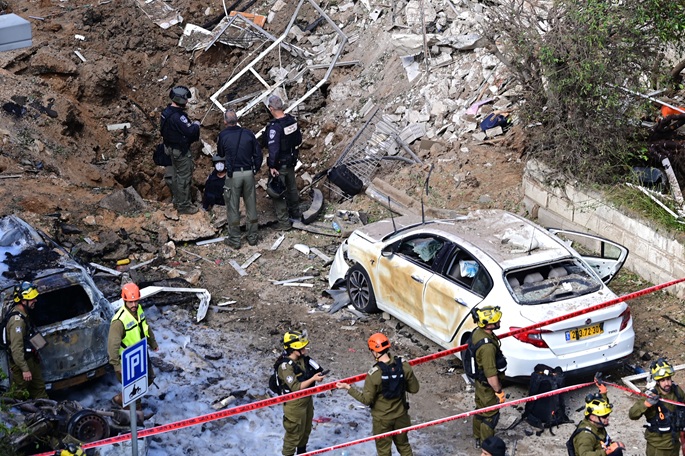
The White House is trying to arrange a meeting in Pakistan this weekend to discuss an off-ramp to the U.S.-Israeli war with Iran, a CNN report said Wednesday, citing two senior U.S. officials, said Xinhua.
Under a current plan, U.S. Vice President JD Vance may travel to Pakistan for the possible talks, said the report.
Besides Pakistan, Türkiye has also arisen as a potential location for the talks, according to the report.
Israel is concerned that the United States may declare a one-month ceasefire to facilitate negotiations with Iran, two Israeli sources told CNN on Wednesday.
There are no talks or negotiations between Iran and the United States, Iran's foreign ministry spokesman Esmail Baghaei said Wednesday in an interview with India Today.
"No one can trust U.S. diplomacy," Baghaei said, noting that Iran had a very catastrophic experience with U.S. diplomacy, evidenced by U.S. attacks during negotiations over the nuclear issue in the past.
Meanwhile, the official news agency IRNA reported that Iran on Wednesday rejected any negotiations with the United States, stressing that the country will not come to terms with the U.S. government.
Ebrahim Zolfaghari, spokesman of Iran's main military command Khatam al-Anbiya Central Headquarters, made the remarks in response to U.S. President Donald Trump's claims that Tehran is negotiating with the United States and wants a deal to end the war.
If the United States, which "claims to be the world's superpower," had been able to free itself from the predicament, it would have done so by now, Zolfaghari said.
He urged the United States to stop disguising its defeat as "an agreement," adding, "the strategic power the enemies would brag about has turned into a strategic defeat."
The United States is negotiating with itself due to its internal strife, Zolfaghari noted, warning that the United States will neither be able to invest in West Asia, nor see energy and oil prices return to previous levels until it understands that stability in the region is guaranteed by the Iranian armed forces.
Whether the situation can return to what it was in the past will depend on Iran's will, he said, adding that normalcy will only be restored when the United States completely erases the thought of "taking actions against the Iranian nation" from its mind.
Trump claimed on Monday that Washington had talks with Iran and the two sides had "major points of agreement." On Tuesday night, Israel's Channel 12 and The New York Times both reported that Washington had delivered Iran a 15-point plan for a month-long ceasefire deal. But Iran has repeatedly denied having negotiations with Washington.
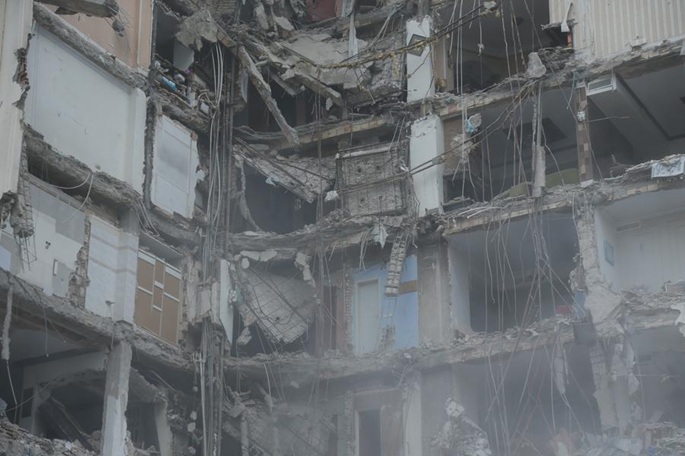
White House threatens to "unleash hell" on Iran
U.S. President Donald Trump will "unleash hell" if Iran refuses to make a deal over the ongoing U.S.-Israeli war against Iran, White House Press Secretary Karoline Leavitt said on Wednesday.
"President Trump does not bluff and he is prepared to unleash hell," she said at a White House press briefing. "Any violence beyond this point," she said, will be because Iran "refused to understand they have already been defeated and refused to come to a deal."
Leavitt declined to reveal whom Washington is negotiating with over how to end the war with Iran.
"We're not going to get into the details of these negotiations and conversations that continue to take place as, of course, you can imagine, they are very sensitive diplomatic discussions," she said.
Iran's FM says messages exchanged with US through intermediaries, but no talks held
Iranian Foreign Minister Seyed Abbas Araghchi said on Wednesday that different messages have been exchanged between Iran and the United States through intermediaries over the past few days, while Tehran has held no talks with Washington since the beginning of the U.S. and Israeli attacks on the country late last month.
He made the remarks in an interview with state-run IRIB TV.
"Since a few days ago, the American side has started sending different messages through different intermediaries. When messages are relayed to us through friendly countries and we, in response, declare our positions or issue the necessary warnings, it is called neither negotiation nor dialogue. There has merely been an exchange of messages through our friends, and we have repeated our principled positions," Araghchi said.
He added that in some messages, Iran warned the United States against attacking its infrastructure, which caused Washington to withdraw its warning to strike Iranian power plants within 48 hours.
Araghchi said that Iran does not seek war, stressing "We did not begin this war and want an end to it, however, in a way that it is not repeated."
He noted that Iran does not want a ceasefire as it would be a repetition of the same "vicious circle" of negotiation, war, and truce, emphasizing that "We want an end to this war on our own terms."
Araghchi said that Iran's current policy is to continue resistance and defend the country, and there is no plan for holding negotiations.
On the Strait of Hormuz, he noted that the waterway is considered part of the territorial waters of Iran and Oman, adding that Iran is studying "new arrangements for safe passage through the strait."
The Iranian foreign minister's remarks came after U.S. President Donald Trump claimed that Tehran is negotiating with the United States and wants a deal to end the war.
Iran says struck US Lincoln carrier with cruise missiles
The Iranian military said Wednesday that it fired several cruise missiles from Iran's southern coast at the U.S. aircraft carrier USS Abraham Lincoln, some of which struck the warship and "forced it to change its position," media reports showed.
Meanwhile, Iran's Navy Commander Shahram Irani said the warship is under constant surveillance, and will come under "crushing" attacks again when it enters the range of Iranian missile systems, the semi-official Fars news agency reported Wednesday.
Writing on social media platform X, Iranian Parliament Speaker Mohammad Bagher Ghalibaf said Iran is closely monitoring all U.S. movements in the West Asia region, especially its troop deployments.
These developments came amid heightened regional tensions following joint U.S.-Israeli strikes on Iran starting on Feb. 28, to which Iran and its regional allies responded with attacks on Israeli and U.S. interests across the Middle East.
Israel says struck underwater research center in Iran's Isfahan
The Israeli military said Wednesday it struck and significantly damaged a research and development facility for submarines and underwater systems in Iran's Isfahan on Tuesday.
"The center is the only facility in Iran responsible for the design and development of submarines and support systems for the Iranian Navy," an Israeli military spokesperson said, adding that Iran also produces various models of unmanned vessels at the site.
The strike "significantly limits" the Iranian Navy's ability to manufacture new and advanced submarines and upgrade its existing fleet, the spokesperson said.
Separately, the military said it has completed two waves of large-scale airstrikes targeting government sites in Tehran on Wednesday.
Meanwhile, multiple sirens were activated across Israel on Wednesday amid Iranian missile launches, including in Tel Aviv and Hadera, where one of Israel's key power stations is located.
A large plume of black smoke was seen in the area, but the military said the missile hit an empty field, and the Israel Electric Corporation said in a statement that no damage was caused to its facilities.
No casualties have been reported so far.
Also, Israeli Defense Minister Israel Katz said Wednesday that the country has dropped over 15,000 munitions on Iran since the start of the nearly month-long conflict, about four times the number used in the Israel-Iran war last summer.
Iranian missile hits Dimona near Israeli nuclear site
A missile fired from Iran on Wednesday evaded Israel's air defense systems and struck the city of Dimona, near which Israel's main nuclear facility and reactor are located, state-owned Kan TV reported.
Air raid sirens in the area sounded in the morning and early afternoon, warning of incoming missile attacks, according to the Home Front Command. The Israeli military did not officially confirm whether the missile was intercepted.
The Magen David Adom ambulance service reported no injuries.
Kan reported that the missile struck Dimona, located about 13 km northwest of the nuclear site in the Negev Desert, without elaborating on whether there was damage.
The Shimon Peres Negev Nuclear Research Center, often referred to as the "Dimona reactor," is one of Israel's most heavily guarded sites.
Iran has repeatedly targeted the area since Saturday, when a missile attack injured 64 people in Dimona. Tehran said the attack was in retaliation for an Israeli strike on the Natanz nuclear facility.
Iran's IRGC says shoots down U.S. F/A-18 Hornet fighter jet
Iran's Islamic Revolution Guard Corps (IRGC) said its Navy's air defense on Wednesday struck a U.S. F/A-18 Hornet fighter jet in the country's southeastern airspace.
Making the announcement in a statement on its official news outlet Sepah News, the IRGC noted that the fighter aircraft was hit over Chabahar County in Sistan and Baluchestan province with the IRGC Navy's missiles and crashed in the Indian Ocean.
It added it was the fourth U.S. and Israeli fighter jet hit by Iran's homegrown air defense systems in the country's airspace.
Iran's army said on Sunday its air defense targeted a hostile F-15E Strike Eagle fighter jet in the country's southern airspace. The day before that, the IRGC announced that it had hit an Israeli F-16 Fighting Falcon in the country's central airspace.
6 targeted Arab countries condemn Iranian attacks
The United Arab Emirates (UAE), Kuwait, Bahrain, Saudi Arabia, Qatar, and Jordan issued a joint statement on Wednesday strongly condemning what they described as Iranian attacks targeting countries in the region.
The statement said the attacks constitute a flagrant violation of sovereignty, territorial integrity, international law, international humanitarian law, and the Charter of the United Nations, whether carried out directly or through allies and armed groups supported by Iran.
The six countries reaffirmed their firm rejection of any actions that undermine regional security and stability, and called for an end to further escalation.
Also in the statement, they denounced attacks launched by Iranian-backed armed groups from Iraq against multiple countries in the region, targeting civilian facilities and critical infrastructure.
While valuing their relations with Iraq, the six states called on the Iraqi government to take urgent and effective measures to halt attacks launched from its territory by factions, militias, and armed groups.
Israeli strikes kill 14, wound 47 across S. Lebanon
At least 14 people were killed, and 47 others wounded in Israeli airstrikes across southern Lebanon, according to Lebanese official sources, as strikes targeted multiple areas overnight and into early Wednesday morning.
The Emergency Operations Center at the Ministry of Public Health said an Israeli airstrike on the town of Adloun in the Sidon district killed four people and wounded one, while another strike on an apartment in the Mieh Mieh refugee camp killed two people and wounded four others. A separate strike on the Al-'Alam roundabout in the city of Tyre wounded 24 people. Another airstrike on the town of Habboush in the Nabatieh district killed three people and wounded 18 others.
An Israeli airstrike on a house located between the towns of Zawtar al-Sharqiya and Zawtar al-Gharbiya shortly after midnight killed two people. In a separate attack, a house in Batouliyeh was struck, resulting in one death and one injury.
The Lebanese Ministry of Public Health added that two paramedics were killed in an Israeli airstrike that targeted their motorcycle as they were heading to carry out a rescue mission in the city of Nabatieh, raising the number of paramedics killed since March 2 to 42.
For its part, Hezbollah said it targeted Israeli troop and vehicle gatherings with rocket barrages and attack drones, causing casualties among Israeli soldiers.
The Israeli military also confirmed that it carried out overnight airstrikes in Lebanon, targeting gas stations and a building it identified as a Hezbollah command center in the southern suburb of Beirut.
Hezbollah says destroys 8 Israeli Merkava tanks in S. Lebanon
Hezbollah announced on Wednesday that it had destroyed eight Israeli Merkava tanks in the village of Taybeh in southern Lebanon as its clashes with the Israeli forces continued along the border.
Hezbollah later reported that it had targeted the forces assigned to recover destroyed vehicles and evacuate the wounded, hitting them with rocket salvos and artillery shells.
Earlier in the day, Naim Qassem, secretary-general of Hezbollah, said that the group will continue what he described as a "defensive battle" against Israel, urging national unity and rejecting calls to disarm amid ongoing hostilities.
Hezbollah entered the confrontation on March 2 by launching rockets from southern Lebanon toward Israel for the first time since a ceasefire on Nov. 27, 2024, prompting Israel to carry out an intensified military campaign targeting multiple areas across the country.
Iraq to summon US diplomat over strike on military clinic
Iraq will summon the U.S. charge d'affaires to protest the deadly airstrike earlier in the day against an Iraqi military medical facility, the Iraqi military said Wednesday in a statement.
According to the statement, Iraqi Prime Minister Mohammed Shia' al-Sudani has directed the foreign ministry to summon the U.S. charge d'affaires and deliver a strongly-worded official note of protest following the attack on the Habbaniyah military clinic, an affiliate of the Iraqi defense ministry.
The statement called the attack a "fully fledged crime in violation of international law," which undermines the relationship between the peoples of Iraq and the United States, adding that Iraq maintains the right to respond under the UN Charter.
A formal complaint, supported by evidence and detailed documentation, will also be lodged with the UN Security Council and the UN to affirm the rights of Iraq and its people in the face of these violations, it added.
Earlier in the day, the Iraqi defense ministry said in a statement that the military clinic and an engineering unit affiliated with the Habbaniyah site command in western Anbar province were hit by an airstrike in the morning, leaving seven soldiers dead and 13 others wounded.
On Tuesday, the Iraqi foreign ministry already summoned both the Iranian ambassador and the U.S. charge d'affaires to Baghdad to deliver formal protests regarding two deadly strikes that day.
7 Palestinians killed in Israeli attacks across Gaza
9 killed in shooting in US Pennsylvania
Abbas postpones Palestinian presidential, legislative elections to Sept. 11, 2027
12 killed, 309 injured in attack on Riyadh airport
Opposition leader announces INDIA bloc protest against CEC on Oct 12
Trump suggests ´new President´ for Ukraine, day after diesel deal with Russia

Editor-in-Chief Ofiul Hasnat
Published by Finnish News Network (FNN)
Heporinne 4 B 45
01200 Vantaa, Finland.
E-mails : [email protected]