
Iran vows to destroy energy infrastructure after Trump's ultimatum
Published : 23 Mar 2026, 00:12
Updated : 23 Mar 2026, 00:17
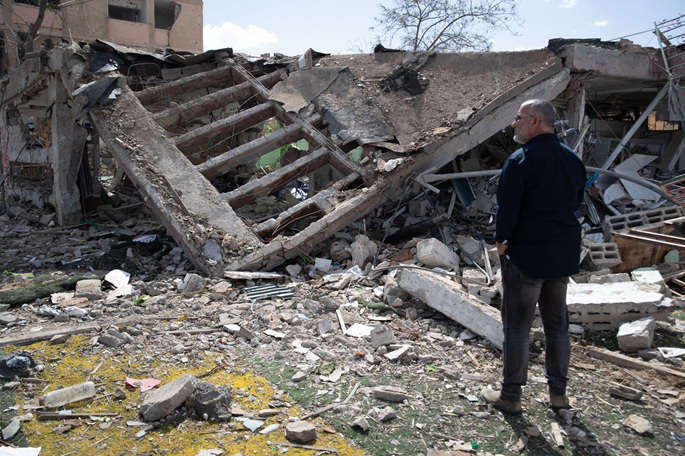
Iran on Sunday issued a stringent warning to the United States, threatening to target critical energy infrastructure across the region in an "irreversible manner" following US President Donald Trump's 48-hour ultimatum to the Islamic Republic over the Strait of Hormuz, reported ANI.
In a post on X, the speaker of Iran's Parliament, Mohammad Bagher Ghalibaf, stated that any attack on Iranian power plants or infrastructure would prompt retaliatory strikes on regional energy facilities.
"Immediately after the power plants and infrastructure in our country are targeted, the critical infrastructure, energy infrastructure, and oil facilities throughout the region will be considered legitimate targets and will be destroyed in an irreversible manner, and the price of oil will remain high for a long time," Ghalibaf stated in his post.
His remarks come after Trump warned Iran of severe consequences if it fails to reopen the strategically vital Strait of Hormuz, a key global energy transit route.
In a post on Truth Social, Trump stated that if Iran does not "fully open" the Strait within 48 hours, the United States would target and "obliterate" Iranian power plants.
"If Iran doesn't FULLY OPEN, WITHOUT THREAT, the Strait of Hormuz, within 48 HOURS from this exact point in time, the United States of America will hit and obliterate their various POWER PLANTS, STARTING WITH THE BIGGEST ONE FIRST!" the post read.
Following Trump's remarks, Ebrahim Zolfaghari, spokesperson for Iran's Khatam al-Anbiya Central Headquarters, today further warned that "all power plants, energy infrastructure, and information technology (ICT) infrastructure of the Zionist regime will be extensively targeted" and added that "the power plants of countries in the region that host American bases will be legitimate targets for us", as reported by Iranian State Media, Press TV.
Zolfaghari also stated that companies in the region with American shareholders could be completely destroyed, highlighting Tehran's readiness to respond to perceived threats.
"We have said repeatedly that the Strait of Hormuz is closed only to the enemy and to harmful traffic, and it has not yet been fully closed. It remains under our intelligent control, and harmless passage occurs under specific regulations that ensure our security and interests," he added, as quoted by Press TV.
The Spokesperson also warned that should US threats against its power plants be carried out, the Strait of Hormuz could be completely closed until any damaged facilities are rebuilt.
Meanwhile, the Israeli military said on Sunday that fighting against Iran and Hezbollah was expected to last "weeks," as the war entered its 23rd day, reported Xinhua.
"Weeks of fighting against Iran and Hezbollah are expected," military spokesperson Effie Defrin said in a press briefing.
"The air force is operating relentlessly," Defrin said, adding that since the start of the joint campaign with the United States on Feb. 28, Israel had dropped more than 10,000 munitions on "thousands of targets" across Iran.
"We continue attacking all of the regime's systems, infrastructure and commanders," he said.
Separately, Defrin said the military was investigating whether a projectile that killed an Israeli man near the Israel-Lebanon border may have been caused by Israeli artillery fire.
Israel had initially blamed Hezbollah for the strike, which set two vehicles ablaze. Defrin added that the circumstances of the incident remained under investigation.
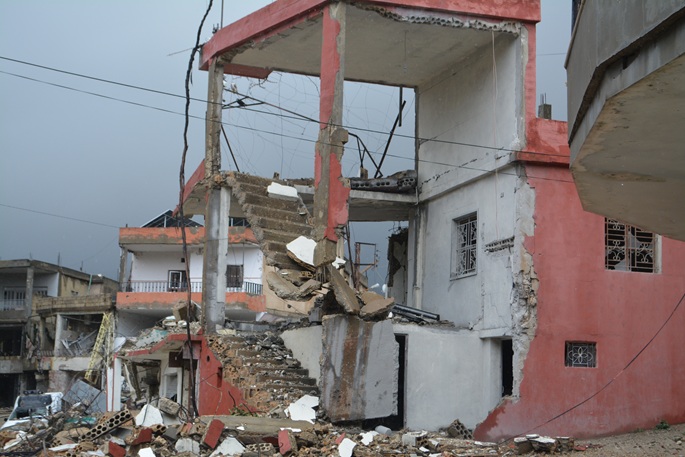
Israel launches new strikes in Lebanon, targeting key bridge over Litani River
Israeli warplanes struck the strategic Qasmiyeh Bridge over the Litani River in southern Lebanon on Sunday, Lebanon's National News Agency reported, as Israel launched a new wave of airstrikes across the region, said Xinhua.
The Israeli military confirmed the strikes, saying they targeted Hezbollah positions along the river, Lebanon's longest at roughly 170 kilometers, which has long served as a key geographic boundary in past conflicts with the group.
Lebanese security sources told Xinhua that Israeli jets fired three air-to-surface missiles at the crossing, sending columns of fire and smoke into the sky.
The strikes followed a Hezbollah rocket attack earlier Sunday that killed an Israeli civilian near the Israel-Lebanon border, the first such death since recent U.S.-Israeli strikes on Iran. Two Israeli soldiers were also killed in Lebanon earlier this month.
Earlier on Sunday, Israeli Defense Minister Israel Katz and Prime Minister Benjamin Netanyahu ordered the military to "immediately" destroy all bridges over the Litani used by Hezbollah. Military spokesperson Avichay Adraee urged residents on X to evacuate and move north of the Zahrani River ahead of the Qasmiyeh strike.
Analysts said targeting the river's bridges could signal a potential expansion of Israel's ground operations in southern Lebanon.
On Sunday afternoon, an Israeli force of several armored vehicles advanced toward the Tal al-Nahas axis south of Marjayoun, about 2 km inside Lebanese territory, Lebanese security sources said. The advance was preceded by heavy artillery shelling on Qlayaa, Burj al-Muluk, Deir Mimas, and the Khiam plain.
Also on Sunday, Israel said it killed Abu Khalil Barji, commander of Hezbollah's elite Radwan Force, in a strike on Saturday near Majdal Selm. Barji, a longtime Radwan commander, died alongside two other Hezbollah militants.
Lebanon's Ministry of Public Health said an Israeli airstrike on al-Sultaniyah in the Bint Jbeil district killed three people and wounded three others, while a strike on al-Sawaneh in Marjayoun killed one person and wounded four. Since March 2, Israeli attacks have killed 1,029 people and injured 2,786 others, the ministry added on Sunday.
Intensive Israeli airstrikes have hit southern Lebanon and parts of Beirut since cross-border fire resumed earlier this month, following Hezbollah rockets in retaliation for Israel's killing of Iranian former Supreme Leader Ali Khamenei.
Iranian forces warn of broader retaliation if US targets power facilities
Iran's primary military command, Khatam al-Anbiya Central Headquarters, issued a statement on Sunday warning that power plants in countries hosting U.S. bases would be considered legitimate targets if the United States attacks Iran's power facilities, reported Xinhua.
The statement came in response to remarks by U.S. President Donald Trump threatening to target Iran's power infrastructure, according to Iranian state media Islamic Republic of Iran Broadcasting.
The Strait of Hormuz has not been fully closed and remains under Iran's "smart control," with non-harmful transit continuing under specific regulations to ensure national security and interests, the statement said.
If U.S. threats are carried out, Iran would immediately adopt several punitive measures, including the full closure of the Strait of Hormuz until damaged Iranian facilities are rebuilt, it said.
Other measures would include large-scale strikes on Israel's power, energy and communications infrastructure, attacks on regional companies with U.S. capital ties, and targeting power facilities in countries hosting U.S. military bases.
The statement stressed that Iran would take "all necessary measures" to defend its national interests and would continue operations against U.S. and allied economic and energy infrastructure in the region.
Hezbollah rocket kills 1 in northern Israel
A man was killed on Sunday when a rocket fired from Lebanon by Hezbollah struck vehicles near the Israeli border, Israeli authorities said, reported Xinhua.
The rocket hit two vehicles in the Upper Galilee near the Israel-Lebanon border, the Magen David Adom rescue service said in a statement. Police confirmed the death.
The strike came amid a drone attack from Lebanon and at least four missile salvos launched from Iran on Sunday morning, triggering sirens across Israel.
Explosions were heard in Jerusalem and Tel Aviv. The military said one of the Iranian missiles appeared to be a cluster munition, with bomblets or fragments reported by Israel's Fire and Rescue Services in at least three cities.
Military chief Eyal Zamir said the army was investigating why air defense systems failed to intercept the latest projectiles, including a ground-to-ground ballistic missile launched late Saturday from Iran.
The missile struck a residential area in the southern city of Arad, where health authorities said at least 115 people were wounded, including 10 seriously.
The attacks came as the regional conflict, sparked by a U.S.-Israeli strike on Iran, entered its 23rd day.
Kremlin warns assassinations of Iran's leaders to have grave consequences
The assassinations of Iran's leaders will have grave consequences, Kremlin spokesperson Dmitry Peskov said Sunday, reported Xinhua.
"In any case, it's an abnormal situation that has and will continue to have profound consequences. It cannot remain without consequences," Peskov told Russian state television's top Kremlin reporter, Pavel Zarubin, while commenting on the assassinations.
Peskov said such actions only lead to greater unity among the Iranian people around their leadership.
Iran outlines 6 conditions to end conflict: Lebanese media
A senior Iranian official said on Sunday that Tehran is carrying out a pre-planned, multi-phase strategy in response to U.S.-Israeli attacks, while setting six conditions for ending the conflict, Lebanon-based Al Mayadeen reported, said Xinhua.
The official, who was not named, said the strategy was prepared months ago and is being executed with "high strategic patience." He added that Iran does not expect a ceasefire soon following strikes on its infrastructure, service facilities, and strategic sites.
Several regional actors and mediators have proposed ways to end the conflict, the official said. But Tehran has laid out six conditions that must be met before any agreement: guarantees against renewed attacks, closure of U.S. bases in the region, compensation to Iran, cessation of hostilities on regional fronts, a new legal framework for the Strait of Hormuz, and legal action against media figures considered hostile to Iran.
Hormuz open to all except those who violate Iranian soil: Iran President
Iranian President Masoud Pezeshkian on Sunday took a jab at US President Donald Trump's statement and said that the illusion of erasing Iran from the map shows desperation against the will of a history-making nation, reported ANI.
Pezeshkian said that the Strait of Hormuz remains open to all nations except Iran's enemies.
In a post on X, he said, "The illusion of erasing Iran from the map shows desperation against the will of a history-making nation. Threats and terror only strengthen our unity. The Strait of Hormuz is open to all except those who violate our soil. We firmly confront delirious threats on the battlefield."
Houthis claim missile, drone attacks on Saudi airports, energy facilities
US accepts some of Iran's conditions, status of others remains unclear: official
Trump announces Russia-Ukraine ´energy ceasefire, ´ Zelensky says unaware of deal
139 migrants dead after boat capsizes off Djibouti coast
Landslide-dam breach likely triggered flash floods in Nepal
Arab nations, Türkiye, Israel condemn Houthi attack on Riyadh airport

Editor-in-Chief Ofiul Hasnat
Published by Finnish News Network (FNN)
Heporinne 4 B 45
01200 Vantaa, Finland.
E-mails : [email protected]