
Iran damages Israel's key oil refinery, Israel hits Iranian navy targets
US F-35 makes emergency landing over Iranian fire
Published : 20 Mar 2026, 02:13
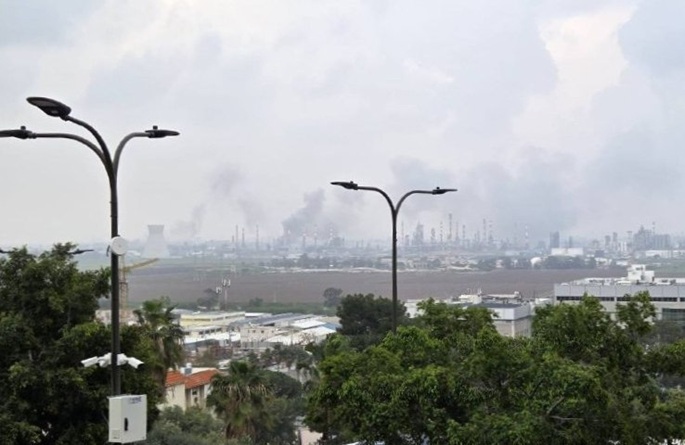
Interception fragments from a missile launched by Iran on Thursday struck Israel's largest oil refinery in Haifa, northern Israel, causing damage, according to Israeli media, reported Xinhua.
Israel's state-owned Kan TV News reported that there was no concern about the leakage of hazardous materials. It added that one man was injured from smoke inhalation, and several vehicles caught fire at the refinery compound.
Israel's Channel 12 News reported that there were power outages following the hits.
Israeli Energy and Infrastructure Minister Eli Cohen said in a statement that "there was no significant damage to infrastructure sites in Israel."
He added that the damage to the electricity grid in the north was limited and that electricity teams already worked to restore power.
Meanwhile, the Israel Defense Forces (IDF) said in a statement on Thursday that its air force, under intelligence guidance, struck Iranian navy infrastructures in the Caspian Sea.
The strikes, carried out on Wednesday, included targets at the Iranian Navy port and base facilities where dozens of military vessels, including missile ships and guard boats, were stationed, it said.
Navy vessels were targeted, including missile ships, support vessels, boats, and guard ships, it said.
Also struck were a port command center, from which Iranian Navy forces controlled naval operations in the Caspian Sea, and a central infrastructure facility used for vessel repair and maintenance, it said.
"The Iranian Navy used the port to advance ongoing operational activity that was impaired by striking the port and the adjacent vessels," it said, claiming that the strikes have further degraded the Iranian capabilities and impaired the Iranian Navy's control of the Caspian Sea.
Meanwhile, a U.S. F-35 fighter jet was forced to make an emergency landing on Thursday at a U.S. military base in the Middle East after it was struck by what was believed to be Iranian fire, according to a CNN report citing two sources familiar with the matter.
The incident would be the first time Iran has hit a U.S. warplane since the United States and Israel launched an attack on Iran on Feb. 28, said the report.
The jet was "flying a combat mission over Iran" when it made the emergency landing, Tim Hawkins, a spokesman for U.S. Central Command, was quoted as saying.
"The aircraft landed safely, and the pilot is in stable condition," Hawkins said. "This incident is under investigation."
Both the U.S. and Israeli forces are flying F-35 jets in the conflict with Iran, said the report, noting that the aircraft costs upwards of 100 million U.S. dollars.
Earlier on Thursday, U.S. Defense Secretary Pete Hegseth said at a Pentagon press conference that Iran's air defenses have been "flattened."
U.S. Chairman of the Joint Chiefs of Staff Dan Caine said at the press conference that Iran retains "some capability" to attack assets of the United States and its allies in the Middle East, including oil facilities.
The U.S.-Israeli conflict with Iran escalated after an Israeli strike on Iran's South Pars gas field on Wednesday, with Qatar later reporting fires and extensive damage at liquefied natural gas facilities following Iranian strikes, sending oil and gas prices surging again on Thursday.
Meanwhile, the Israel Defense Forces said in a statement on Thursday that its air force struck and dismantled an Iranian Mi-17 military helicopter at Sanandaj Airport in Hamadan, western Iran, overnight.
It added that the strike was based on accurate real-time intelligence and attached a video to its statement, allegedly showing the strike.
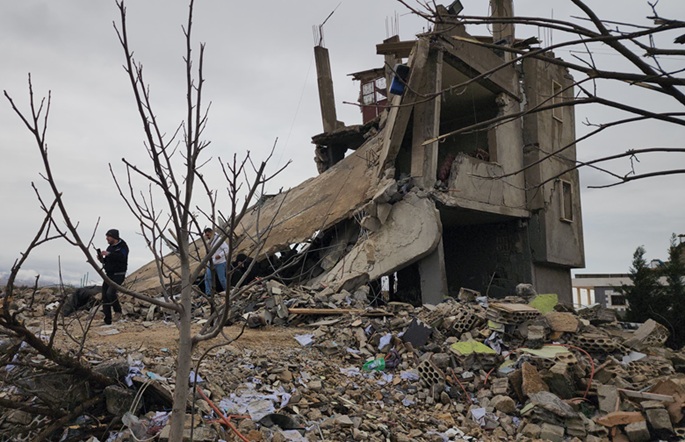
Earlier on Thursday, the Israeli army said that over the past day, its troops killed more than 20 Hezbollah militants and struck dozens of the organization's military structures in southern Lebanon.
It added that troops also confiscated several weapons, including rocket-propelled grenades, anti-tank rockets, ammunition, a hunting rifle, and other military equipment.
Drone attacks spark fires at 2 Kuwaiti refineries
Kuwait's state-owned Kuwait Petroleum Corporation (KPC) confirmed on Thursday that drone attacks targeted operational units at two of the country's major oil refineries, sparking fires that were quickly brought under control, with no casualties reported.
In a statement carried by the Kuwait News Agency (KUNA), KPC said that a unit at the Mina Abdullah Refinery, operated by Kuwait National Petroleum Company (KNPC), was hit by a drone, causing a fire at the site.
Emergency response teams swiftly initiated containment efforts, following the highest safety protocols to secure the site and ensure the safety of personnel, said KPC.
KPC also reported a separate drone strike on an operational unit at the Mina Al Ahmadi Refinery, which caused a limited fire. The blaze was quickly contained with no injuries recorded.
Earlier in the day, Kuwait's military said its air defense systems were actively intercepting hostile aerial threats.
In a statement carried by KUNA, the General Staff of the Kuwaiti Army said that air defenses were engaging "hostile missile and drone attacks" targeting the country.
"Air defense units are confronting incoming threats," the statement said, adding that explosions were heard in some areas due to interception operations.
Authorities in Kuwait did not immediately provide further details on the origin of the attacks.
5 killed, 10 injured in Israeli strikes across S. Lebanon
At least five people were killed and 10 others wounded on Thursday in a series of Israeli airstrikes targeting multiple areas in southern Lebanon, according to Lebanon's National News Agency.
In the coastal town of Aadloun, an airstrike on a house at the town's outskirts killed two people.
Meanwhile, strikes on several areas around Tyre and the popular housing district left two people dead and eight others injured, with wounds reported as ranging from minor to moderate, according to rescue teams.
In a separate strike on the town of Bazourieh, one person was killed, and two others were injured, one of them critically, as the attack reportedly destroyed an entire residential block and cut off the main road.
Separately, Israeli forces have been attacking the border town of Khiam since Thursday morning, with reported attempts at ground infiltration and ongoing clashes with Hezbollah, amid heavy artillery shelling and missile fire.
Hezbollah announced the launch of rockets from Lebanon toward Israel on March 2, the first time since a ceasefire was declared on Nov. 27, 2024. Israel subsequently launched a military campaign against the group, involving intensive airstrikes on several areas in southern and eastern Lebanon, in addition to Beirut's southern suburbs.
Iran has "zero restraint" if its infrastructures stuck again: FM
Iranian Foreign Minister Seyed Abbas Araghchi on Thursday vowed "zero restraint" if Iranian infrastructures are struck again.
In a post on social media platform X, Araghchi said "the ONLY reason for restraint" is "respect for requested de-escalation."
"Any end to this war must address damage to our civilian sites," he added.
On Wednesday, Israel launched an attack against Iran's South Pars offshore natural gas field in the Gulf it shares with Doha. Later, Qatar reported fires and extensive damage at its liquefied natural gas facilities targeted by Iran.
In response, U.S. President Donald Trump said on his Truth Social that the United States is unaware of the Israeli attack, nor was Qatar involved in it, warning that if Iran attacks Qatar again, the U.S. military "will massively blow up the entirety" of Iran's South Pars gas field.
The development came amid heightened tensions following joint U.S.-Israeli strikes on Iran starting on Feb. 28, to which Iran and its regional allies responded with attacks on Israeli and U.S. interests across the Middle East.
Trump says he will not put troops in Iran
U.S. President Donald Trump said Thursday he will not put troops in Iran as the U.S.-Israeli war with Iran is escalating.
Trump made the remarks when meeting with Japanese Prime Minister Sanae Takaichi at the White House.
Asked by a reporter about sending U.S. ground troops to Iran, Trump said, "I'm not putting troops anywhere."
The United States and Israel began large-scale strikes on Iran on Feb. 28, disrupting global shipping, sending oil prices soaring and shaking the global economy.
Iran no longer able to enrich uranium, produce missiles: Netanyahu
Israeli Prime Minister Benjamin Netanyahu said at a press conference on Thursday that Iran has lost its uranium enrichment and missile production capabilities.
Netanyahu said that these were two of the three goals of the joint U.S.-Israeli attack on Iran, and that the third goal, toppling the regime, now depends on the Iranian people.
"Revolutions do not happen from the air, and there are many ground options that I will not disclose," he said.
Regarding Israel's strike on an Iranian natural gas field in the Persian Gulf on Wednesday, Netanyahu confirmed earlier remarks by U.S. President Donald Trump that Israel had not informed the United States before the attack.
"President Trump asked us to hold off on future attacks, and we're holding it," Netanyahu said.
He also said that the United States and Israel together had destroyed Iran's entire naval fleet in the Caspian Sea.
As for the duration of the ongoing war, Netanyahu said it would last "as long as necessary," adding that it would end "much faster than people think."
During the press conference, Iran launched missiles towards Israel, setting off air raid sirens across the country's north. Israel's emergency service reported no casualties.
Netanyahu's remarks came amid heightened tensions after joint U.S.-Israeli strikes on Iran began Feb. 28, prompting retaliatory attacks by Iran and its regional allies against Israeli and U.S. interests across the Middle East.
Iran warns of intensified retaliation if US, Israel strike energy sites again
Iran warned Thursday it would carry out more severe retaliatory strikes if the United States and Israel attack its energy facilities again.
Ebrahim Zolfaghari, spokesman for Iran's Khatam al-Anbiya Central Headquarters, said in a statement published by the Islamic Revolutionary Guard Corps' Sepah News that Tehran had not sought to expand the conflict to oil infrastructure or harm the economies of friendly neighboring states.
"Following the enemies' aggression against Iranian energy infrastructure, we have practically entered a new stage of war," he said.
Zolfaghari said Iran's response was ongoing and warned that further attacks would be met with more intense strikes targeting energy infrastructure linked to the United States, Israel and their allies.
On Wednesday, Israel struck Iran's South Pars offshore natural gas field in the Gulf, which it shares with Qatar. Qatar later reported fires and extensive damage at liquefied natural gas facilities following Iranian strikes.
The escalation comes amid heightened tensions after joint U.S.-Israeli strikes on Iran began Feb. 28, prompting retaliatory attacks by Iran and its regional allies against Israeli and U.S. interests across the Middle East.
Iran calls on regional countries to prevent US from using bases
Iran on Thursday (local time) called on countries in West Asia to prevent the United States from using military bases in their own territories, reported ANI.
These bases are the "root cause" of the current crisis and are being used for operations against Tehran, claimed Iran. The government has warned that such actions would amount to complicity in aggression.
"Foreign Ministry Spokesman Emphasizes the Urgent Need for Regional Countries to Act to Prevent the Continued Use of Their Territory and Facilities by #America and the #ZionistRegime for Conducting Military Aggression Against Iran," Ministry of Foreign Affairs of the Islamic Republic of Iran's X post read.
Ismail Baghaei, the official spokesperson for Iran's Foreign Ministry, described the remarks made by the Foreign Minister of Saudi Arabia at the Arab-Islamic countries' summit as "unfair, one-sided, and contrary to the requirements of a responsible approach toward regional developments."
"No party can ignore the clear fact that the root cause of the current crisis in the region is the imposed war by America and the Zionist regime," Baghaei said, adding that these countries were using "military bases and facilities stationed in regional countries to plan, execute, and support their aggressive actions against Iran."
Daily brief about U.S.-Israeli strikes on Iran: Day 20
Energy infrastructure attacks rippled across the Middle East on Thursday as the United States, Israel, and Iran exchanged strikes for a 20th consecutive day, sending oil and gas prices surging, knocking out a significant share of Qatar's LNG export capacity, and prompting warnings of catastrophic global economic consequences, reported Xinhua.
The following is a brief overview of the latest developments in the escalating crisis affecting much of the region and beyond.
The United States
Regarding Israel's Wednesday attack on Iran's South Pars offshore natural gas field and Iran's retaliatory strike on Qatar's liquefied natural gas facilities, President Donald Trump said Washington had no prior knowledge of the Israeli action and that Qatar was not involved.
"NO MORE ATTACKS WILL BE MADE BY ISRAEL pertaining to this extremely important and valuable South Pars Field unless Iran unwisely decides to attack" Qatar again, Trump said, adding that if Iran attacks Qatar, the U.S. military "will massively blow up the entirety" of the South Pars gas field.
-- Joint Chiefs of Staff Chairman Dan Caine said U.S. attack helicopters are targeting Iran-aligned armed groups in Iraq and that major combat operations in Iran will continue.
-- Defense Secretary Pete Hegseth said there is no "definitive time frame" for ending the U.S.-Israeli war with Iran, noting the decision will rest with Trump.
-- Treasury Secretary Scott Bessent indicated the United States may lift sanctions on roughly 140 million barrels of Iranian oil currently in transit.
-- Director of National Intelligence Tulsi Gabbard said U.S. objectives in Iran differ from Israel's and that Iran's government "appears to be intact" despite ongoing military pressure.
Israel
Prime Minister Benjamin Netanyahu said at a press conference that Iran has lost its uranium enrichment and missile production capabilities, calling these two of the three goals of the recent U.S.-Israeli operation. He said the third goal, regime change, now depends on the Iranian people.
He also said that the United States and Israel together had destroyed Iran's entire naval fleet in the Caspian Sea.
-- The Israel Defense Forces (IDF) said its air force destroyed an Iranian Mi-17 military helicopter at Sanandaj Airport in western Iran overnight. IDF forces reportedly killed more than 20 Hezbollah fighters and struck dozens of the group's military sites in southern Lebanon.
-- Missile fragments from an Iranian strike hit Israel's largest oil refinery in Haifa, northern Israel, causing reported damage.
Iran
Foreign Minister Seyed Abbas Araghchi warned of "zero restraint" if Iranian infrastructure is attacked again.
-- Araghchi criticized a Pentagon budget request of over 200 billion U.S. dollars for the war on Iran as the "tip of the iceberg," calling it a war of choice "imposed on both Iranians and Americans."
-- Iran's Khatam al-Anbiya Central Headquarters threatened more severe retaliatory strikes if U.S. and Israeli attacks on its energy facilities continue.
-- Iran reported that one of its air defense systems struck a U.S. F-35 fighter jet over central Iran early Thursday. CNN cited U.S. military sources saying the jet made an emergency landing at a U.S. base in the Middle East.
Lebanon
At least five people were killed and 10 wounded in Israeli airstrikes across southern Lebanon, bringing the death toll since March 2 to 1,001 people and the injured 2,584, according to the Lebanese Public Health Ministry.
-- Lebanese President Joseph Aoun urged an immediate halt to the ongoing Israeli aggression against Lebanon, saying, "An end to the escalation is necessary to create a suitable atmosphere for negotiations, which is currently unavailable due to the expansion of military operations."
-- Russia blamed Israel for a "targeted" airstrike that wounded an RT television crew in Lebanon.
-- Lebanon's state electricity company said Israeli attacks earlier Thursday disabled a main power substation.
-- The United Nations Economic and Social Commission for Western Asia reported that the ongoing conflict has caused an estimated 63 billion U.S. dollars in economic damage across the Arab region within just two weeks. Lebanon is among the worst-hit, it said, facing severe economic and humanitarian strain as attacks intensify and key infrastructure is compromised.
Iraq
Iraq's Popular Mobilization Forces said two members were killed and several wounded in U.S.-Israeli airstrikes.
-- Shiite militia Kata'ib Hezbollah announced a five-day suspension of operations targeting the U.S. Embassy in Baghdad, contingent on certain conditions.
-- The Islamic Resistance in Iraq said it carried out 29 military operations against "enemy bases" in Iraq and the region in the past 24 hours.
-- The Iraqi Civil Aviation Authority extended the country's airspace closure for another 72 hours.
-- Iraq's Foreign Ministry condemned the "dangerous escalation" targeting Iran's energy facilities.
Yemen
Houthi leader Abdulmalik al-Houthi renewed the group's support for Iran, saying, "We affirm our support for Iran and our readiness on the military front to respond to whatever developments may require."
Kuwait
Kuwait Petroleum Corporation confirmed drone attacks on two major oil refineries, causing fires that were quickly extinguished. No casualties were reported.
Oman
In an article for The Economist, Foreign Minister Sayyid Badr bin Hamad bin Hamood Albusaidi said the United States has lost control of its foreign policy and is engaged in a war that is not its own.
United Arab Emirates
The Ministry of Economy and Tourism denied imposing restrictions on capital movement or preventing foreign investors from accessing funds.
-- Operations at Habshan gas facilities were temporarily suspended due to debris from missile interceptions.
-- The Defense Ministry said air defense systems intercepted seven ballistic missiles and 15 drones.
-- Minister Sultan Ahmed Al Jaber warned that attacks on energy infrastructure amid escalating tensions could have far-reaching global consequences.
Qatar
Reports said several LNG facilities were hit by Iranian missiles, causing fires and extensive damage.
-- QatarEnergy CEO Saad Sherida Al-Kaabi said the attack knocked out about 17 percent of the country's LNG export capacity, with repairs expected to take three to five years.
-- During a visit to Doha, Turkish Foreign Minister Hakan Fidan urged Tehran not to expand the conflict into neighboring countries, calling Israel the main instigator of the war.
Saudi Arabia
Foreign ministers of 12 Arab and Islamic states met in Riyadh and called on Iran to halt attacks and avoid measures that could close the Strait of Hormuz. They condemned Israel's aggression in Lebanon and its "expansionist policy."
Türkiye
Sinan Seha Turkseven, general manager of the Türkiye Tourism Promotion and Development Agency, said tourism operations are continuing safely, with flights at international airports operating normally.
Britain
Wholesale gas prices rose to 180 pence per therm before settling at around 171, up 20 percent for the day and more than double pre-conflict levels. Brent Crude climbed above 116 U.S. dollars per barrel in early trading.
France
President Emmanuel Macron called for an immediate end to military strikes on civilian infrastructure, particularly energy and water facilities, in the ongoing Iran war.
7 Palestinians killed in Israeli attacks across Gaza
9 killed in shooting in US Pennsylvania
Abbas postpones Palestinian presidential, legislative elections to Sept. 11, 2027
12 killed, 309 injured in attack on Riyadh airport
Opposition leader announces INDIA bloc protest against CEC on Oct 12
Trump suggests ´new President´ for Ukraine, day after diesel deal with Russia

Editor-in-Chief Ofiul Hasnat
Published by Finnish News Network (FNN)
Heporinne 4 B 45
01200 Vantaa, Finland.
E-mails : [email protected]