
Israel begins ground operations in Lebanon, Iran ready to continue war
Published : 17 Mar 2026, 01:15
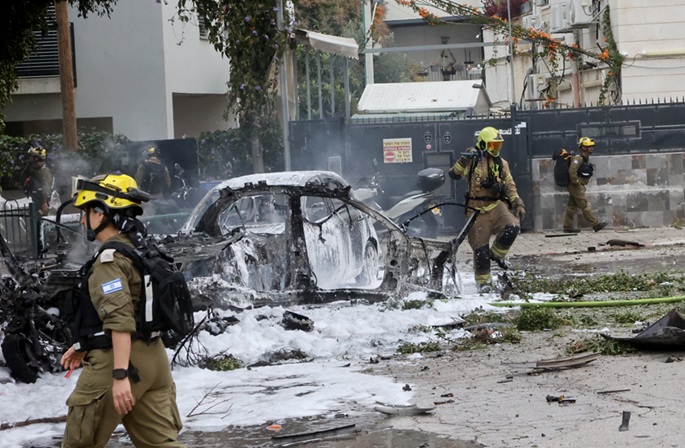
Israeli forces launched ground operations on Monday against Hezbollah strongholds in southern Lebanon, the Israel Defense Forces (IDF) said, opening a new front in a widening regional conflict, reported Xinhua.
Defense Minister Israel Katz said the operation aimed "to remove threats and protect the residents of the north." He added that hundreds of thousands of southern Lebanese residents evacuating homes south of the Litani River would not be allowed to return until northern Israeli communities were secured.
"Prime Minister Netanyahu and I have instructed the IDF to destroy the terror infrastructure in the Lebanese border villages, just as it was done against Hamas in Rafah, Beit Hanoun, and the terror tunnels in Gaza," Katz said, warning that Israel could target Hezbollah Secretary-General Naim Qassem.
Israeli troops, supported by Merkava tanks and armored personnel carriers, advanced at dawn toward the towns of Khiam and Aitaroun and surrounding villages. The incursion was backed by airstrikes, artillery, drones, and warplane attacks, according to security sources.
The heaviest fighting was in the eastern sector, where Israeli forces moved from Tal al-Hamamis toward Khiam, a longstanding flashpoint. In the central sector, troops advanced toward Aitaroun, Yaroun, and Bint Jbeil, aiming to seize high ground above Wadi al-Hujeir. In the west, forces targeted the villages of al-Dhahira and Alma al-Shaab before pulling back to Labbouneh heights under Hezbollah missile and artillery fire.
Hezbollah said its fighters repelled Israeli advances throughout the day, striking a Merkava tank north of the Khiam detention center with a guided missile and hitting an Israeli troop gathering near the Kfar Yuval settlement with rockets.
Fierce resistance blocked Israeli forces from entering Khiam and advancing along the Taybeh axis, sources said, adding that Israeli forces have established positions at roughly 15 border points, advancing one to three kilometers north of the Blue Line, the UN-demarcated boundary between Israel and Lebanon.
Eyewitnesses reported heavy shelling, machine-gun fire, and airstrikes across dozens of localities during the night and early morning.
The ground operation escalates a conflict that began on Feb. 28 with a U.S.-Israeli air campaign targeting Iranian facilities. Hezbollah, an Iranian ally that controls much of southern Lebanon, resumed attacks on March 2, two days after the killing of former Iranian Supreme Leader Ali Khamenei in a U.S.-Israeli strike.
Monday's clashes were among the fiercest since a ceasefire ended a year-long war in late 2024, which had displaced hundreds of thousands of people and caused widespread infrastructure damage on both sides.
Meanwhile, Iranian Foreign Minister Abbas Araghchi on Monday said that the war in the Middle East must end in a way that all enemies must never think of attacking Iran again, reported ANI.
Araghchi said that Iran would never hesitate to defend itself.
"This war must end in a way that our enemies will never think to attack us again. I think they have learned a lesson by now and have understood what kind of nation they are facing. We will not hesitate to defend ourselves and are ready to continue the war wherever it is and take it to wherever it will go," he said.
Tasnim News Agency quoted Iran's Foreign Ministry Spokesman Esmaeil Baghaei as saying that the Strait of Hormuz is not closed.
"We had given the necessary warnings to the countries in the region months ago. Having 60 percent uranium does not mean having an atomic bomb. The claim that Iranian drones might reach the western coasts of America could be a prelude to false-flag operations. The Strait of Hormuz has not been closed," he said.
Baghaei said, as per Al Jazeera, that the Strait of Hormuz will not be open to any country seeking to strike Iran.
Baghaei said the passage of ships through the key waterway would take place under special conditions due to what he described as insecurity created by Israel and the US in the region, adding that Iran's armed forces control the passage and no country can use it to launch attacks on Iran.
He added that Iran, as a coastal country, has the right to take necessary measures in the Strait of Hormuz to ensure national security and prevent what he described as aggressors from misusing the waterway.
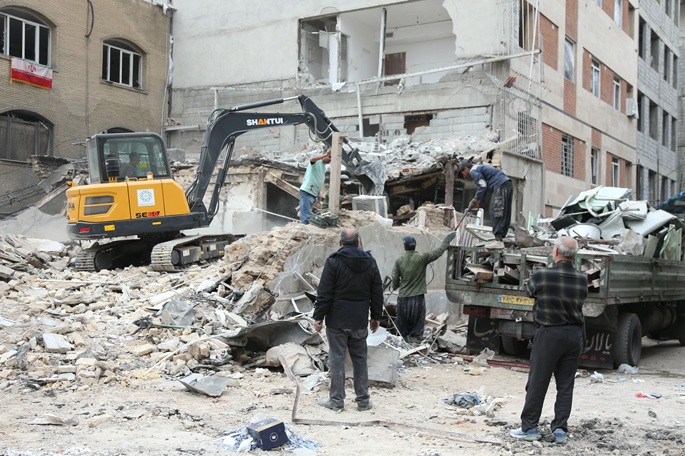
Baghaei said Iran has historically been the guardian of safe passage through the strait but blamed the US and Israel for creating the current conditions, as per Al Jazeera.
US, Iranian officials reactivate direct contact in recent days
A direct communications channel between U.S. and Iranian officials has been reactivated in recent days, according to a report from U.S. online media outlet Axios on Monday, citing a U.S. official and a source with knowledge, reported Xinhua.
The communication between U.S. envoy Steve Witkoff and Iranian Foreign Minister Seyed Abbas Araghchi is the first known direct contact between the two countries since the United States and Israel launched massive attacks on Iran on Feb. 28, said the report.
The U.S. official told Axios it was Araghchi who was attempting to engage, but said the U.S. "is not talking" to Iran.
However, Drop Site News reported Monday that Witkoff had sent messages to Araghchi and quoted Iranian officials who claimed Araghchi was ignoring the U.S. envoy's messages.
U.S. President Donald Trump said Monday that Iran wants to make a deal with the United States, but the White House is not sure who is making decisions in Iran.
"They want to make a deal. They're talking to our people ... we have people wanting to negotiate. We have no idea who they are," Trump told reporters earlier on Monday.
Drone attack sparks fire in UAE emirate of Umm al-Quwain
A drone struck a building in the emirate of Umm Al Quwain on Monday, sparking a fire but causing no casualties, the emirate's media office said.
Emergency crews were dispatched immediately and brought the blaze under control. Officials said no injuries or deaths were reported.
In a separate incident, a fire at a petroleum facility in Fujairah following a drone attack was also contained, authorities said. The blaze broke out in the Fujairah Oil Industry Zone, and no injuries were reported. Civil defense teams responded quickly and extinguished the fire.
Officials said the area has been targeted three times in recent days, including a drone attack and a similar fire last Saturday, as regional tensions escalate.
The Fujairah Oil Industry Zone is a major hub for ship refueling and a key terminal for exporting the United Arab Emirates' crude oil. Located outside the Strait of Hormuz, it plays an important role in global oil supplies.
Authorities urged residents to rely on official information and avoid spreading rumors, saying the situation is being closely monitored and that measures are in place to ensure public safety.
The UAE and other Gulf states have faced missile and drone attacks amid rising regional tensions linked to U.S. and Israeli military actions against Iran.
Separately, the UAE Defense Ministry said Sunday that six people from the UAE, Pakistan, Nepal, and Bangladesh have been killed and 142 residents of various nationalities have suffered minor to moderate injuries during the recent escalation.
Since the start of the conflict, the ministry said that air defenses have intercepted 298 ballistic missiles, 1,606 drones, and 15 cruise missiles.
200 US troops injured since start of U.S.-Israel strikes on Iran
About 200 U.S. troops have been injured since the United States and Israel launched massive attacks on Iran more than two weeks ago, a spokesperson with the U.S. Central Command said on Monday.
The injuries happened across seven Middle East countries, namely Bahrain, Iraq, Israel, Jordan, Kuwait, Saudi Arabia and the United Arab Emirates, according to U.S. Central Command spokesperson Tim Hawkins.
Among the injured, 10 service members were seriously wounded and over 180 others have been treated and returned to duty, said Hawkins.
A U.S. KC-135 refueling aircraft on Thursday went down in western Iraq, raising the known death toll of the U.S. military to 13 since the U.S.-Israeli strikes were launched on Feb. 28, the command said.
6 Iraqi paramilitary members killed in Israeli attack
Iraq's paramilitary Popular Mobilization Forces (PMF) said on Monday that six of its members were killed and four others wounded in an Israeli attack in the western province of Anbar.
According to a PMF statement, the strike targeted a checkpoint in the town of al-Qaim near the Syrian border.
The group described the location as an "official security site," stating the casualties occurred while the members were "performing their duty of protecting the land and sovereignty."
The PMF added that the incident is part of repeated attacks targeting its security forces in recent days.
Over the past few days, dozens of PMF members have been killed in attacks, for which the group blamed U.S.-Israeli operations.
The attack came amid heightened tensions following joint U.S.-Israeli strikes on Iran starting on Feb. 28, to which Iran and its regional allies responded with attacks on Israeli and U.S. interests across the Middle East.
Drone targets hotel in C. Baghdad
A booby-trapped drone struck on Monday evening a hotel in central Baghdad, with huge explosions heard, an Iraqi security source said.
An Interior Ministry source told Xinhua on condition of anonymity that the drone hit the roof of the Royal Tulip al-Rasheed Hotel in the heavily fortified Green Zone area.
The source said that the security forces has launched an investigation into the incident. No casualties or damage have been reported so far.
The Green Zone in central Baghdad houses Iraqi government buildings, the parliament, and foreign missions, including the U.S. embassy. The fortified zone has been a frequent target of rocket and mortar fire in recent years.
The incident occurs amid a surge in attacks targeting foreign missions and military bases in Iraq, following the outbreak of a wider regional conflict on Feb. 28 involving Israel and the United States against Iran.
Israeli army says destroyed IRGC Navy's HQ in E. Tehran
The Israel Defense Forces (IDF) said on Monday that its air force destroyed the headquarters of the Iranian Islamic Revolution Guard Corps' (IRGC's) Navy in eastern Tehran.
The headquarters, struck on Friday, was located within a large military compound, according to the Israeli military.
It claimed the headquarters had been used for years by senior Iranian naval commanders to advance maritime operations against Israel and other Middle Eastern countries.
"The IRGC's Navy is directly responsible for carrying out terror attacks against civilian vessels," the army said.
It added that the strike further degraded the Iranian navy's command and control capabilities.
On Feb. 28, Israel and the United States launched joint strikes on Tehran and other Iranian cities, killing then Supreme Leader Ali Khamenei, senior military commanders, and civilians. Iran responded with waves of missile and drone attacks on Israel and U.S. bases and assets across the Middle East.
US-Israeli strikes kill 226 women, 204 children in Iran
The U.S.-Israeli strikes on Iran have killed 226 women as well as 204 children, Iran's semi-official Tasnim news agency reported Monday, citing Fatemeh Mohajerani, a government spokesperson.
Mohajerani said that 17 medical workers and 206 teachers and students were killed in the strikes, according to the report.
She added that more than 61,000 civilian facilities in Iran have been damaged since the start of the conflict, including over 18,000 residential and commercial units in the Iranian capital Tehran, the report said.
The development came amid heightened tensions following joint U.S.-Israeli strikes on Iran starting on Feb. 28, to which Iran and its regional allies responded with attacks on Israeli and U.S. interests across the Middle East.
EU has "no appetite" to expand naval mission to Hormuz
The European Union (EU) has no appetite for expanding its naval mission "Aspides" to the Strait of Hormuz, Foreign Policy Chief Kaja Kallas said on Monday.
After a foreign ministers' meeting, she said the EU ministers had discussed options to better protect shipping in the region, with a focus on de-escalation and the freedom of navigation.
"We are working on the diplomatic solutions for the Strait of Hormuz," she said, adding, "This is not Europe's war."
"Aspides", meaning shield in Greek, is a defensive naval mission launched by the EU in February 2024, aiming to restore and safeguard freedom of navigation in the Red Sea and the Gulf regions.
Kallas' remarks came after U.S. President Donald Trump urged NATO allies to support efforts to secure oil transport in the strategic waterway. So far, several NATO countries in Europe, including Germany and Greece, have expressed unwillingness to support the U.S. proposal.
Reopening Strait of Hormuz "not simple task": British PM
British Prime Minister Keir Starmer said on Monday that Britain is working with allies on a "viable plan" to reopen the Strait of Hormuz, stressing that restoring freedom of navigation in the key waterway is "not a simple task."
Speaking at 10 Downing Street in London, Starmer said reopening the strait is crucial for ensuring stability in global markets and maintaining secure international shipping.
He said Britain is coordinating with its allies to develop a workable approach to restore navigation in the region following the recent escalation of tensions in the Middle East.
Starmer added that reopening the strait will not be a NATO mission. "Let me be clear, that won't be and it's never been envisioned to be a NATO mission," he said.
Starmer also provided an update on Britain's activities in the region, saying more than 92,000 British nationals have returned to Britain on commercial and government-chartered flights.
Support efforts for British citizens in Lebanon are continuing, he added.
U.S. President Donald Trump warned on Sunday that NATO would face a "very bad" future if its allies fail to take action to help Washington keep the Strait of Hormuz open, the Financial Times reported.
Daily brief about U.S.-Israeli strikes on Iran: Day 17
The U.S.-Israel-Iran conflict entered its 17th day on Monday, marked by intensified military actions, including Israeli ground operations in Lebanon and a widening scope of strikes, as regional nations grappled with escalating casualties and infrastructure attacks while renewing calls for de-escalation.
The following is a brief overview of the latest developments on the escalating crisis affecting nearly all regional countries and beyond.
The United States
U.S. President Donald Trump said he has demanded about seven countries send warships to keep the Strait of Hormuz open as Iranian strikes continued to rain down on Gulf countries. Several U.S. allies then said they have no immediate plans to send ships to unblock the waterway.
Trump later said the United States does not require help from other countries to deal with the reopening of the strait, but still criticized some long-standing U.S. allies for not being "enthusiastic" about his call.
Israel
Israeli forces launched "targeted" ground operations against Hezbollah strongholds in southern Lebanon, the Israel Defense Forces said, opening a new front in a widening regional conflict.
-- The Israeli army said it has destroyed an aircraft used by Iran's top leadership at Tehran's Mehrabad Airport, and destroyed the headquarters of the Iranian Islamic Revolution Guard Corps' Navy in eastern Tehran.
-- The Israel Police said that it found missile and interceptor fragments, some of large size, in the Old City of Jerusalem, including the Al-Aqsa Mosque compound.
Iran
Iran's Foreign Minister Seyed Abbas Araghchi said Tehran has neither sought a ceasefire nor negotiations with the United States.
-- An Iranian government spokesperson claimed that U.S.-Israeli strikes have killed 226 women, 204 children, and damaged more than 61,000 civilian units.
-- Iran's Minister of Cultural Heritage, Tourism and Handicrafts Seyed Reza Salehi-Amiri said no damage has been caused to the country's depositories for protecting historical artifacts, according to the official news agency IRNA.
Iraq
The Iraqi Civil Aviation Authority announced a further 72-hour extension of the country's airspace closure, citing ongoing regional tensions.
-- The Iraqi Shiite militia Kata'ib Hezbollah announced the death of its security official, Abu Ali al-Askari, and named a successor to the post.
-- Iraq's paramilitary Popular Mobilization Forces said six of its members were killed and four others wounded in an Israeli airstrike in the western province of Anbar.
-- AFP reported two drones attacking Majnoon oil field, a major southern Iraqi oil field, with one hitting a telecommunication tower and the other targeting the offices of a U.S. firm operating at the site, adding that there has been no damage.
-- An Iraqi security source said a booby-trapped drone struck the upper floors of the Royal Tulip al-Rasheed Hotel in central Baghdad, with no injuries or damage reported.
Oman
Oman's Sultan Haitham bin Tariq Al Said met with visiting Egyptian Foreign Minister Badr Abdelatty, with both sides stressing the importance of coordinating regional and international efforts to contain tensions and de-escalate the situation.
The United Arab Emirates
A drone struck a building in the emirate of Umm Al Quwain, sparking a fire but causing no casualties, the emirate's media office said. Separately, a fire at a petroleum facility in Fujairah following a drone attack was also contained, authorities said. Later in the day, Abu Dhabi authorities said a drone strike triggered a fire at the Shah oil field, with no injuries reported.
-- The UAE Defense Ministry said Iranian missile and drone attacks have killed seven people in the country, including two military personnel and five civilians, since Feb. 28, and injured 145 people of various nationalities, with injuries ranging from minor to severe.
Jordan
Jordan's King Abdullah II met with UAE President Sheikh Mohamed bin Zayed Al Nahyan, stressing the need to halt escalation and prioritize dialogue to address regional challenges.
-- During the meeting between Jordan's Deputy Prime Minister and Foreign Minister Ayman Safadi and Egyptian Foreign Minister Badr Abdelatty, both senior officials said that attention to tensions with Iran must not overshadow the situation in Gaza, calling for implementing the Gaza peace plan and halting Israeli measures in the West Bank.
Lebanon
At least seven people, including two children and two paramedics, were killed in a series of Israeli airstrikes across southern Lebanon, Lebanese officials said.
-- Hezbollah said its fighters repelled Israeli advances throughout the day, striking a Merkava tank north of the Khiam detention center with a guided missile and hitting an Israeli troop gathering near the Kfar Yuval settlement with rockets.
-- The death toll from Israeli attacks on Lebanon has risen to 886 since March 2, with 2,141 people injured, the Lebanese Public Health Ministry said. Official data also showed that the number of internally displaced people in Lebanon due to the conflict with Israel has surpassed 1 million.
Britain
British Prime Minister Keir Starmer said Britain is working with allies on a "viable plan" to reopen the Strait of Hormuz, stressing that restoring freedom of navigation in the key waterway is "not a simple task." He also said reopening the strait will not be a NATO mission.
France
French President Emmanuel Macron said Sunday that it is "unacceptable" for France to be targeted amid the regional escalation following joint U.S.-Israeli strikes on Iran. He said he had called on Iran to immediately end the attacks it has carried out against countries in the region, whether directly or through proxies.
Macron also reiterated that freedom of navigation in the Strait of Hormuz must be restored as soon as possible.
Houthis claim missile, drone attacks on Saudi airports, energy facilities
US accepts some of Iran's conditions, status of others remains unclear: official
Trump announces Russia-Ukraine ´energy ceasefire, ´ Zelensky says unaware of deal
139 migrants dead after boat capsizes off Djibouti coast
Landslide-dam breach likely triggered flash floods in Nepal
Arab nations, Türkiye, Israel condemn Houthi attack on Riyadh airport

Editor-in-Chief Ofiul Hasnat
Published by Finnish News Network (FNN)
Heporinne 4 B 45
01200 Vantaa, Finland.
E-mails : [email protected]