
IRGC hits 2nd US THAAD system
US to escort oil tankers through Hormuz Strait if needed: Trump
Published : 04 Mar 2026, 02:11
Updated : 04 Mar 2026, 02:20
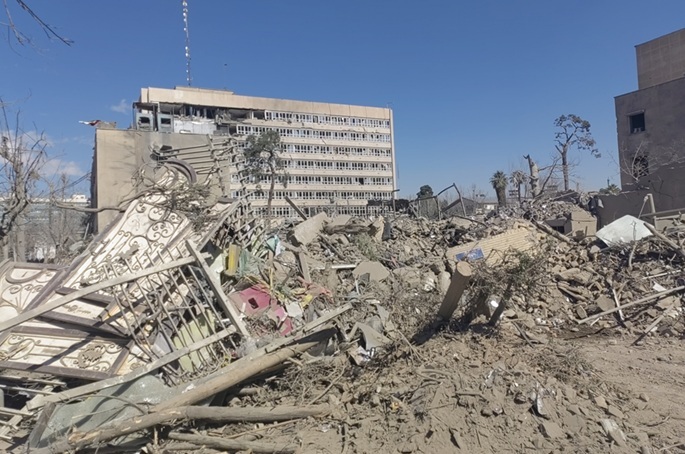
U.S. President Donald Trump said Tuesday that the U.S. Navy will begin escorting tankers through the Strait of Hormuz if necessary, reported Xinhua.
"If necessary, the United States Navy will begin escorting tankers through the Strait of Hormuz, as soon as possible," Trump said in a post on social media.
Trump said he has ordered the U.S. International Development Finance Corporation (DFC) to provide so-called political risk insurance and guarantees for maritime trade, especially energy, "traveling through the Gulf."
Nestled between the Gulf and the Gulf of Oman, the Strait of Hormuz serves as the only sea passage from the Gulf to the open ocean, cementing its status as one of the world's most strategically vital chokepoints.
Iranian media reported that Iran's Islamic Revolutionary Guard Corps had closed the Strait of Hormuz to shipping, declaring the vital oil and gas waterway unsafe due to U.S. and Israeli attacks.
Meanwhile, Iran's Islamic Revolution Guards Corps (IRGC) said on Tuesday it has struck the second U.S. Terminal High Altitude Area Defense (THAAD) anti-missile system in the West Asia region.
In a statement published on its official news outlet Sepah News, the IRGC said it hit and destroyed the system with precision-guided missiles.
According to the statement, the IRGC on Monday destroyed the radar of a U.S. THAAD system stationed in a military base in the United Arab Emirates.
It said the destruction of the anti-missile systems has provided its forces with greater freedom to successfully hit their targets.
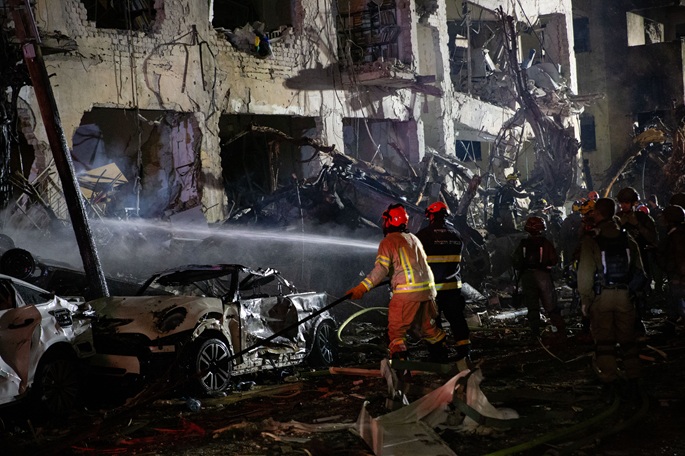
On Saturday morning, Israel and the United States launched joint attacks on Tehran and several other Iranian cities, killing the country's Supreme Leader Ali Khamenei, some of the leader's family members, top military commanders and civilians. Iran responded through several waves of missile and drone attacks targeting Israel and U.S. bases in the region.
In another statement on Tuesday, the IRGC said it has targeted positions of the "hostile counter-revolutionary" groups based in Iraq's semi-autonomous Kurdistan region, which were planning to infiltrate Iranian territory and take action against the country.
In addition, Iran's army said on Tuesday the country's air defenses brought down six Israeli Hermes drones in the provinces of Isfahan, Kermanshah, East Azarbaijan, Khuzestan and Tehran over the past 24 hours.
It added since the beginning of the war, the Iranian armed forces have shot down 35 advanced drones belonging to the "aggressive enemies."
Meanwhile, the general staff of the Iranian Armed Forces on Tuesday denied in a statement any attack by Iran against Oman's territory and ports, the official news agency IRNA
On Saturday morning, U.S.-Israeli airstrikes against Iran killed Iran's Supreme Leader Ayatollah Ali Khamenei, along with some of the leader's family members, senior military commanders and civilians. Iran responded through several waves of missile and drone attacks targeting Israel and U.S. bases across the Middle East.
reported.
US embassy in Riyadh hit by drones
Saudi Arabia's Defense Ministry said Tuesday that the U.S. Embassy in Riyadh was hit by two drones earlier in the day, amid continuation of the U.S.-Iran conflict triggered by the U.S.-Israeli attacks on the Islamic republic, reported CCTV.
The drone attack resulted in "limited" fire and material damage, the ministry said.
Previous reports said loud explosions were heard in Riyadh's diplomatic quarter.
Security in the embassy district, which houses the U.S. Embassy as well as diplomatic missions from various other countries and offices of international organizations, has been strengthened in case of possible further attack.
Drone-related fire near U.S. consulate in Dubai
Authorities in Dubai said Tuesday that they have extinguished a limited fire near the U.S. consulate caused by a drone targeting incident earlier in the day, reported Xinhua.
No injuries were reported, and the situation was brought under control swiftly, according to competent authorities.
A joint military strike by the United States and Israel on Iran, which started on Saturday morning, triggered a sharp escalation across the Middle East, setting off waves of missile exchanges, mounting casualties, and far-reaching political and security repercussions.
Following the U.S.-Israeli joint strike, Iran subsequently carried out retaliatory strikes, targeting sites in Israel and U.S. military bases in Gulf countries and Jordan.
The United Arab Emirates, which has closed its embassy in Tehran amid deteriorating security situation, said Tuesday evening on social media platform X that it has detected 186 ballistic missiles, eight cruise missiles, and 812 UAVs launched by Iran.
Hezbollah rockets target Tel Aviv
Air raid sirens sounded across Tel Aviv and northern Israel Tuesday night as Hezbollah fired three rockets from Lebanon, with explosions reported in the central region, Israeli sources said, reported Xinhua.
Residents in the Tel Aviv metropolitan area reported hearing loud blasts.
The Israeli military confirmed that "several" projectiles crossed into Israeli territory from Lebanon. The "majority of the projectiles were intercepted," the military said, while one additional projectile landed in an open area.
Emergency responders are assessing reported impact sites for casualties and damage, Magen David Adom emergency service said.
The ongoing exchange of fire comes as Israel fights on two main fronts: Lebanon and Iran. Both conflicts were triggered by Saturday's joint U.S.-Israeli military operation against Iran, leading to a rapid escalation across the Middle East.
There was no immediate comment from Hezbollah in Lebanon.
Houthis claim missile, drone attacks on Saudi airports, energy facilities
US accepts some of Iran's conditions, status of others remains unclear: official
Trump announces Russia-Ukraine ´energy ceasefire, ´ Zelensky says unaware of deal
139 migrants dead after boat capsizes off Djibouti coast
Landslide-dam breach likely triggered flash floods in Nepal
Arab nations, Türkiye, Israel condemn Houthi attack on Riyadh airport

Editor-in-Chief Ofiul Hasnat
Published by Finnish News Network (FNN)
Heporinne 4 B 45
01200 Vantaa, Finland.
E-mails : [email protected]