
80 killed in Pakistan's cross-border airstrikes on Afghanistan
Published : 23 Feb 2026, 02:34
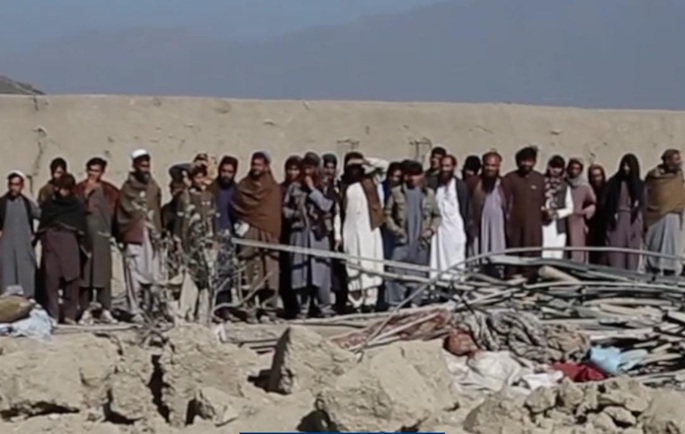
More than 80 people were killed in Pakistan's airstrikes at the seven locations in Afghanistan's Nangarhar, Paktika and Khost provinces, Geo News reported, citing Islamabad's security sources, said ANI.
Pakistan has conducted multiple strikes in the region in response to recent suicide attacks for which they have blamed Afghanistan.
The targeted locations reportedly included "New Centre No. 1 and New Centre No. 2 in Nangarhar, Khwariji Maulvi Abbas Centre in Khost, Khwariji Islam Centre and Khwariji Ibrahim Centre in Nangarhar, and Khwariji Mullah Rahbar and Khwariji Mukhlis Yar in Paktika."
Earlier, Pakistan's State Minister for Interior, Talal Chaudhry, said nearly 70 militants had been "neutralised" in the cross-border operation.
The government stated that the strikes targeted camps belonging to Fitna al-Khawarij, a term used by Pakistani authorities for the banned Tehreek-e-Taliban Pakistan, its affiliates and Islamic State - Khorasan Province (Daesh-Khorasan).
Speaking to Geo News programme "Geo Pakistan," Chaudhry alleged that Afghanistan had become a source of cross-border militancy. He said Pakistan was taking necessary measures to safeguard its citizens and highlighted that around 70,000 intelligence-based operations had been conducted domestically, resulting in multiple arrests.
Pakistan's Ministry of Information and Broadcasting described the strikes as "precise and accurate," calling them a retaliatory response to recent suicide bombings in Islamabad, Bajaur and Bannu. Islamabad claimed that the attacks were orchestrated by handlers based in Afghanistan and linked to the TTP and Daesh elements.
The strikes reportedly targeted hideouts in the Barmal area of Paktika province, Khogyani district of Nangarhar province, as well as Ghani Khel, Behsud and Argoon areas.
Chaudhry also referred to the 2020 Doha Agreement, stating that the Afghan Taliban had pledged not to allow Afghan soil to be used for terrorism. He alleged that Kabul's interim administration had failed to curb militant activity.
He added that Pakistan had made diplomatic and military-level efforts to address its security concerns and urged political parties to unite against terrorism.
The latest strikes follow a surge in violence in Pakistan's Khyber Pakhtunkhwa and Balochistan provinces. Tensions between Islamabad and Kabul have escalated in recent years, particularly since the Taliban returned to power in Afghanistan in 2021.
In October 2025, border clashes between Pakistani forces and Afghan Taliban fighters reportedly resulted in significant casualties on both sides. Despite multiple rounds of talks, both countries have struggled to achieve lasting de-escalation.
Meanwhile, Kabul has previously rejected Islamabad's allegations that militant groups operate from Afghan territory, maintaining that Pakistan's security challenges are an internal matter.
The situation along the Pakistan-Afghanistan border remains tense amid continued accusations and counter-accusations between the two neighbours.
Houthis claim missile, drone attacks on Saudi airports, energy facilities
US accepts some of Iran's conditions, status of others remains unclear: official
Trump announces Russia-Ukraine ´energy ceasefire, ´ Zelensky says unaware of deal
139 migrants dead after boat capsizes off Djibouti coast
Landslide-dam breach likely triggered flash floods in Nepal
Arab nations, Türkiye, Israel condemn Houthi attack on Riyadh airport

Editor-in-Chief Ofiul Hasnat
Published by Finnish News Network (FNN)
Heporinne 4 B 45
01200 Vantaa, Finland.
E-mails : [email protected]