
PM Takaichi's LDP secures landslide victory in Japan general polls
Published : 08 Feb 2026, 23:38
Updated : 08 Feb 2026, 23:49
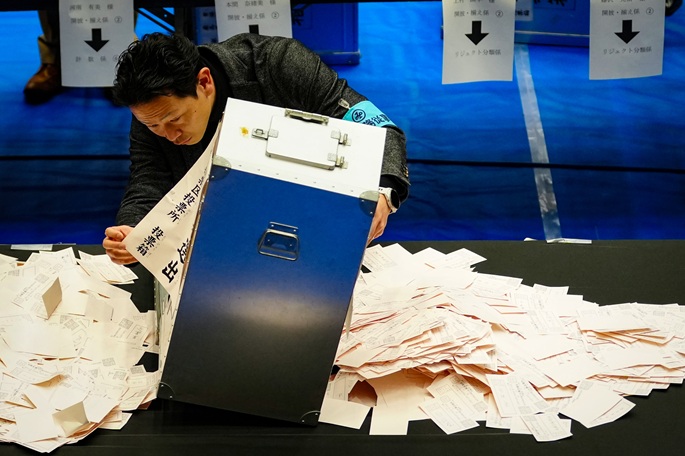
Japan's ruling Liberal Democratic Party (LDP) won a two-thirds majority in the House of Representatives in Sunday's general election, handing Prime Minister Sanae Takaichi a decisive mandate to advance her conservative policy agenda, reported ANI, quoting Kyodo News.
Crossing the two-thirds threshold of 310 seats in the 465-member lower house allows the LDP to pursue constitutional revision and pass legislation even if it is rejected by the upper House of Councillors, where the ruling coalition remains in a minority.
The LDP is the first party in postwar Japan to achieve such a margin, according to Kyodo News.
The landslide result marks a sharp increase from the party's pre-election strength of 198 seats and was widely attributed to Takaichi's personal popularity.
The LDP and its coalition partner, the Japan Innovation Party (JIP), will together command a dominant presence in the chamber, reinforcing Takaichi's position after she took office in October.
"We bear an extremely heavy responsibility to focus on steadily delivering on the campaign pledges we have made," Takaichi said during a television program after the victory was reported, Kyodo News said.
She also signalled she would largely maintain the current Cabinet lineup, which has enjoyed relatively strong public approval since its launch less than four months ago.
The election delivered a major setback to the newly formed Centrist Reform Alliance, whose seats were halved from 167 before the vote. Its co-leaders, Yoshihiko Noda and Tetsuo Saito, hinted at possible resignations following the defeat.
Amid prolonged inflation and a deteriorating international security environment, Takaichi has pledged to pursue what she calls a "responsible yet aggressive" fiscal policy while strengthening Japan's defence capabilities.
She also urged the JIP, known as Nippon Ishin, to share responsibility within the coalition, even as the party opted not to take Cabinet posts. The JIP added one seat to reach 35, though it struggled to match its senior partner's momentum.
"It was an election in which we felt pressure from the LDP," JIP leader Hirofumi Yoshimura told a news conference in Osaka.
Among smaller parties, the populist Sanseito, campaigning on a "Japanese First" platform, won 13 seats, up from two, while Team Mirai, which promotes digital technology to boost political participation, entered the lower house for the first time with nine seats.
Nearly 1,300 candidates contested the election, with 289 seats decided in single-member districts and 176 through proportional representation across 11 regional blocs. Early voting surged to a record 27.02 million ballots, about six million more than in the 2024 election.
Voter turnout was estimated at 56.23 per cent, up around two percentage points from the previous race, according to Kyodo's early figures. Japan held a February general election for the first time in 36 years, a decision by Takaichi that drew criticism as heavy snowfall in many areas hampered campaigning and voting.
With households under pressure from rising living costs, major parties campaigned on cutting tax burdens. The ruling bloc also sought support for boosting defense spending amid a worsening security environment. Takaichi said her government would accelerate discussions on a two-year suspension of the 8 per cent consumption tax on food, one of the LDP's key campaign pledges.
Houthis claim missile, drone attacks on Saudi airports, energy facilities
US accepts some of Iran's conditions, status of others remains unclear: official
Trump announces Russia-Ukraine ´energy ceasefire, ´ Zelensky says unaware of deal
139 migrants dead after boat capsizes off Djibouti coast
Landslide-dam breach likely triggered flash floods in Nepal
Arab nations, Türkiye, Israel condemn Houthi attack on Riyadh airport

Editor-in-Chief Ofiul Hasnat
Published by Finnish News Network (FNN)
Heporinne 4 B 45
01200 Vantaa, Finland.
E-mails : [email protected]