
Budapest explores cross-border concept for 2036 Olympic bid
Published : 20 Nov 2026, 11:38
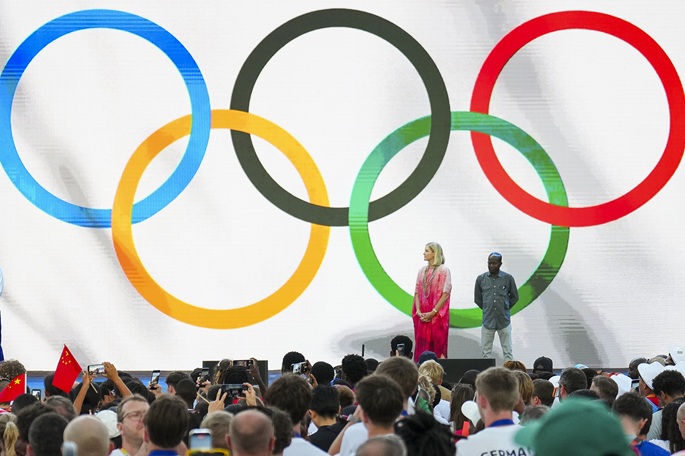
Budapest is exploring a regional approach to hosting the 2036 Olympic Games that would use existing venues in neighboring Austria and Slovakia, city and sports officials said on Thursday, reported Xinhua.
Speaking at Sport Forum Hungary, organizers outlined a concept that would keep Budapest as the main host while tapping facilities in Vienna and Bratislava to reduce the need for new construction and align Games preparations with broader regional development.
Budapest Mayor Gergely Karacsony said he had raised the idea with his counterparts in both cities and found them receptive. The proposal is at an exploratory stage, he and others cautioned, with transport links, funding and public consultation still to be resolved.
Hungary is one of seven countries the International Olympic Committee has confirmed as interested in the 2036 Games, alongside Germany, India, Qatar, South Korea, South Africa and Türkiye. The host is expected to be chosen in mid-2029.
Hungarian Olympic Committee president Zsolt Gyulay said the plan would also incorporate Hungarian cities such as Szeged and Debrecen. Sports could be assigned to existing venues across the region, with several smaller Olympic villages replacing a single, large athletes' village.
"Our concept is a Central European concept," Gyulay said. He added that the committee and Budapest's municipal government have been developing a venue masterplan to present to the IOC and hope to advance to the next stage of the selection process in March 2027.
The discussions were part of the fifth Sport Forum Hungary, held November 18 to 19 at Groupama Arena, which drew sports organizations, clubs, businesses and investors to sessions on sports financing, technology, athlete development and grassroots participation.
Across two Olympic panels, speakers stressed that the Games should fit the host city's long-term development rather than forcing the city to adapt to the Olympics.
Karacsony cited suburban rail upgrades, better airport access, student housing and riverside public spaces as projects Budapest needs regardless of whether it hosts the Games, and suggested an Olympic timetable could help coordinate and accelerate those investments.
Planners say the Danube would be central to the vision, linking venues and new waterfront projects designed to be greener and more accessible. Karacsony said the Paralympics could also fast-track improvements to accessible public transport and public spaces, while emphasizing the need for broad public consultation.
Peter Oszko, a former Hungarian finance minister and president and CEO of O3 Partners, said that cooperation and the use of existing facilities would make staging the Games more cost-efficient and give businesses clearer incentives to invest. He said preparations could also provide a testing ground for Hungarian sports-technology firms and help them scale across a larger regional market.
Radovan Jelasity, president and CEO of Erste Bank Hungary, highlighted the potential benefits of faster transport links between Budapest, Vienna and Bratislava for hotels, restaurants, property and other services.
He urged consideration of what high-speed rail and shorter journey times have delivered in China, Japan and France.
Speakers agreed that funding and sustainable post-Games use of facilities will be decisive. Attila Szalay-Berzeviczy, chairman of the BOM Foundation for Hungarian Sport, called for a mix of EU development money, private investment and strict budget controls to ensure the project fits Hungary's fiscal capacity. He described the Games as the "icing on the cake" of a broader development agenda.
On tourism, Oliver Csendes, head of the Hungarian Tourism Agency, warned that major events can both price out some visitors and attract higher-spending travelers. The long-term opportunity, he said, is to convert global exposure into sustained interest in Budapest and the surrounding region. Any additional hotel capacity must be supported by demand after the Games, with conference and business tourism among the options to maintain use.
For forum participants, the ultimate measure of success will be legacy: durable improvements to transport, sports facilities and public spaces that serve local communities long after the athletes and spectators have gone.
FIFA announces 3 candidatures for presidential election
FIFA rejects Bilbao-San Sebastian joint-host proposal for 2030 WC
Haaland's late penalty sends Norway into Nations League quarterfinals
Estonia beat Bulgaria but face Nations League promotion play-offs
Ronaldinho returns to competitive football at 46
England edge Spain to end 43-match unbeaten run in Nations League

Editor-in-Chief Ofiul Hasnat
Published by Finnish News Network (FNN)
Heporinne 4 B 45
01200 Vantaa, Finland.
E-mails : [email protected]