
Small Welsh Haulage Firms Have Been Fitting GPS Tracking Faster Than the Rest of the UK
Published : 29 Jun 2026, 10:42
Updated : 29 Jun 2026, 11:42
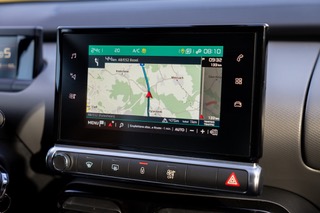
A dispatcher at a refrigerated goods firm running nine vehicles out of a depot near Llandrindod Wells told me last autumn that she used to spend the first two hours of every Monday morning on the phone trying to work out where her lorries were. That was in 2024. She checks a screen now, and Monday mornings are unremarkable. What changed was not the operation itself, which is still nine vehicles on the same upland routes through Powys and into Shropshire, but the insurance. Her insurer started quoting her one rate without telematics and a very different rate with it. The gap came to around twelve hundred pounds per vehicle per year. For a nine vehicle fleet, she told me, that arithmetic was not something you could sit on.
That calculation has been running across a surprising number of small Welsh haulage firms over the past two years. The pattern I have seen, and I have been asking about it since early 2025, is that operators running fewer than 20 vehicles in Wales have been fitting tracking at a rate that outpaces similarly sized firms in the English Midlands and northwest. Base premiums in those English regions tend to be lower, and the pressure to fit telematics correspondingly less acute. On the Welsh side of the border, the geometry of the problem is different. Most of the country's road freight moves through a handful of arterial routes. Smaller operators run loads across terrain where mobile signal drops out for stretches and where a lorry sitting stationary at the wrong stopping point for forty minutes could mean a breakdown, a theft, or a driver making an unauthorised stop. Without tracking data, the fleet manager's decision gets made slowly and blindly. The firms that fitted systems early stopped having to make it.
Freight crime across the UK reached roughly £111 million in goods stolen from lorries during 2024, up from £68 million the year before, according to the national haulage trade body. The average financial loss per incident when a lorry is targeted runs above £20000. A freight crime bill backed by the All Party Parliamentary Group for Freight and Logistics was tabled in Parliament in early 2026, aimed at the organised criminal networks working in this sector, and the political attention on the issue is higher than it has been in years. For a firm running eight or ten vehicles, one significant theft event can be the incident that turns the next insurance renewal into a difficult conversation. Welsh operators I have spoken with are aware that their routes sometimes take drivers through isolated overnight stops with limited camera coverage, and that awareness has made them more receptive to the argument for tracking than fleet managers in better surveilled urban corridors tend to be. Curtain slashing at motorway services accounts for a large share of UK freight crime, but the quieter rural incidents at loading bays and unmanned agricultural depot stops produce a liability profile that smaller rural operators cannot easily absorb.
A haulage coordinator running thirteen curtainsiders out of a depot in the Conwy Valley told me his firm's original reason for fitting tracking was getting the premium down. It worked, though he did not say by how much. What he had not expected was how quickly the operational data changed the way he dispatched. He started seeing which runs were taking longer than the route should justify, and he found two cases over about four months where fuel consumption and journey time did not match. Neither turned into a formal matter, but he changed how he rostered those routes afterwards. A GPS tracking expert at gpswox.com noted that this pattern is common among smaller operators who adopt tracking under financial pressure rather than as a planned investment. The insurance case gets them through the door, and the operational data gives the firm a reason to stay.
The grant environment in Wales has played a role, though it is harder to measure precisely. Welsh Government transport schemes have been channelling investment toward decarbonisation and efficiency in the freight sector, and some smaller operators accessed subsidy routes that covered part of the hardware installation cost. That was enough to move firms that had been sitting undecided. The segment that responded fastest was owner operators running four to twelve vehicles on family owned regional routes or owner driver contracts. I spoke with three operators in Gwynedd and Carmarthenshire who told me that either a partial cost offset through a Welsh business development scheme or a specific broker recommendation bundled with their insurance renewal was the thing that moved them from thinking about tracking to buying it.
The wider UK figures provide some context. Around 19% of businesses across the country were using telematics in their fleet operations as of a 2025 industry survey, with a further 44% expecting to adopt by 2028. Those numbers cover all fleet sizes and sectors, so the penetration rate among small HGV operators specifically is harder to isolate. The small fleets segment is growing faster than the market overall, at roughly 11% annually through to 2032, and the main drivers of that growth are cost pressure and insurance requirements more than voluntary efficiency investment. That pattern shows up in Wales in sharper form than elsewhere, because the combination of rural exposure, difficult geography, and a historically high proportion of owner operators means the factors pushing small firms toward tracking were stacking up faster than in most English regions.
There is a practical side to this that the headline adoption numbers do not fully capture. Several operators I spoke with said that once tracking went in, the conversation with their drivers changed more than they had anticipated. The drivers on rural routes, some of them owner drivers subcontracting to a larger Welsh firm, began using the data themselves to document conditions and delays that had historically been difficult to verify and sometimes contentious when it came to contractor pay. The dispatcher near Llandrindod Wells told me two of her drivers actively asked her to check their timestamps on a particular Powys route after a temporary weight restriction forced a longer detour. She could verify it immediately. Before the tracking, that would have been a phone call, a conversation, and ultimately someone's word against the invoice.
Adoption rates for a segment this specific are difficult to pin down with any real accuracy, and I am cautious about the surveys that circulate in this sector, which tend to oversample larger operators and miss the firms running fewer than ten vehicles without a logistics manager filling in questionnaires. What I can say from the conversations I have had over the past 18 months is that the number of small Welsh hauliers operating without any tracking system at all has measurably shrunk, and that the firms still holding out are mostly the ones whose insurance renewal has not yet gone the way it eventually will.

Editor-in-Chief Ofiul Hasnat
Published by Finnish News Network (FNN)
Heporinne 4 B 45
01200 Vantaa, Finland.
E-mails : [email protected]