
Article
Morocco’s Sports Diplomacy: How AFCON 2025 Became a Soft Power Triumph
Published : 19 Jan 2026, 19:57
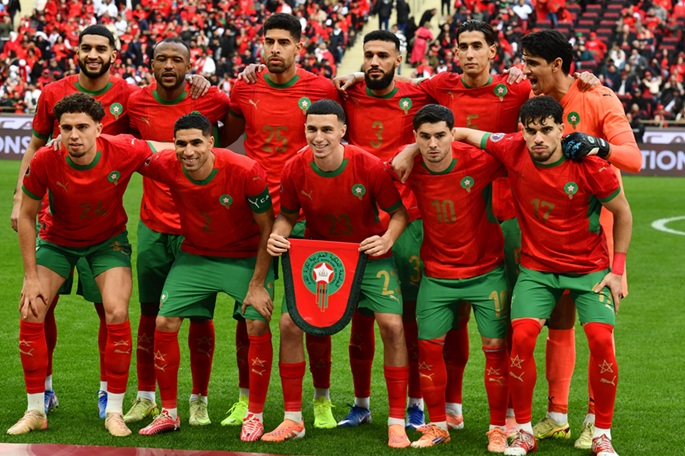
Morocco may not have lifted the Africa Cup of Nations trophy in 2025, but it undeniably won something larger: continental confidence and international admiration. From infrastructure to logistics, hospitality to security coordination, Morocco delivered a tournament that set a new continental standard.
In doing so, the Kingdom confirmed what has become increasingly clear over the past decade: sport, particularly football, is no longer simply entertainment or competition. It has become a strategic instrument of Moroccan diplomacy and international influence, strengthening national prestige and enhancing Morocco’s standing across Africa and beyond.
From Vision to Victory: The Royal Foundations of Morocco’s Sporting Power
Under the leadership of His Majesty King Mohammed VI, sport has become a pillar of Morocco’s national strategy, guided by a clear ambition: transforming the Kingdom into a global sporting power and making athletic performance a driver of development and international credibility.
This vision rests on the large-scale modernization of infrastructure, the professionalization of sports governance, and investment in human capital, particularly through elite training structures such as the Mohammed VI Football Academy and the Maâmoura Complex, designed to meet the highest international standards.
This strategy has produced tangible outcomes. Morocco has built a pipeline of elite talent capable of competing at the highest levels, with academy-trained players such as Youssef En-Nesyri, Azzedine Ounahi, and Nayef Aguerd, forming the backbone of the national team. That deepened talent pool has led to major breakthroughs, most notably the Atlas Lions’ historic run at the 2022 FIFA World Cup, confirming the strength of Morocco’s long-term development model and elevating national expectations toward excellence.
A Year of Success: Morocco’s Sporting Momentum in 2025
AFCON 2025 crowned a wider cycle of Moroccan success across football, futsal, and youth competitions, reflecting steady progress driven by a system where high performance is now the standard. In 2025, Morocco were crowned CHAN champions, won the U-17 AFCON, and achieved a historic breakthrough by becoming FIFA U-20 World Cup champions in Chile. The year ended with another major title as the Atlas Lions lifted the FIFA Arab Cup 2025.
Beyond trophies, Morocco also strengthened its profile through strong performances across categories: hosting the FIFA U-17 Women’s World Cup in Rabat and Salé (host until 2029), reaching the U-17 World Cup quarter-finals in Qatar, and qualifying for the knockouts at the inaugural FIFA Futsal Women’s World Cup.
With Achraf Hakimi shining on the global stage, the senior team also qualified flawlessly for the 2026 FIFA World Cup, winning all eight qualifiers and conceding only two goals.
Infrastructure as a National Investment: Toward the 2030 FIFA World Cup
Morocco’s successful hosting of AFCON 2025 reflected years of sustained infrastructure investment anchored in a long-term national roadmap. This momentum continues with the Kingdom set to host the Women’s Africa Cup of Nations (WAFCON) 2026 (17 March–3 April 2026), and to co-host the 2030 FIFA World Cup.
To support this strategic trajectory, the Kingdom allocated more than MAD 9.5 billion to upgrade and build stadiums across the country, enabling Morocco to deliver the tournament at high organizational standards. The reopening of the Prince Moulay Abdellah Stadium in Rabat, with a capacity of 68,700 seats, illustrates this approach through modern facilities meeting international requirements.
Similar modernization programs were carried out in Benslimane, Marrakech, Agadir, and Fez, reinforcing Morocco’s position as a credible host for major events. Beyond sport, these investments generate lasting returns, including job creation, tourism growth, and regional economic stimulation, demonstrating that sports infrastructure is fully integrated into Morocco’s national development model.
AFCON 2025: A Continental Showcase of Capacity
Hosting AFCON 2025 was a diplomatic milestone as much as a sporting one. Morocco showcased its capability, leadership, and organizational excellence through the tournament. Transport connectivity, accommodation capacity, security planning, and overall coordination highlighted the Kingdom’s readiness to handle complex international events.
Beyond infrastructure, Morocco’s signature strength was its ability to combine efficiency with hospitality. The welcoming of African teams and supporters strengthened informal, people-to-people ties, an often underestimated component of soft power. Morocco’s performance on the field amplified this impact: even without lifting the trophy, the Atlas Lions embodied discipline and professionalism, reinforcing Morocco’s reputation not only as a capable host but also as a serious contender.
Africa at the Heart of Morocco’s Sports Diplomacy
As part of its South-South cooperation strategy, Morocco has made sports diplomacy a strategic and practical extension of its African engagement, supported by cooperation mechanisms that go far beyond symbolic gestures. Over recent years, the Kingdom, through the FRMF and national training structures, has multiplied technical partnerships with African federations, including exchange programs for coaches, referees, and medical staff.
Morocco has also hosted CAF-certified seminars and capacity-building workshops, offering African technical personnel training in performance analysis, sports medicine, fitness preparation, and scouting.
The Mohammed VI Football Academy model, combining elite training with education, has inspired cooperation with African partners seeking to modernize youth systems. Moroccan clubs have welcomed young African talents for training camps and competitive exposure, while Morocco’s expertise in sports management and infrastructure delivery increasingly serves as a reference point for African partners preparing facilities for continental events.
AFCON 2025 elevated this African dimension even further. Morocco hosted not simply a tournament, but a continental meeting point bringing together delegations, federations, sponsors, media, and supporters. Informal diplomacy flourished through behind-the-scenes coordination with CAF and visiting federations, side meetings between sports leaders, and cultural interaction across Moroccan cities.
Ultimately, Morocco reinforced trust not through speeches, but through performance demonstrating to African partners that it can welcome the continent with professionalism, warmth, and efficiency, and positioning sport as a credible channel of long-term influence.
References:
fifa.com/en/articles/a-year-to-remember-for-morocco
https://www.independent.co.uk/sport/football/morocco-afcon-global-football-powerhouse-b2886971.html
From Evening News to Live Sport: How Finland Chooses What to Watch
Finland Imported Over 41000 Used Cars Last Year, and the Odometer History Stopped at the Border for Most of Them
Only 16% of Finnish Domains Enforce Strict DMARC Policies
How Consumers Are Moving Beyond Fast Accessories
Morocco, Colombia ties
How to Plan the Perfect All-Inclusive Holiday in Tenerife

Editor-in-Chief Ofiul Hasnat
Published by Finnish News Network (FNN)
Heporinne 4 B 45
01200 Vantaa, Finland.
E-mails : [email protected]