
Poorest loses monthly €80
4-party govt´s measures weaken livelihoods of low-income people: THL
Published : 11 Nov 2026, 22:45
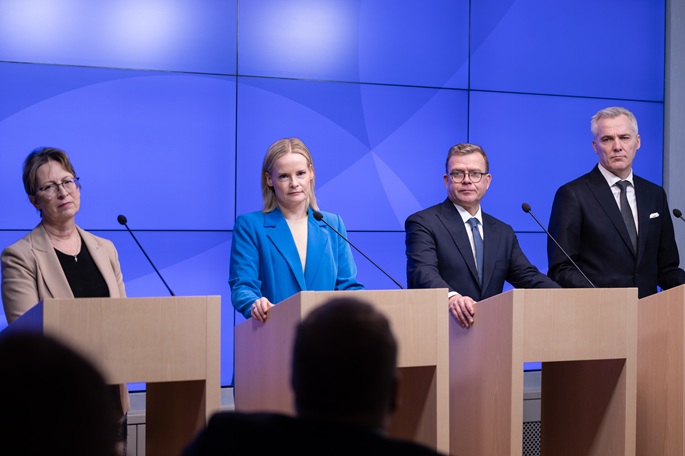
The changes to social security and taxation during the regime of the present four-party alliance government led by Kansallinen Kokoomus (National Coalition Party-NCP) weakened the livelihoods of those on the lowest incomes, according to a study commissioned by the Finnish Institute for Health and Welfare (THL).
The changes will reduce the incomes of households in the lowest income decile by eight per cent, or by an average of approximately EUR 80 per month per adult, said THL in a press release on Wednesday referring to the study.
At the same time, the number of people on low incomes will increase by about 102,000, including around 22,000 children.
The study examines the effects of social security and tax changes over the entire government term.
The estimated impact of the legislative changes on low income, however, is smaller than previously estimated.
THL’s previous estimate covered the changes in 2024–2025 and indicated that the number of people on low incomes would increase by 110,000, including 27,000 children.
“Changes to social security and taxation during the government term have different impacts on different income groups. In the highest income decile, net income is estimated to increase by around one per cent, or approximately EUR 50 per month per adult," said Jussi Tervola, Chief Researcher of THL.
Overall, the legislative changes are not expected to affect the total income of households.
The income losses are mainly due to cuts made to housing allowance and unemployment security in 2024–2025 while the increase in income, in turn, is mainly due to tax cuts that particularly benefit people in employment.
In relative terms, the income losses caused by the legislative changes are greatest among students.
In euro terms, however, the largest income losses affect unemployed people who work part-time while receiving unemployment benefits, or who receive an unemployment benefit paid by Kela.
The legislative changes also clearly reduce the incomes of people who have received social assistance or rehabilitation allowance from Kela.
“Contrary to what is often thought, social assistance compensates for cuts to other benefits only partially. It is often received for only part of the year, and in the other months, cuts to housing allowance and unemployment security, for example, are fully reflected in household incomes”, Tervola said.
In addition to increasing the number of people on low incomes, the legislative changes are estimated to increase the number of people whose incomes are insufficient for a reasonable minimum level of consumption.
This group is estimated to increase by 87,000 people, including around 20,000 children.
In addition, the incomes of people on low incomes are estimated to fall, on average, approximately 14 per cent further below the low-income threshold than previously.
“The low-income rate alone does not provide a comprehensive picture of poverty. It is therefore important to examine other indicators as well, such as the depth of poverty and the number of people whose incomes are insufficient to meet the reference budget for reasonable minimum consumption,” said Joonas Ollonqvist, Senior Researcher of THL.
The calculation compares the legislation that will be in force in 2027 with a situation in which the legislative changes made during the government term had not been implemented and benefits and tax parameters had been adjusted in the usual way in line with indices.
Finland lists 15 countries as safe to make asylum procedures efficient
Razmyar mulls legal action against social media post of Tynkkynen
Masseur suspected of 49 sexual offences in Helsinki in 7 years
Finland´s 1st emergency warning test causes malfunctions on Doro phone
Finland extends validity of deportation law by 2 years
Kokoomus popularity drops to record low as SDP tops with big margin

Editor-in-Chief Ofiul Hasnat
Published by Finnish News Network (FNN)
Heporinne 4 B 45
01200 Vantaa, Finland.
E-mails : [email protected]