
Govt approves climate plans, leaves key forest sink issue unresolved
Published : 05 Dec 2025, 00:12
Updated : 05 Dec 2025, 00:17
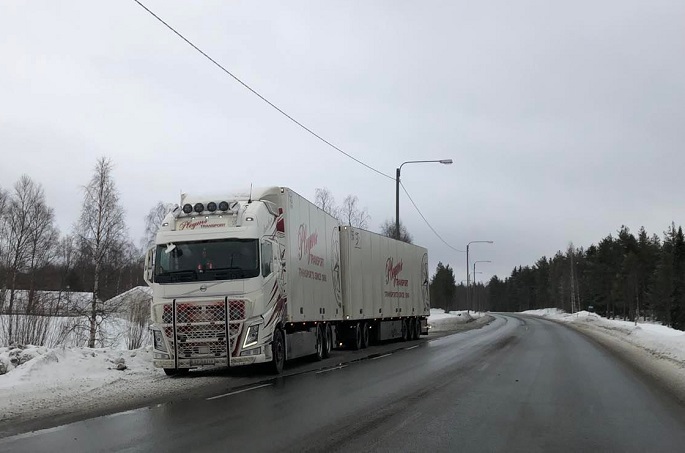
The four-party alliance government led by conservative Kansallinen Kokoomus (National Coalition Party-NCP) on Thursday approved two key climate policy plans aimed at meeting national and European Union (EU) climate targets, but left unresolved how to reverse the decline in the country's forest carbon sinks, a central element in its 2035 carbon neutrality goal, reported Xinhua.
At a plenary session, the cabinet adopted a medium-term climate plan and an energy and climate strategy. The medium-term plan focuses on transport measures, including a car scrapping incentive program to bring more low-emission and electric vehicles onto the roads, the reinstatement of subsidies for converting petrol cars to run on ethanol or gas, and support for low-income households to buy electric cars.
The energy and climate strategy includes investment incentives for clean energy and low-carbon industry, such as a 50-million-euro tax credit to promote electricity-based industrial projects and 90 million euros in support for carbon capture solutions. It also seeks to facilitate the deployment of wind and solar power through changes in land-use planning.
Sari Multala, Minister of Climate and the Environment, told a press conference that, with the plans, Finland remains on course to meet the EU Climate Law's Effort Sharing Regulation target for the effort-sharing sector, which requires emissions to be halved by 2030 compared with 2005.
She also noted that the government continues to adhere to the 2035 carbon neutrality goal.
Multala said a lack of sufficiently reliable data has delayed new decisions on forest sinks, and the government has launched a project to refine the methodology for calculating them.
Updated calculations by the Natural Resources Institute Finland (Luke) show that Finland's forests and land use have shifted from being a net carbon sink to a net source of emissions in recent years.
This trend undermines both EU and national climate targets, which rely heavily on forest sinks to offset remaining emissions.
So far, the government has decided to support forest fertilization and afforestation and to encourage growing denser forests and harvesting trees at an older age.
These measures are estimated to increase the sink by a few million tonnes of carbon dioxide, while the gap to be closed is assessed at up to tens of millions of tonnes, according to Luke.
Earlier this autumn, a report by VTT Technical Research Centre of Finland estimated that, under current policies, Finland would reach carbon neutrality only after 2050, some 15 years later than the government's target year.
Jyri Seppälä, Chair of the Finnish Climate Panel, said the measures in the two plans are not sufficient and fail to offer a credible path to EU requirements or Finland's own climate target. Seppala told the Finnish News Agency STT that, beyond the measures now on the table, forest use would need to be substantially curtailed. According to him, carbon sinks have been weakened by high logging levels, slower forest growth and increased soil emissions.
Man held while crossing Finnish border into Russia
8 face arson charges for fire at Helsinki building hosting bicycle shop
2 drown in Joensuu, Iisalmi, 2 found dead in Rauma, Pargas
Man dies in police custody in Jyväskylä
Human trafficking network organises illegal entry of dozens of migrants into Finland
Finnish Border Guard supports Estonian border security

Editor-in-Chief Ofiul Hasnat
Published by Finnish News Network (FNN)
Heporinne 4 B 45
01200 Vantaa, Finland.
E-mails : [email protected]