
Metals, minerals of smartphones, TV recycling found difficult
Published : 03 Nov 2021, 22:21
Updated : 03 Nov 2021, 22:25
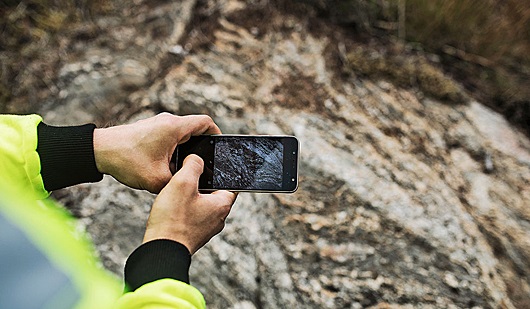
The recycling of the metals and minerals of smartphones and television is difficult, said the Geological Survey of Finland (GTK), VTT Technical Research Centre of Finland Ltd and the Finnish Environment Institute (SYKE) in a joint press release, quoting a study.
Meanwhile, the demand for critical raw materials used in smartphones and televisions, metals and minerals, is constantly increasing.
The study headed by Geological Survey of Finland (GTK) identified the primary solutions including sustainability and repairability at the design stage, increasing recycling and self-sufficiency in components and metals, improving the responsibility of mining, and influencing the unsustainable rate of consumption.
The research project analysed the value chain of the metals and minerals used in smartphones and televisions from mining to recycling. The project was a collaboration of GTK, VTT Technical Research Centre of Finland Ltd, the Finnish Environment Institute (SYKE), and the project’s financier, the Finnish Innovation Fund Sitra.
The research indicated that the circular economy and sustainability must be included throughout the value chain from the mining of metals and minerals to the material development, device design, marketing, use, and recycling.
The European Commission estimates that up to 80 per cent of a product’s lifetime environmental impacts are locked in at the product design and material design stages. For example, the design dictates which raw materials, other materials, components, chemicals, and manufacturing methods will be used, as well as how repairable and recyclable the product and its materials are respectively.
“A single device requires dozens of metals and minerals, but many in tiny quantities. This is a problem for their recycling and reuse,” said GTK Senior Specialist Toni Eerola, who is one of the study’s authors.
“Recyclability must be considered at the design stage by choosing metal alloys that can be recycled to recover the metals. Naturally, it is also important that the device itself has a long useful life and that it is repairable,” said Eerola.
The number of electronic devices continues to grow. According to the study, the average European household contains 72 electrical or electronic devices, 11 of which are broken or unused. Even though devices are recycled, precious materials are difficult to recover.
“Devices must be designed for repairability and easy recycling of the materials once the device reaches the end of its life. This is currently not the case, even though a growing number of devices are being recycled,” said Lotta Toivonen, Circular Economy Specialist at Sitra.
Recycling is not enough to produce the necessary metals and minerals for new devices, which means responsible mining is required to secure raw materials.
The EU currently depends on imports for both raw materials and components. This has already been a problem in different industries. For this reason, the availability of raw materials, the responsibility and acceptability of mining, and the manufacturing of components should be considered together when decisions are made.
Digitalisation competes for many of the same raw materials as the green transition in energy: these materials are also used in electric vehicle batteries, solar cells, and wind turbines.
On the other hand, the expansion of digitalisation requires more energy, which increases the demand for renewable energy and raw materials. This demand largely concerns the critical raw materials listed by the EU.
Both digitalisation and climate change mitigation are extremely important for society. This steepening spiral can be broken by reducing consumption, supporting repair services, improving the collection and recycling system, and considering a device’s environmental impacts at the design stage. Various steering measures can also help, including legislation and incentives.
Man to face charges for hoisting Swastika flag in yard
Belarus to close embassy in Finland
15 to face trial for producing, selling cannabis in Helsinki
Russian reconnaissance aircraft suspected of violating Finnish airspace
Finland supports aviation safety in Indonesia
Misuse of funds, info most common suspected corruption cases in Finland: study

Editor-in-Chief Ofiul Hasnat
Published by Finnish News Network (FNN)
Heporinne 4 B 45
01200 Vantaa, Finland.
E-mails : [email protected]