
EU needs better waste management of medicine
Published : 06 Sep 2020, 00:36
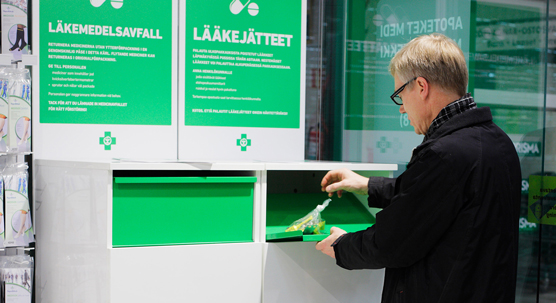
The national-level practices of take-back and disposal of unused medicines and other pharmaceutical waste have to be improved for a better understanding of the overall API in the Baltic Sea region, reports an evaluation by the CWPharma, a project funded by the EU.
The project investigated the management of pharmaceutical waste fro households, hospitals and other health-care institutions, the pharmaceutical industry, veterinary practices, and farms, said the Finnish Environment Institute (SYKE) in a press release.
“We have evaluated the current practices in Denmark, Estonia, Finland, Germany, Latvia, Lithuania, Poland, Russia, and Sweden with the aim of improving national practices and thus reducing pharmaceuticals-related emissions to the Baltic Sea,” said Senior Expert Jukka Mehtonen from SYKE, the leading partner in the project.
The return of unused medicines to collection points varies greatly between the Baltic Sea countries. The proportion of citizens who return their unused pharmaceuticals to designated collection points ranges from 10% to 70% depending on the country. Anywhere from 16% to 80% of the survey respondents included their unused medicines in mixed household waste and 3–30% of them flushed them down the drain. The most commonly cited reason for households’ inappropriate disposal of medicines is a lack of information on their environmental impacts and about environmentally sound disposal methods.
In some countries, dedicated collection of unused pharmaceuticals from households still lacks systematic organisation, or it may even be non-existent as is the case in Russia. Also, some national collection schemes function poorly. Latvia, Lithuania, and Poland are examples. In Germany, mixed household waste is often incinerated (though usually at temperatures not considered as high temperature incineration), so people are instructed to dispose of their unused pharmaceuticals with mixed household waste, if incineration is performed. Otherwise, disposing of these pharmaceuticals via mobile collection vehicles or at recycling centres is recommended in Germany.
It is clear that the implementation of take-back for unused medicines is highly heterogeneous, both in the Baltic Sea region and across the EU member states in general.
IAEA team visits Finland to evaluate radiation emergency preparedness
Finland to redefine ties with Russia after Ukraine war ends: Stubb
Birth rate remains lower than death in Finland in Jan-July period
Online illegal wildlife trade poses risks to biodiversity: study
Finland to host Arctic summit of EU leaders in September
Woman killed in road mishap in Helsinki

Editor-in-Chief Ofiul Hasnat
Published by Finnish News Network (FNN)
Heporinne 4 B 45
01200 Vantaa, Finland.
E-mails : [email protected]