
Chemical status of Finnish water bodies still poor
Published : 29 Aug 2020, 00:52
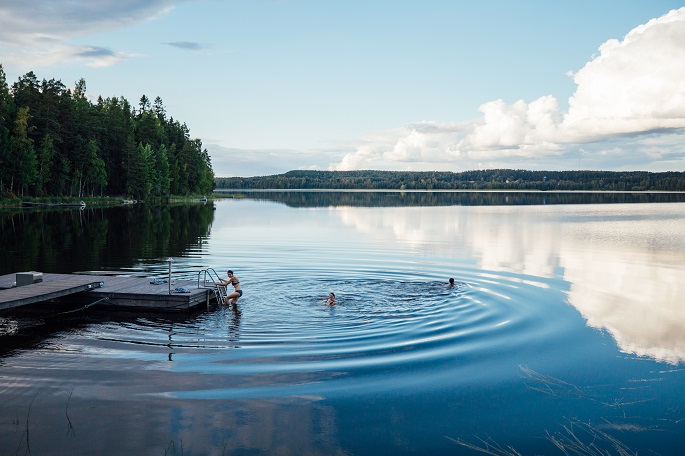
The chemical status of Finnish lakes, rivers, and coastal waters has not improved yet, despite the concentrations of several chemicals falling below the Environmental Quality Standards- EQS set for them.
As the quality standards for a few permanent and bio-accumulative substances are exceeded throughout Finland, the chemical status of Finnish surface water is rated as poor, said the Finnish Environment Institute (SYKE) in a press release on Friday.
The Centres for Economic Development, Transport and the Environment (ELY Centres) and the Finnish Environment Institute assess the chemical status of Finnish surface waters every six years.
The status assessment compares the concentrations of substances hazardous and harmful to the aquatic environment with their respective EQS, which are based on their toxic effects.
The assessment covers a total of 6,875 water bodies spread across the country.
The concentration limit set for mercury was exceeded in approximately half the water bodies assessed. The outcome of the current classification remained largely the same as in the previous classification period.
The amount of mercury is estimated by way of its concentration in fish, but the concentration limit set for the assessment of the chemical status of water bodies is significantly stricter than the maximum level set for fish when sold as a foodstuff.
Although the EQS for polybrominated diphenyl ethers (PBDEs), previously used as flame retardants, was tightened in 2015, the concentration limit was exceeded throughout Europe.
PBDEs are long-range and very persistent compounds. With a few specific exceptions, their use is internationally prohibited. The EQS has been criticised for being too strict. Food authorities do not impose a threshold value for PBDE concentrations in fish.
Concentrations of nickel and cadmium exceeded their EQS limits/values in approximately 40 Finnish water bodies. The EQS for organotin compounds (TBT), perfluorooctane sulfonate (PFOS), and polycyclic aromatic hydrocarbons (PAHs) were exceeded in fewer than 10 water bodies.
IAEA team visits Finland to evaluate radiation emergency preparedness
Finland to redefine ties with Russia after Ukraine war ends: Stubb
Birth rate remains lower than death in Finland in Jan-July period
Online illegal wildlife trade poses risks to biodiversity: study
Finland to host Arctic summit of EU leaders in September
Woman killed in road mishap in Helsinki

Editor-in-Chief Ofiul Hasnat
Published by Finnish News Network (FNN)
Heporinne 4 B 45
01200 Vantaa, Finland.
E-mails : [email protected]