
Microplastics found in all waters
Published : 24 Aug 2020, 13:01
Updated : 25 Aug 2020, 00:43
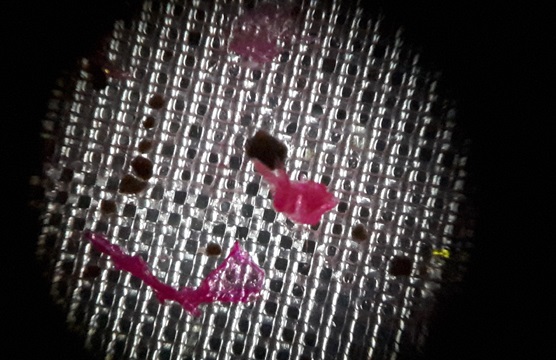
Microplastics have been found in all water systems and in fish, bivalve molluscs, and benthic fauna, according to a study of the Finnish Environment Institute (SYKE) and the University of Eastern Finland.
Microplastics cause stress to the aquatic organisms and may expose them to harmful substances, said a SYKE press release.
The new results and methods will be utilised in, for example, monitoring and conservation in the Baltic Sea and in research on the health impacts of microplastics.
The largest number of microplastics was found in blue mussels that filter water in order to feed.
Fewer quantities were found in the most common benthic fauna, that is, Baltic clam, Marenzelleria polychaetes, and chironomid larvae. Microplastics most likely end up in aquatic organisms when they feed. Exposure is affected by the habitat, prey and feeding methods.
Major differences were found in the quantities of microplastics in fish, both regionally and among fish species. The study found only a very small quantity of plastics in Baltic herring, Baltic sprat, and three-spined stickleback in the open sea.
Microplastics were remarkably more frequent or abundant in European perch, common bleak and three-spined stickleback on the Finnish coast as well as in European perch and vendace in the Lake Kallavesi. The method developed over the course of the project improved the accuracy of analysis, enabling identification of smaller particles than before.
“Field studies indicate that microplastics are found everywhere, that is, in the surface layers of water, deeper in the water column, on the sea bed and in fish, bivalve molluscs, and benthic fauna. The smaller microplastics we study, the higher concentrations we observe. This is because plastics constantly fragment into smaller particles in the environment,” said SYKE Research Professor Maiju Lehtiniemi.
In surface waters, microplastics were found in similar concentrations both in Finland’s coastal waters and in the Lake Kallavesi close to the City of Kuopio. This is probably due to the fact that the sources of microplastics ending up in water systems are mostly located on land. In the Baltic Sea, stratification seems to affect the concentrations of microplastics in different layers of water.
The sediment at the bottom of the Baltic Sea contains higher concentrations of microplastics than in the water in the area. Relatively high local concentrations of microplastic particles were observed in coastal sediments. The quantities reach the same levels as in Norway’s coastal sediments and in the southern Baltic Sea, for example.
“Microplastics end up in water systems from land, especially via flowing waters. One of the most important pathways is storm water, that is, rain and melted water from built-up areas. Research results indicate that storm water in urban environments contains microplastics and that the temporal and local variation in the quantity of microplastics is significant. In the future, more research is required on microplastic emissions from transports in particular,” said SYKE Researcher Julia Talvitie.
Laboratory tests indicated that plastic and recycled rubber causes stress in plankton and Baltic clam. Small planktonic crustaceans died or had higher stress levels when exposed to rubber used in car tyres and frozen vegetable bags (light PE) containing food residues. Harmful substances, such as metals and PAHs, were observed in Baltic clam exposed to car tyre rubber.
“The most common types of plastic found in the samples were the same in both the Baltic Sea and the Lake Kallavesi, as well as in fish and benthic fauna,” said SIB Labs and the University of Eastern Finland’s sub-project Director Arto Koistinen.
Polyethylene (PE) was often the most abundant type of plastic in the samples. This is understandable as the various forms of polyethylene are the world’s most used raw materials of plastic.
IAEA team visits Finland to evaluate radiation emergency preparedness
Finland to redefine ties with Russia after Ukraine war ends: Stubb
Birth rate remains lower than death in Finland in Jan-July period
Online illegal wildlife trade poses risks to biodiversity: study
Finland to host Arctic summit of EU leaders in September
Woman killed in road mishap in Helsinki

Editor-in-Chief Ofiul Hasnat
Published by Finnish News Network (FNN)
Heporinne 4 B 45
01200 Vantaa, Finland.
E-mails : [email protected]