
Size matters in sex life of salmon
Published : 24 Jun 2020, 02:10
Updated : 24 Jun 2020, 09:19
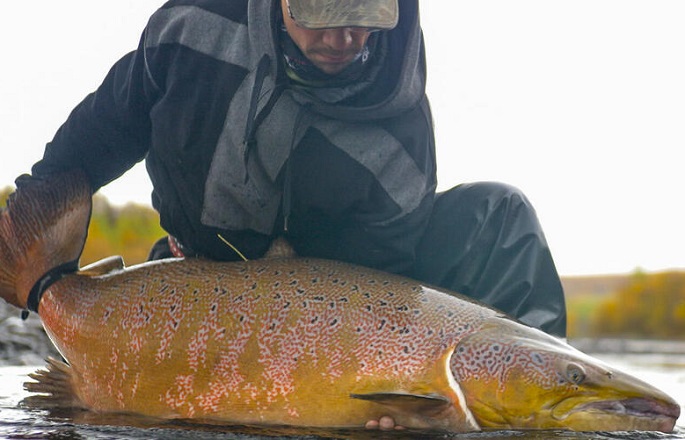
For Atlantic salmon, size matters when it comes to love. Larger males and females that may spend up to four years in sea produce many more babies but they are very rare compared to younger fish, according to researchers at the University of Helsinki and the Natural Resources Institute Finland (Luke).
Every summer, tens of thousands of Atlantic salmon migrate from the Barents Sea to the Teno River, Finland to spawn in the streams where they were born. This journey is a feat of endurance: salmon stop feeding and must navigate fast-flowing water, leap over obstacles, and avoid predators, hooks, and fishing nets to arrive at their spawning grounds, said the University of Helsinki in a press release.
The marathon doesn’t stop there though: once they arrive at their spawning grounds, they must fight for the possibility to mate with members of the opposite sex. It turns out that the largest fish produce the most offspring, but there are far fewer of these fish in the spawning ground battling for reproductive success than their younger and smaller competitors.
The report of the study was recently published in the scientific journal Molecular Ecology, the study is a part of a long-term monitoring programme. A small piece of fin tissue was removed from more than 5000 adults and juveniles for genetic fingerprinting before they were released back into the wild.
Adults were also fitted with a unique identification tag after a few scales were carefully sampled. The scales are particularly valuable, as they record annual growth cycles, much like tree rings.
“Great care was taken to not harm the fish,” said Dr. Kenyon Mobley, lead author of the article. “In fact, we have recaptured adults returning to spawn several years later and juveniles returning to spawn as adults.”
Most salmon in the Teno River spend between one and four years in sea before migrating back to breed. The more time salmon spend in sea, the larger they grow. Females generally take between two and three years to mature, but most males return after just one year in sea.
Mobley’s study showed that, for every year spent in sea, females gain over four kilograms of body weight and produce 60% more offspring. Males, on the other hand, gain nearly five kilograms of body weight and produce 200% more offspring for every year they spend in sea.
However, spending more time in sea comes with a significant cost. Very few of these older larger fish return to spawn. “This is presumably because spending more time in sea exposes fish longer to predators, fishing, and diseases, and thus a higher risk of death before having a chance to spawn,” explains Mobley.
“Knowing the reproductive contributions of different sized fish in this river section can help us develop more accurate models of offspring production. These are needed for developing Teno salmon management guidelines,” said Professor Jaakko Erkinaro of Luke.
Like most animals in nature, salmon are not monogamous and can have up to eight mating partners, the study found. Having more mating partners ensures successful fertilisation of eggs and passing on their genes to the next generation.
Nearly all females captured in the study produced offspring, mating on an average with more than two males, and gained 35% more mates for each year they spent in sea. Males have, on an average, less than one mate, indicating that many males are excluded from mating, presumably through strong competition by bigger males. For each year spent in sea, males gain 60% more mates. This means that larger salmon, in particular males, have a distinct advantage when it comes to finding mates.
In the study population, females are a rare commodity. There are up to seven males for every female in the spawning ground near the entrance of the Utsjoki River.
IAEA team visits Finland to evaluate radiation emergency preparedness
Finland to redefine ties with Russia after Ukraine war ends: Stubb
Birth rate remains lower than death in Finland in Jan-July period
Online illegal wildlife trade poses risks to biodiversity: study
Finland to host Arctic summit of EU leaders in September
Woman killed in road mishap in Helsinki

Editor-in-Chief Ofiul Hasnat
Published by Finnish News Network (FNN)
Heporinne 4 B 45
01200 Vantaa, Finland.
E-mails : [email protected]