
Researchers depict full gene structure of Nordic reindeer
Published : 05 Jun 2020, 23:31
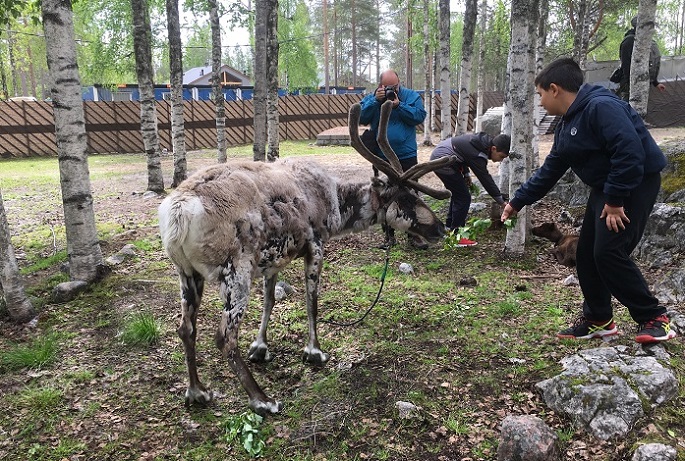
Finnish researchers have solved and depicted the full gene structure of the Nordic reindeer, reported Xinhua, quoting national broadcaster Yle on Friday.
One of the researchers, professor Juha Kantanen from the Finnish Institute for Natural Resources (LUKE) told Yle that the researchers have identified many such genetic traits that have helped reindeer adapt to the harsh natural conditions.
According to the research, the retina of the eyes of Nordic reindeer has adapted to the changing light conditions of northern Finland's Lapland area. In winter it is dark there nearly all day, while in summer there is almost no sunset.
Lapland area is a main habitat of Nordic reindeer. In today's international folklore, Lapland is well-known as the home area of legendary Santa Claus. In most countries his image is associated with flying reindeer.
Reindeer also have genes that create an excellent ability to scent. "They have to be able to scent lichen, as their food, covered by a thick crust of snow," Kantanen elaborated.
There is also a gene system for the annual development of antlers of Nordic reindeer, Kantanen said. The genes trigger the antlers to drop off and begin to grow again.
Kantanen noted that humans tamed the half-domesticated Nordic reindeer of today from the mountain deer. Last wild mountain deer disappeared from Finland in the 19th century.
"But contemporary research does not support the view that the taming took place in Northern Europe at all," Kantanen said. He gave the Yamal peninsula on the Arctic Sea or the Altai Mountains in Central Asia as likely areas.
Kantanen said though that it is not clear when the taming took place. Views range from the Neolithic era to the Iron Age, or even later.
IAEA team visits Finland to evaluate radiation emergency preparedness
Finland to redefine ties with Russia after Ukraine war ends: Stubb
Birth rate remains lower than death in Finland in Jan-July period
Online illegal wildlife trade poses risks to biodiversity: study
Finland to host Arctic summit of EU leaders in September
Woman killed in road mishap in Helsinki

Editor-in-Chief Ofiul Hasnat
Published by Finnish News Network (FNN)
Heporinne 4 B 45
01200 Vantaa, Finland.
E-mails : [email protected]