
Rovaniemi Arctic Spirit Conference
People’s future, security issues discussed
Published : 14 Nov 2019, 01:58
Updated : 14 Nov 2019, 10:25
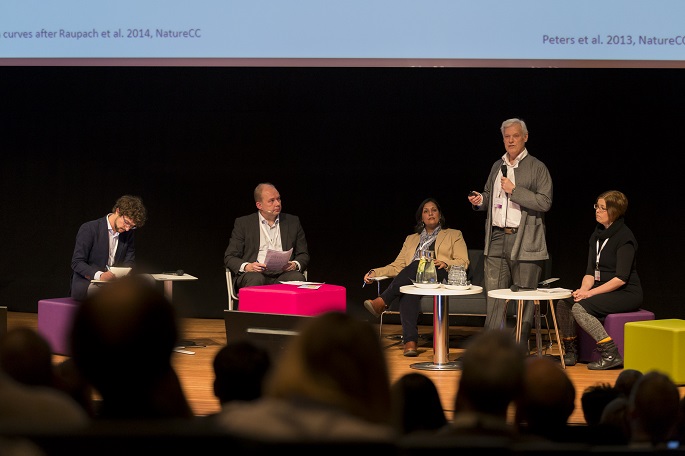
The Fourth Arctic Spirit Conference in Rovaniemi ended on Wednesday after threadbare discussions on issues concerning the future and the rights of people living in the Arctic and other regions, and the world-wide security challenges caused by man-made climate change and its impact on future generations.
On the final day of the two-day event, Maria Pitukhina and Anna Simakova from the Budget Monitoring Centre of Petrozavodsk State University presented the findings of a sociological survey implemented under a mutual Russian-Finnish project devoted to the life and work of youths living in the Arctic. The study analysed the attractiveness of post-industrial cities in the Arctic (e.g., Kemijarvi, Kirovsk, Revda, Kovdor, Neryngri, Novy Urengoy, Aldan, and Khandyga) as places to live and work.
The survey results show that generally the Arctic youth are happy. Interestingly enough, the positive attitude relates to psycho-emotional factors rather than monetary ones. There was no correlation found between the level of youth happiness and municipalities’ socio-economic situation.
Ria-Maria Adams, a research affiliate and a PhD student from the Arctic Centre, came to similar conclusions in relation to youth in Northern Finnish pre-industrial towns (namely Kemijärvi, Pyhäjoki and Kolari). “The prospect of big industry does not influence youth’s choice in staying or leaving,” said Adams.
The researcher noted that there are push and pull factors, opportunities and threats, which lead to individual decisions about staying or leaving. Educational and work opportunities, the connection with nature, functioning infrastructure, safety, sufficient services and social ties can serve as both push and pull factors. In Adams’ opinion, a more sustainable Arctic can be envisioned by incorporating young people’s perceptions in policy-making decisions.
Sebastien Duyck, a senior attorney at the Centre for International Environmental Law in Geneva, Switzerland, shared a presentation on human rights from environmental perspective. Duyck believes that when it comes to climate change, we should use human rights as “a sword and a shield”.
Julia Bobina, the climate, environment and hot spots adviser at the International Barents Secretariat, shared her findings about young people’s perceptions and engagement with climate change in Arctic Norway.
Bobina interviewed 17 young people aged 18 to 27 and found that they see the absence of political action on climate issue and not many of them perceive politicians as trustworthy voice on climate change.
Alla Bolotova and Elena Gorbacheva from the University of Helsinki shared their findings about recycling initiatives of youth in industrial cities in the Russian Arctic, namely in the cities of Murmansk, Kirovsk, Arkhangelsk, and Novy Urengoy.
According to Bolotova and Gorbacheva, more than 90% of waste in Russia goes to the landfill. Therefore, in recent years, grassroots recycling projects have appeared in different Arctic cities initiated by young people who are more environmentally concerned than older generations. It can be concluded from their presentation that the pro-environmental behaviour becomes more popular among the Russian youth even in conditions of lack of recycling infrastructure.
For instance, the ‘Zero Waste Fest’ event is being held in Murmansk on a regular basis. Arkhangelsk has become the scene for numerous environmental protests, while the youth in Novy Urengoy had opened a second-hand store that sends the proceedings earned to environmental charities.
Border Guard’s criminal intelligence activities to strengthen
3 Estonians held for suspected narcotic smuggling to Finland
Finland ends funding for UNRWA for Palestinian refugees
IAEA team visits Finland to evaluate radiation emergency preparedness
Finland to redefine ties with Russia after Ukraine war ends: Stubb
Birth rate remains lower than death in Finland in Jan-July period

Editor-in-Chief Ofiul Hasnat
Published by Finnish News Network (FNN)
Heporinne 4 B 45
01200 Vantaa, Finland.
E-mails : [email protected]