
Sipilä´s quitting creates scope for Keskusta to join govt
Published : 16 Apr 2019, 21:05
Updated : 16 Apr 2019, 21:08
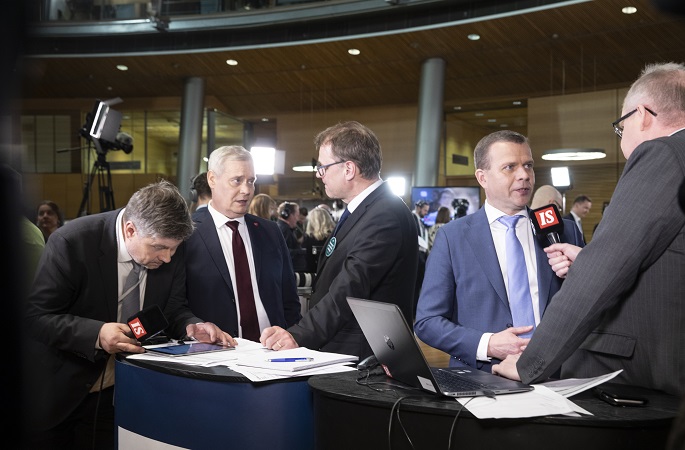
The announcement of the resignation of Juha Sipilä from the Suomen Keskusta (Centre Party of Finland) Chairmanship was seen as making the talks about a future government easier. There was major reluctance in the ranks of the winning Suomen Sosialidemokraattinen Puolue (Social Democratic Party of Finland -SDP) against seeing Sipilä in a new cabinet.
The Keskusta on Tuesday listed its conditions for joining a cabinet under SDP leader Antti Rinne.
Marko Junkkari, an analyst for a Finnish language newspaper Helsingin Sanomat, noted that many of the "conditions" set by the Keskusta would be easy for the Social Democrats to accept.
Kansallinen Kokoomus (National Coalition Party) leader Petteri Orpo on Tuesday praised Sipilä for having remained "committed to the program of the coalition government" and willing to "carry responsibility".
Analysts have partially attributed the election defeat to Sipilä's reforms which promoted the Kokoomus's agenda rather than the traditional Keskusta agenda.
Li Andersson, chairperson of the Vasemmistoliitto (Left Alliance), said Sipilä's resignation signaled that the Keskusta remains part of the government formation process.
WEALTHY BUSINESSMAN
Sipilä was chosen as party chairman in 2012. Before being elected into parliament in 2011, he had made a large fortune as a businessman in the IT sector.
His campaign with the promise to "repair Finland" led to victory in 2015. Sipilä formed a coalition government with the Kokoomus and the populist Perussuomalaiset (Finns Party).
Even though the Keskusta traditionally emphasized social responsibility and had leaned more towards the political left, Sipilä began implementing economic policies that reflected largely the interests of the business sector.
He tried to change labor laws to make the labor market more flexible, but had to backtrack several plans due to massive opposition from the trade unions and the political left.
For the plans to reform the public health system, Sipilä made a deal with the Kokoomus leaders where the introduction of a provincial administrative tier was coupled with the opening up of tax-financed public health sector to private business.
As the plan finally failed due to constitutional and schedule issues, Sipilä handed in the resignation of his cabinet in March, less than two months before the parliamentary election.
President condoles at death of Norwegian King
Using force by police rises in Finland
95 killed in road mishaps in Finland in H1
Finland, Sweden to strengthen defence cooperation
Border Guard’s criminal intelligence activities to strengthen
3 Estonians held for suspected narcotic smuggling to Finland

Editor-in-Chief Ofiul Hasnat
Published by Finnish News Network (FNN)
Heporinne 4 B 45
01200 Vantaa, Finland.
E-mails : [email protected]