
Coronavirus infections may be many times more than confirmed cases
Published : 16 Apr 2020, 02:15
Updated : 16 Apr 2020, 08:54
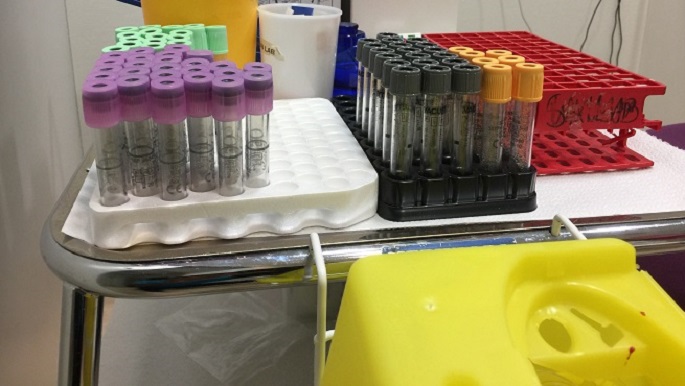
The number of people infected with coronavirus in the Hospital District of Helsinki and Uusimaa (HUS) may be many times higher than the confirmed number of cases, according to an antibody study carried out by the Finnish Institute for Health and Welfare (THL).
Antibody studies can be used to collect information on the share of the population that have been infected with coronavirus, said a THL press release.
THL studied the prevalence of antibodies in blood samples of persons who had undergone laboratory tests for various reasons in the HUS.
“The study is the first preliminary assessment of the extent to which the coronavirus epidemic has spread in the HUS area, and the share of people who may have had the mild or asymptomatic version of the disease,” said THL Senior Researcher Merit Melin.
The samples were collected from HUSLAB’s clinical chemistry laboratories over a period of three consecutive weeks from 23 March to 12 April.
The sampling included a total of 442 samples from men and women between the ages of 15 and 90 who had given a blood sample for reasons other than any infection. These surplus samples from laboratory tests were examined without personal identifiers.
Two different tests were performed to determine the presence of antibodies. A commercial rapid test was used for sample screening, the performance of which was tested at the THL before the study. In addition, all positive results were verified with the THL’s own test. The THL confirmation test measures the ability of antibodies to neutralise the virus and provides a very reliable result.
“The material used in the study does not represent the population as well as a random sampling of the population, so the result is still very preliminary at this stage. However, it is in line with the results of a previous antibody study conducted on blood donors in Denmark,” said Melin.
Many wild rabbits found dead in Helsinki during summer
HUS offers antibody to newborns to prevent RSV disease
Researchers create human heart valve tissues from stem cells
11 more African swine flu cases detected in Finland
Low parental income, education linked to children bacterial infections risk
1st ever African swine flu cases spotted in Finland

Editor-in-Chief Ofiul Hasnat
Published by Finnish News Network (FNN)
Heporinne 4 B 45
01200 Vantaa, Finland.
E-mails : [email protected]