
EU budget talks in Brussels cut short amid disagreements
Published : 28 Nov 2026, 00:29
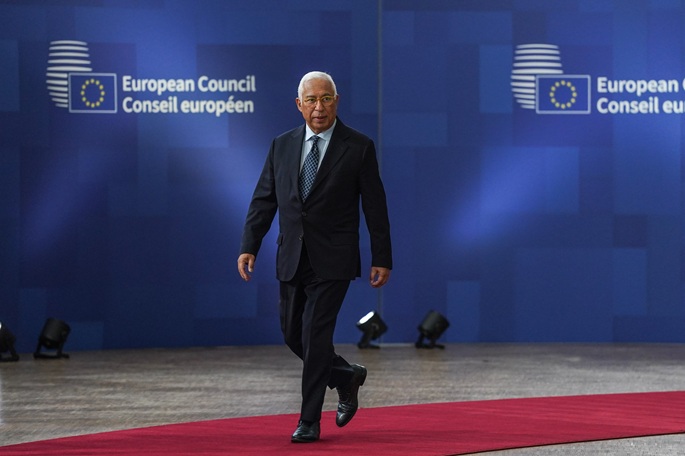
A European Union summit in Brussels was cut short, as leaders failed to find common ground on the bloc's next long-term budget for the years 2028-2034.
"Far too much preparatory work still needs to be done to reach a conclusion," German Chancellor Friedrich Merz said on Thursday evening, as he announced that leaders will not reconvene on Friday for a second day of talks, as previously planned.
EU leaders clashed over how to fund investments into emerging priorities, like defence and competitiveness, while also maintaining traditional subventions for agriculture and adjustment payments for poorer regions.
European Council President António Costa convened the leaders' meeting in an attempt to reconcile diverging positions between wealthy EU countries, which contribute a relatively large share to the joint budget based on the size of their economy, and less affluent countries that fear for their subsidies.
The summit was "a necessary step in the process" to converge positions, said Costa after the consultations. Leaders are set to continue discussions at their next Brussels summit in December.
Meloni: EU 'light years away' from reaching a deal
Arriving at the meeting, Merz doubled down on his demand to limit the volume of the budget to avoid a significant increase in Germany's contributions.
In addition to Germany, Austria, the Netherlands, Denmark, Finland, Sweden and Belgium are calling for cuts to the new budget.
Costa presented a new compromise proposal last weekend with an overall volume of €1.78 trillion for the seven-year period, about €204 billion lower than the initial proposal by the European Commission.
The new proposal is, however, still higher than the current budget covering the 2021-2027 period.
"I think I'm in a position to say that there is certainly some movement towards a further reduction," Merz said after consultations with EU leaders.
Italian Prime Minister Giorgia Meloni, whose country benefits from EU regional subventions, warned of cuts to adjustment payments for poorer regions.
"We are not prepared to sign off on a budget under which we would have to give more to receive less," she said in Brussels.
The EU was "light years away" from reaching a deal on the budget, according to the Italian premier.
When pressed by a journalist, Costa did not say whether he would accept more cuts to the budget.
Macron urged deal by year-end
French President Emmanuel Macron urged fellow leaders to find a compromise by the end of the year, ahead of presidential elections in the spring of 2027.
"If no agreement is reached by 31 December, then discussions will resume in the second half of the year," Macron said.
A first round of votes in France's presidential elections is scheduled for April 18. Macron, who is already serving his second term as president, cannot run again.
Not finding an agreement for the EU's long-term budget for the years 2028-2034 in the coming weeks would mean "much greater pressure" and the risk of not having a budget finalized on time, Macron said.
Merz backed French President Emmanuel Macron's call to find an agreement at the next EU summit in December.
"I think it would be good for Europe if we managed to pull it off, and I agree that we should do everything we can to make it happen," the German chancellor said.
Meloni pushed back on setting a deadline for the negotiations.
"I'm not going to let the timeline dictate the outcome of this matter," she said.
"I don't have a fixed deadline; I have conditions. And when the agreement is one that I consider valid and fair for Italy, then I'll sign it – before that, I'm not prepared to sign anything."
"Everybody knows that we cannot fail Europe, and we need to have a new budget from the 1st of January 2028. In order to do this, we need to reach a final agreement by the end of this year," Costa urged.
Roma settlement fire kills 3 children in Slovakia
Ukraine proposes Black Sea ceasefire, awaits Russia's response
German police raid 51 premises in investigation into illegal gambling
AfD head predicts Germany will try to ban the far-right party in 2027
Amazon workers to go on strike in Germany on Black Friday
Bayer plans €1b China investment by 2030, betting on innovation and market potential

Editor-in-Chief Ofiul Hasnat
Published by Finnish News Network (FNN)
Heporinne 4 B 45
01200 Vantaa, Finland.
E-mails : [email protected]