
Dead humpback whale 'Timmy' brought ashore on Danish island
Published : 31 May 2026, 00:16
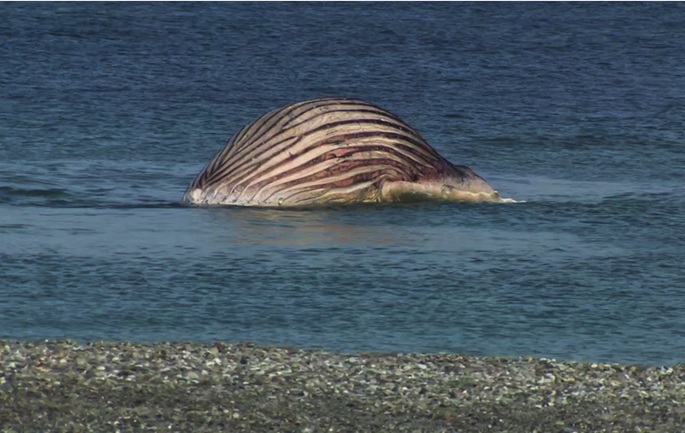
The body of a dead humpback whale known as "Timmy" has been brought ashore on the Danish island of Anholt, where experts hope a post-mortem examination will shed light on how it died, reported dpa.
A livestream by the News5 broadcaster showed a vehicle slowly dragging the bloated carcass out of the shallow water by a rope onto the beach on Saturday morning, leaving behind a deep furrow in the sand.
The Danish environmental protection agency urged people not to approach the whale as there is a risk of infection.
The carcass is due to be examined on the beach in the coming week. "Because the animal has been lying in the sun for so long, it will smell terribly," said whale researcher Peter Teglberg Madsen, who has been assisting with whale autopsies in Denmark for 25 years. "It will be quite overwhelming if you’re not used to it."
The dead whale has been drifting in the water off the holiday island of Anholt for more than two weeks. Authorities previously abandoned an attempt to tow the whale into deeper water so they could bring it into a harbour on the mainland. Danish officials have warned the public that the carcass - which is swollen with decomposition gases - is at risk of exploding.
Madsen said the post-mortem aims to find out what the animal died of, "because the discussion has largely centred on whether the whale could have been saved or not."
The whale attracted international attention after repeatedly becoming stranded in shallow waters along the Baltic coast of Germany.
After several failed rescue attempts of their own - and against the advice of experts and institutions - German authorities finally allowed a private initiative to transport the animal away and release it into the North Sea. The whale was later found dead near Anholt.
Madsen believes the rescue attempt was "pure animal cruelty." He said the whale was "obviously a sick, emaciated animal that could not be saved, and they should simply have left it in peace."
Instead, an animal that had never lived in captivity was confined in a metal box and towed across the sea for days on end by rescue workers, the researcher said.
"It was tossed about by the waves, exposed to the noise of the engines, only to be simply dumped into the sea – that must have been incredibly stressful and frightening for the animal."
Zelenskyy says Starlink and Starshield operations restored
Protests sweep Italian cities, clashes reported
Russian, Ukrainian officials discuss humanitarian mission in Oleshky
410,000 take part in new round of protests across France
Injuries and damage after Germany hit by 1st autumn storm
Russia, Ukraine agree to temporary ceasefire in Oleshky: White House

Editor-in-Chief Ofiul Hasnat
Published by Finnish News Network (FNN)
Heporinne 4 B 45
01200 Vantaa, Finland.
E-mails : [email protected]