
Far more cars newly registered in Germany during H1
Published : 05 Jul 2023, 21:24
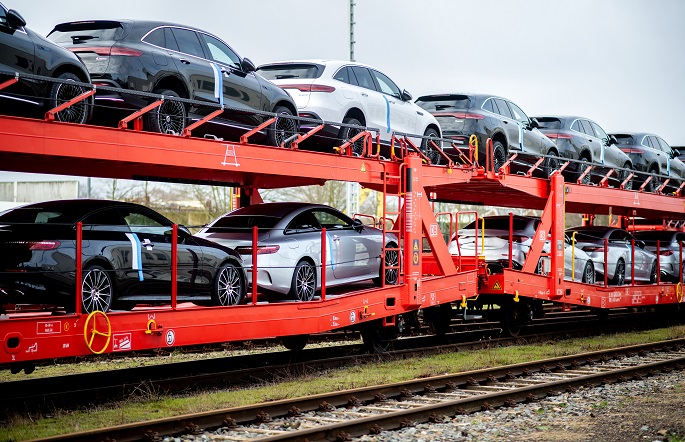
Purely electric cars are becoming increasingly popular in Germany, but petrol-powered vehicles are maintaining their share of total car sales, according to the latest figures.
In the first half of the year, slightly more than 220,000 purely electric cars were newly registered - 31.7% more than in the same period last year, the country's Motor Transport Authority (KBA) announced on Wednesday. Their share of all new car registrations is around 16% - up from 13.5% in the same period last year.
According to the KBA, a total of 1.4 million new cars were registered in Germany from the beginning of January to the end of June. This is an increase of 12.8% compared to the first six months of 2022.
"The German passenger car market recovered noticeably in the first half of the year," said Reinhard Zirpel, President of the Association of International Motor Vehicle Manufacturers (VDIK). "New registrations have developed positively, as expected, and are mainly driven by the slow reduction of the order backlog."
However, he stressed that the market volume of the pre-pandemic era is still far away. "In the first half of the year, new registrations remained 16% below the average of the 10 years before the start of the coronavirus crisis," he said.
The German Association of the Automotive Industry (VDA) gave a similar assessment of the situation. It says there was a significant increase - of 32% - in the number of cars built in Germany (around 2.2 million) in the first half of the year, but here, too, the pre-pandemic level had not yet been reached.
"In view of the overall economic situation and the development of incoming orders, it is to be expected that the high growth rates are likely to weaken soon," association president Hildegard Müller told dpa.
The big losers in recent months have been plug-in hybrids. The government withdrew its subsidy for these models at the beginning of the year, which has resulted in a dramatic slump in demand. Their share of newly registered cars was below 6% in the first two quarters of 2023. While almost 140,000 plug-in hybrids were newly registered in the first half of 2022, the figure for the current year was just under 80,000.
The switch from internal combustion engines to electric vehicles is one of the important building blocks in Germany's plans to reduce CO2 emissions. After the turn of the year, e-car sales initially slumped after government subsidies were reduced. Since then, however, the sales and new registration figures for pure battery vehicles have recovered strongly.
"Within the first six months, this type of drive showed an increase of plus 31.7% compared to the same period last year; no type of drive achieved more in the same period," the KBA said.
However, the increase in sales of electric vehicles has not caused the average CO2 emissions of newly registered vehicles to fall. According to the KBA, the average CO2 emissions of newly registered cars in the first half of 2023 is 121 grams per kilometre - slightly higher than in the first half of 2022. From 2019 (157 grams per kilometre) to 2022 (109.6 grams per kilometre), this figure had steadily declined.
One reason for this could be the SUVs, which continue to be popular with car buyers and are considered by critics to be particularly harmful to the climate. This segment of the market has seen the strongest demand for months. In the first half of the year, their share was around 30% of all new registrations. In June 2023, 31.6% more SUVs were newly registered than in June 2022.
Germany monitors Russian disinformation ahead of state elections
German auto industry sentiment jumps in July
Police seize drone near Ukrainian aircraft at German airport
Italy's 4th heatwave this summer prompts emergency response
5 killed, 6 wounded in Ukrainian drone attack on Moscow oblast
173 migrants rescued after boat catches fire in English Channel

Editor-in-Chief Ofiul Hasnat
Published by Finnish News Network (FNN)
Heporinne 4 B 45
01200 Vantaa, Finland.
E-mails : [email protected]