
Sabotage suspected after discovery of Nord Stream gas pipeline leaks
Published : 27 Sep 2022, 23:13
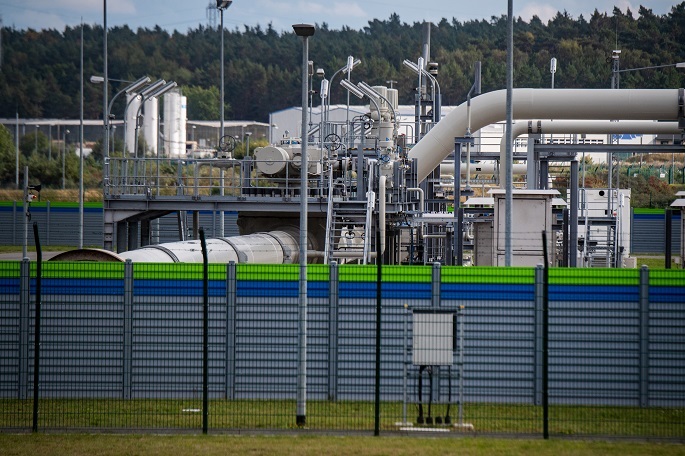
German sources and Russian authorities said they were not ruling out an act of sabotage after three leaks were discovered on the Nord Stream pipelines that carry gas from Russia to Europe via the Baltic Sea.
German security sources told dpa the cause of the incidents had not been clarified, but there were indications of sabotage. Only a state actor could mount such an intervention due to its technical complexity, the sources said.
The Kremlin also reacted to the discovery of the leaks by saying that an act of sabotage could not be ruled out.
"Obviously, there is a destruction of the pipeline. As to what the reason is, there is no option that can be ruled out until the results of the investigation emerge," spokesman Dmitry Peskov said, according to the Interfax news agency. "This is an absolutely unprecedented situation that needs to be resolved quickly."
Measuring stations in Sweden and Denmark recorded powerful detonations underwater before the three pipeline leaks in the Baltic Sea were discovered, according to Swedish media.
There is no doubt that these were explosions, seismologist Björn Lund of the Swedish Seismological Network (SNSN) told Swedish broadcaster SVT on Tuesday.
There were two distinct detonations in the area on Monday - one in the night at 2:03 am (0003 GMT) and a second at 7:04 pm in the evening, the SVT report said.
In total, three leaks were discovered near the Baltic Sea island of Bornholm, partly in Danish and partly in Swedish waters.
Crisis management teams with representatives from the highest levels of government were held in both Denmark and Sweden on Tuesday in response to events.
On Monday night, severe pressure drops were detected in both pipelines. The average pressure of 105 bar dropped to 7 bar on the German side.
Neither of the pipelines is in operation, so the incidents have no implications for the gas supply in Europe.
Construction on the Nord Stream 2 pipeline was completed, but it was not put into operation due to Russia's invasion of Ukraine in February.
More recently, Russia halted all deliveries through Nord Stream 1, citing maintenance work that could not be completed due to Western sanctions on the country.
"It's very premature to speculate" on what caused the recently discovered leaks in the Nord Stream gas pipelines in the Baltic Sea, a European Commission spokesperson said.
Declining to comment on any potential indications of sabotage, commission spokesperson for energy, Tim McPhie, said the EU executive arm was monitoring the situation closely.
Polish Prime Minister Mateusz Morawiecki was more definitive in his statements about the incident.
"We don't know today the details of what happened, but we clearly see that there was an act of sabotage," Morawiecki said on Tuesday in the town of Goleniów near the port of Szczecin, where he was attending the opening of the new Baltic Pipe gas pipeline.
This act of sabotage was "probably the next stage of escalation we are dealing with in Ukraine," he said.
The environmental organization Friends of the Earth Germany (BUND) said the leaks posed a danger to marine life and ships.
There is a "danger of suffocation for the animals ... particularly animals that cannot flee quickly," said Nadja Ziebarth, head of BUND's marine protection office. "At the water surface, there is an increased danger of explosion, so above all a danger for all ships."
BUND also sees a potential climate hazard emanating from escaping methane. While pure methane that dissolves in the sea is non-toxic, the composition of the gas in the Nord Stream pipelines is not known.
"Since it is unclear exactly which mixture is transported via Nord Stream, unknown damage could be caused locally to the marine ecosystem by other gases," Ziebarth said.
Drone explodes after crossing into Bulgaria from Romania: PM
Netherlands grapples with water shortage amid drought, heatwaves
Boeing 737 cargo plane overruns runway after landing in Russia's Norilsk
Ukraine reaches deal with US on monthly deliveries of interceptor missiles
Security radar installed at Leipzig airport after drone incident
Ukraine reports major Russian attack on oil, gas production facilities

Editor-in-Chief Ofiul Hasnat
Published by Finnish News Network (FNN)
Heporinne 4 B 45
01200 Vantaa, Finland.
E-mails : [email protected]