
UN, EU nations increase pressure on Belarus at HRC
Published : 04 Dec 2020, 23:48
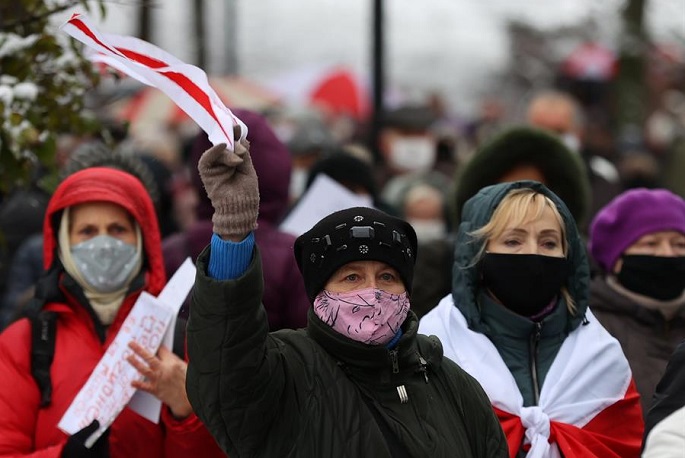
The UN High Commissioner for Human Rights, Michelle Bachelet, on Friday said fundamental freedoms in Belarus had become even more limited in recent weeks, and both she and several European ministers called for the release of demonstrators from custody, reported EFE-EPA.
"It is urgent that the Government of Belarus puts an end to ongoing human rights violations," Bachelet said at the meeting.
The former Chilean president added: "Recent weeks have seen continued deterioration, particularly with respect to the right of peaceful assembly."
She called on Alexander Lukashenko's regime to "immediately release all those unlawfully or arbitrarily detained for exercising their rights to freedom of expression" and to respect the right to peaceful assembly.
Bachelet said that since the start of the protests in August, more than 27,000 people have been arrested, and last month alone there were more than 1,700 arrests following the three protests held in November.
She stressed that authorities were increasing punishments for protesters, who in the first few months of unrest were serving a maximum of 15 days of administrative detention. In recent weeks longer prison sentences are starting to be handed down, she added.
The High Commissioner also expressed concern about the continued persecution of opposition politicians, journalists, bloggers, lawyers and human rights defenders, and police violence to disperse protests with the use of tear gas, water cannons, rubber bullets and other excessive measures.
This repression has resulted in the deaths of at least four demonstrators, Bachelet said, going on to mention allegations of beatings of protestors in police stations and detention centres.
She also regretted that the Belarusian government has not allowed observers from the High Commissioner's office access to the country.
Friday's debate was attended by the foreign ministers from Ukraine, Poland, Lithuania, Estonia, Slovakia, Romania, and Denmark (representing the Nordic countries), who supported Bachelet's allegations and in some cases called for the release of political prisoners and a repeat of the August elections.
The Ukrainian foreign minister, Dmytro Kuleba, also made it clear that the flagrant human rights violations in Belarus cannot be left unpunished, and called on Moscow to refrain from interfering in the internal affairs of the neighbouring country.
The Belarusian ambassador to the United Nations in Geneva, Yury Ambrazevich, argued that it was not reasonable to bring his country's situation up for discussion before the UN Human Rights Council when there are still humanitarian disasters and wars going on in other nations.
The Belarusian ambassador called on the European Union to go back to non-intervention methods and criticised nearby countries such as Lithuania, Poland and Ukraine, which want to solve their problems at the expense of their neighbours.
In the debate, Belarus received the support of countries such as Cuba, Venezuela and Russia.
The Russian representative wanted those present to reflect and ask the question, about who stands to gain from increased tensions in Belarus, as some want to see the country torn apart by internal conflicts.
Belgium wildfire burns 3,000 hectares as several hotspots remain active
Wildfires on Greek island of Salamina kill 2, injure 9
Ukrainian drone attacks kill 6, Russia downs 800 drones
12 killed, 10 injured in bus crash in Hungary
Germany revoking refugee status for growing number of Syrians
Russia probes German journalist over Zelensky question

Editor-in-Chief Ofiul Hasnat
Published by Finnish News Network (FNN)
Heporinne 4 B 45
01200 Vantaa, Finland.
E-mails : [email protected]