
Central European nations grapple with Covid 2nd wave
Published : 19 Nov 2020, 02:54
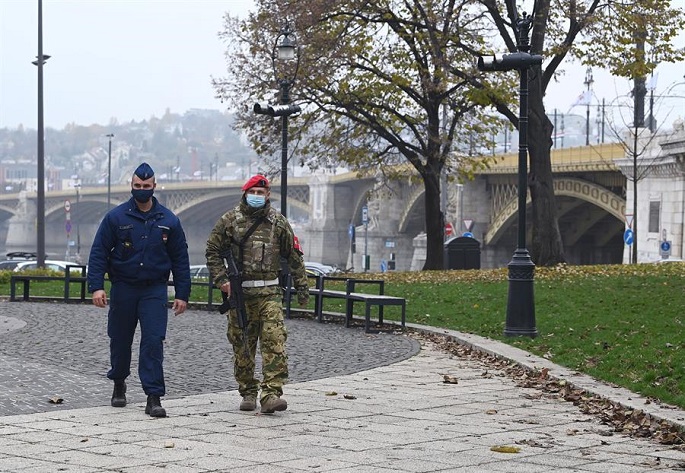
The Covid-19 pandemic is heaping pressure on both health systems and politicians in countries across Central Europe, where several nations that fared well during the first wave of the pandemic, such as Austria, Czech Republic and Hungary, have developed into hotspots with some of the highest rates of deaths and infections in the European Union, reported EFE-EPA.
On Wednesday, Austria passed the threshold of 100 daily deaths for the first time and now has the second-worst infection incidence per 100,000 people in the EU.
With most cultural, hospitality and other non-essential activities banned, only half of Austrians approve of the government’s handling of the crisis, a sharp contrast to six months ago, when Chancellor Sebastian Kurz enjoyed approval ratings of 83 percent due to his government’s response to the pandemic.
Austrian authorities have announced a nationwide testing campaign amid soaring infections in the Alpine country, similar to the one tried in neighboring Slovakia.
Slovakia, home to 5.4 million people, became the first country to call for a Covid test for everyone over the age of 10 earlier this month, isolating 50,000 positive people.
The strategy, which the government justified as an alternative to a total lockdown, seems to be working. In the last 24 hours 1,311 cases were detected, 50 percent less than two weeks ago.
The authorities opened the theaters, cinemas and houses of worship on Monday, but the country will remain in a state of emergency until January 1.
BACK TO SCHOOL
The Czech Republic, despite having the third highest cumulative infection rate in the EU, from Wednesday onwards has reopened schools for in-person classes for children in the first and second year of primary school, although pupils must wear masks at all times.
The measure contrasts with those affecting shops, where no more than one customer for every 15 square meters will be allowed. Opening hours will be extended by one hour, until 9pm, to mitigate the limit on customers.
The restriction of movement and a curfew will be kept in force, between 9pm and 5am, with Parliament due to debate on Thursday whether to extend the state of emergency until 20 December.
ORBAN CRITICISM
With figures of 5,000 cases and 100 deaths every 24 hours in recent weeks, Hungary has seen its rates double over the past month.
According to the European Centre for Disease Prevention and Control, the cumulative number of deaths per 100,000 people in the last 14 days is 13.5, the fourth highest in the EU. Only Czech Republic, Belgium and Bulgaria exceed Hungary.
Despite the fact that measures introduced 10 days ago, such as the closure of the bars and restaurants, museums and a night curfew, are slowly beginning to reduce infection rates, the opposition is blaming the prime minister, ultra-nationalist Viktor Orban, for having reacted badly and too late.
The government has said that it is trying to strike a balance between restrictions and keeping the economy open.
The Covid-19 pandemic is heaping pressure on both health systems and politicians in countries across Central Europe, where several nations that fared well during the first wave of the pandemic, such as Austria, Czech Republic and Hungary, have developed into hotspots with some of the highest rates of deaths and infections in the European Union, reported EFE-EPA.
On Wednesday, Austria passed the threshold of 100 daily deaths for the first time and now has the second-worst infection incidence per 100,000 people in the EU.
With most cultural, hospitality and other non-essential activities banned, only half of Austrians approve of the government’s handling of the crisis, a sharp contrast to six months ago, when Chancellor Sebastian Kurz enjoyed approval ratings of 83 percent due to his government’s response to the pandemic.
Austrian authorities have announced a nationwide testing campaign amid soaring infections in the Alpine country, similar to the one tried in neighboring Slovakia.
Slovakia, home to 5.4 million people, became the first country to call for a Covid test for everyone over the age of 10 earlier this month, isolating 50,000 positive people.
The strategy, which the government justified as an alternative to a total lockdown, seems to be working. In the last 24 hours 1,311 cases were detected, 50 percent less than two weeks ago.
The authorities opened the theaters, cinemas and houses of worship on Monday, but the country will remain in a state of emergency until January 1.
BACK TO SCHOOL
The Czech Republic, despite having the third highest cumulative infection rate in the EU, from Wednesday onwards has reopened schools for in-person classes for children in the first and second year of primary school, although pupils must wear masks at all times.
The measure contrasts with those affecting shops, where no more than one customer for every 15 square meters will be allowed. Opening hours will be extended by one hour, until 9pm, to mitigate the limit on customers.
The restriction of movement and a curfew will be kept in force, between 9pm and 5am, with Parliament due to debate on Thursday whether to extend the state of emergency until 20 December.
ORBAN CRITICISM
With figures of 5,000 cases and 100 deaths every 24 hours in recent weeks, Hungary has seen its rates double over the past month.
According to the European Centre for Disease Prevention and Control, the cumulative number of deaths per 100,000 people in the last 14 days is 13.5, the fourth highest in the EU. Only Czech Republic, Belgium and Bulgaria exceed Hungary.
Despite the fact that measures introduced 10 days ago, such as the closure of the bars and restaurants, museums and a night curfew, are slowly beginning to reduce infection rates, the opposition is blaming the prime minister, ultra-nationalist Viktor Orban, for having reacted badly and too late.
The government has said that it is trying to strike a balance between restrictions and keeping the economy open.
Belgium wildfire burns 3,000 hectares as several hotspots remain active
Wildfires on Greek island of Salamina kill 2, injure 9
Ukrainian drone attacks kill 6, Russia downs 800 drones
12 killed, 10 injured in bus crash in Hungary
Germany revoking refugee status for growing number of Syrians
Russia probes German journalist over Zelensky question

Editor-in-Chief Ofiul Hasnat
Published by Finnish News Network (FNN)
Heporinne 4 B 45
01200 Vantaa, Finland.
E-mails : [email protected]