
EU to pen Pfizer contract for coronavirus vaccines
Published : 10 Nov 2020, 22:05
Updated : 10 Nov 2020, 22:12
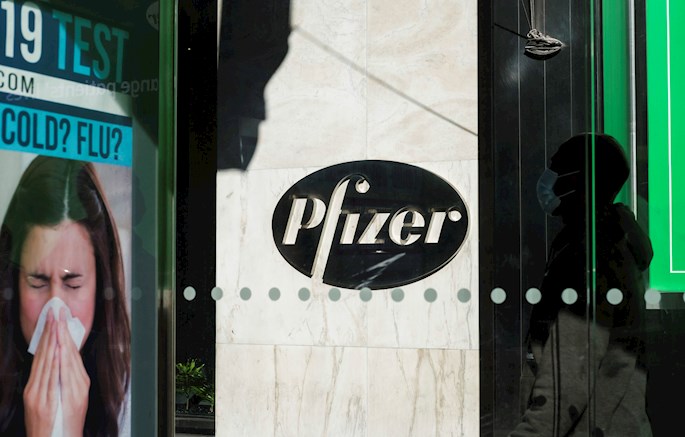
The European Union is poised to sign a contract for 300 million doses of the Covid-19 vaccine being developed by Pfizer and BioNTech, which it plans to roll out “quickly” once it becomes available, reported EFE, quoting officials on Tuesday.
The news comes just as EU member states landed a political agreement with members of the European Parliament to approve the bloc’s 1.8 trillion-euro ($2T) long-term budget, which includes a 750 billion-euro coronavirus recovery fund.
Meanwhile, individual member states began to tentatively set out plans for a future vaccination program.
EU
EU Commission president Ursula von der Leyen said the bloc would on Wednesday authorize a contract for 300 million doses of a future vaccine from American pharmaceutical giant Pfizer and German developer BioNTech.
The manufacturers on Monday announced that their candidate vaccine against Covid-19 had demonstrated a 90% efficacy rate according to interim analysis from its late-stage clinical trials, the final step before it applies for regulatory approval later this month.
It means the first immunizations, which are administered in two doses, could be given to health workers and at-risk people before the end of the year.
BioNTech confirmed Tuesday that it planned to produce 50 million doses of the vaccine in 2020 and manufacture 1.3 billion more in 2021.
“A safe and effective vaccine is our best chance to beat coronavirus and return to our normal lives,” von der Leyen said in a statement. “We have already started working with Member States to prepare national vaccination campaigns.”
“This will be the fourth contract with a pharmaceutical company to buy vaccines. And more will come.”
UNITED KINGDOM
The UK health secretary, Matt Hancock, told MPs that the government did “not yet know whether or when a vaccine is approved” but said he had ordered the National Health Service to be ready for a roll-out from 1 December.
Any future vaccine program developed by the NHS would prioritize care home residents and workers as well as medical staff, according to proposals from the government’s scientific advisers.
The British Medical Association earlier said that specialized clinics would be operational seven days a week to efficiently roll out the vaccine.
UK prime minister Boris Johnson on Monday tempered the positive reactions to the news from Pfizer and BioNTech urging the British public not to let their guard down in what was still a "critical" moment in the country's Covid-19 campaign.
SPAIN
Spanish health authorities said they hoped to have access to 20 million Pfizer/Biotech vaccines between the end of 2020 and the start of 2021, which would, in theory, be enough to inoculate 10 million people.
Health minister Salvador Illa said future vaccines would be administered free of charge and, in an interview with public TV, added he hoped that a considerable chunk of the population would be vaccinated, although fell short of detailing exact figures.
"It is a promising step," he told RTVE. "But there is much left to be done and we have to keep our guards high."
Spain, already badly hit during Europe’s first wave of Covid-19 in spring, is in the grips of a second wave. Health authorities on Tuesday added over 17,395 new infections to the overall caseload.
A further 411 people died from Covid-19 in the last 24 hours, bringing the overall death toll to 39,756.
BELGIUM
Belgium could be able to conduct 100,000 coronavirus tests daily from the end of November or the beginning of December, Laurent Gillet, a member of the University of Liège scientific team that has developed all-in-one tests that do not need to be sent to third parties for analysis.
Belgium is already conducting around 30,000 to 40,000 tests per day, which is high for a country of 11.5 million but it with one of the highest infection rates per capita in the EU, with a 14-day cumulative tally of 1,538 new cases per 100,000 people.
Gilet said that while the announcement from Pfizer and BioNTech was “good news” it was not enough to bring an end to the crisis.
Botched Munich takeoff narrowly avoided disaster: expert
Belgium wildfire burns 3,000 hectares as several hotspots remain active
Wildfires on Greek island of Salamina kill 2, injure 9
Ukrainian drone attacks kill 6, Russia downs 800 drones
12 killed, 10 injured in bus crash in Hungary
Germany revoking refugee status for growing number of Syrians

Editor-in-Chief Ofiul Hasnat
Published by Finnish News Network (FNN)
Heporinne 4 B 45
01200 Vantaa, Finland.
E-mails : [email protected]