
Coronavirus in Europe
Denmark's mink in the spotlight, Belgium figures improve
Published : 06 Nov 2020, 19:02
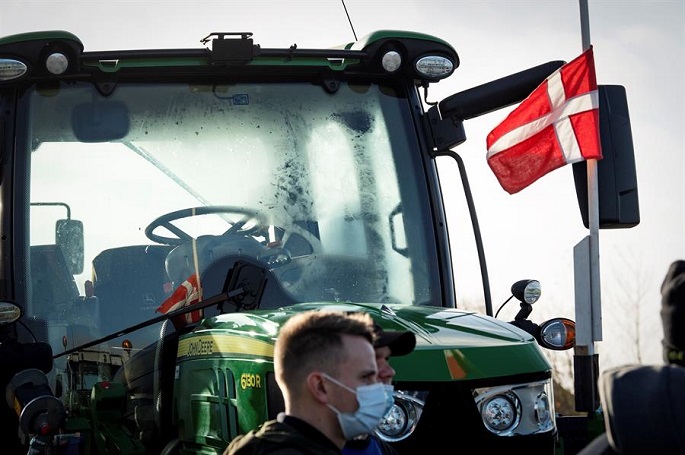
A coronavirus mutation linked to mink farms in Denmark have prompted authorities to draw up plans for a mass cull and saw the United Kingdom remove the country from its safe travel list, reported EFE-EPA.
In Italy, anti-lockdown protesters in a coronavirus-weary nation continued to voice their anger as regional restrictions are beefed up while Belgium is cautiously optimistic that the peak of a ferocious second wave of Covid may have arrived.
DENMARK
A mink-related Covid-19 mutation has been detected in 214 fur farm workers in Denmark since June, and a number of the same strain has been detected in the general population, according to Denmark's State Serum Institute for infectious diseases Friday.
Danish Prime Minister Mette Frederiksen on Wednesday announced plans to cull 17 million mink as a precaution.
New restrictions on movement in the North Jutland region are set to be enforced for at least a month while restaurants, sporting and cultural events are off the table during that time, although schools shall remain open.
Denmark has fared much better than its European counterparts and has been able to keep the pandemic largely under control without resorting to a national confinement measure.
Sweden’s agriculture minister confirmed Friday that authorities had detected an outbreak of coronavirus at 10 mink farms in the southern region of Blekinge.
UNITED KINGDOM
Responding to the news from the Danish government, the United Kingdom decided to take the Scandinavian country off its travel corridor, which exempts from having to self-quarantine upon returning to the UK.
Denmark already has travel restrictions in place for visitors coming from the UK, given the Covid-19 situation in Britain.
UK transport minister Grant Shapps said: “I understand that this will be concerning for both people currently in Denmark and the wider UK public, which is why we have moved quickly to protect our country and prevent the spread of the virus to the UK.”
The measures are to come into effect after Sweden and Germany were also removed from the list.
England, the most populous country in the UK — with 56 out of the country’s 66.6 million inhabitants – has gone into lockdown for a second time in a month amid fears that the rapid spread of Covid-19 would soon overwhelm the country’s hospitals as second wave bites in ahead of Christmas.
It has a weekly-average infection rate of 227.7 per 100,000 and over 2,000 people have died in the last week.
ITALY
Protests continued unabated in the northern Italian regions of Lombardy, Piedmont and Aosta Valley, where a partial lockdown took effect on Friday after they were judged to be at risk by the government.
Italy has now been divided into three color-coded regions of yellow, orange and red, according to risk factors set by Rome that have triggered a wave of criticism from the leaders of those areas.
The measures come after the country registered a daily Covid-19 death toll of 445, a figure not seen since the first wave of the pandemic, which devastated the country.
Other regions of Italy are expected to toughen restrictions over the weekend.
BELGIUM
In more positive news, Belgian authorities are reporting a slowdown in Covid-19 infections, bringing tentative hope that the country — which still has one of the highest infection rates in Europe — could have passed the peak of the second wave of the pandemic. The number of daily deaths could also be about to descend, medical experts have said.
Yves Van Laethem, a member of the Belgian specialist committee for Covid-19, said: “For a few days now we can, fortunately, see figures heading in the right direction, we can at last start to trace the peak of this second wave.”
“The number of infections continues to fall -— very slightly, but it is falling, followed by hospital admissions, which is falling for the first time (...) It appears therefore that our efforts are bearing fruit and they should bear even more in the coming weeks with the extra efforts that have been asked of us in recent days.”
“We must maintain the current rhythm of observing the measures for several long weeks before we can be in relative safety. It is clearly not the moment to lower our guard.”
The number of Covid-19 patients being admitted to ICU is still rising but at a slower pace than previously observed with a weekly increase of 1 percent on average, Yves Van Laethem said, adding that death rates, while high with an average of 159 per day, appeared to be poised to descend.
Botched Munich takeoff narrowly avoided disaster: expert
Belgium wildfire burns 3,000 hectares as several hotspots remain active
Wildfires on Greek island of Salamina kill 2, injure 9
Ukrainian drone attacks kill 6, Russia downs 800 drones
12 killed, 10 injured in bus crash in Hungary
Germany revoking refugee status for growing number of Syrians

Editor-in-Chief Ofiul Hasnat
Published by Finnish News Network (FNN)
Heporinne 4 B 45
01200 Vantaa, Finland.
E-mails : [email protected]