
Nobel Peace Prize 2026 goes to Navi Pillay
Published : 09 Oct 2026, 12:54
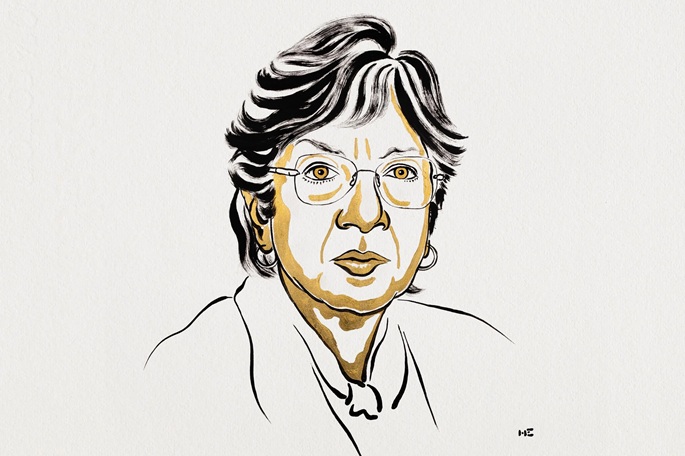
The Norwegian Nobel Committee on Friday decided to award the Nobel Peace Prize for 2026 to Navanethem Navi Pillay for her efforts to promote peace and international law, said the committee in a press release.
This year’s laureate has been instrumental in ensuring that war crimes, crimes against humanity and genocide are prosecuted.
The prize has gone to a person who with exceptional courage and integrity has led the way towards a more comprehensive global legal order.
Navi Pillay’s commitment to universal legal principles and her firm moral compass are constants in a long career.
Born into a family of Indian Tamil origin under apartheid in Durban, South Africa, Pillay became a lawyer and legal pioneer, confronting deep structural discrimination, segregation and exclusion. A common thread runs from her early work defending Nelson Mandela and others who stood up against apartheid to her service as a judge in some of the key international court cases of our time.
She has served as a judge on the High Court in South Africa, the International Criminal Tribunal for Rwanda and the International Criminal Court. She was the United Nations High Commissioner for Human Rights and, until recently, she chaired the UN Independent International Commission of Inquiry on the Occupied Palestinian Territory.
Navi Pillay is a judge on the International Court of Justice in the case where Myanmar stands accused of genocide.
“History has shown that a world operating without the rule of law is unjust, unwise and inhumane. The judges – those who guard the thin red line between order and chaos – are therefore highly deserving of our praise. But today, as these same judges are sanctioned, and their institutions are attacked, we need people of courage, vision and determination – qualities that Navi Pillay demonstrates in her work on the bench. Navi Pillay has held states and national leaders accountable and brought hope to victims of violence and conflict. In all the positions she has held, she has stressed the responsibility of individuals and states to comply with the rule of law. She has also helped define the relevant norms and legal principles,” said the committee.
When the International Criminal Tribunal for Rwanda established that rape and sexual violence could constitute a crime against humanity – as well as genocide – her influence was a significant factor.
In the same case, Pillay was instrumental in a separate legal breakthrough: for the first time, a defendant faced charges of incitement to commit genocide purely on the basis of spreading propaganda.
Canadian author Anne Carson wins Nobel in Literature
Vantaa's new smoke saunas win Finlandia Prize for Architecture
Helsinki plans unique skate pool in Töölönlahti Park
Record number of people visit Police Museum in summer
Finland's largest Viking Age silver coin hoard discovered
83rd Venice International Film Festival kicks off

Editor-in-Chief Ofiul Hasnat
Published by Finnish News Network (FNN)
Heporinne 4 B 45
01200 Vantaa, Finland.
E-mails : [email protected]