
Recovery of Finnish economy delays: Finance Ministry
Published : 18 Dec 2025, 16:20
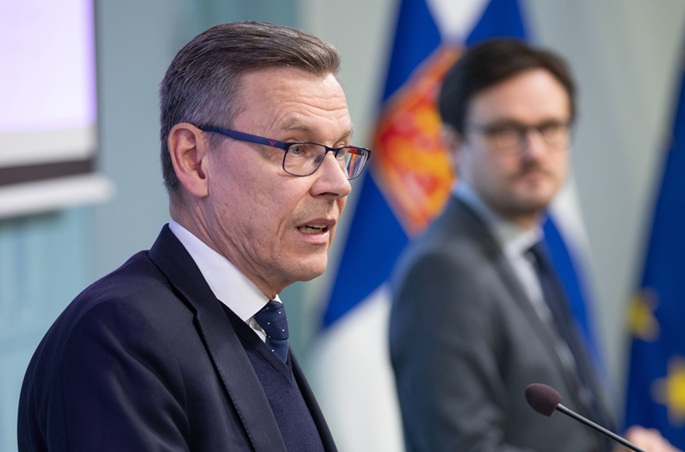
Finland’s economic recovery has been weaker than expected this year, according to the economic forecast published by the Ministry of Finance on Thursday.
The general government deficit is wide, and the debt ratio will continue to grow, said the Ministry in a press release referring to the forecast.
Year-on-year growth of gross domestic product (GDP) will be 0.2 per cent this year. However, the economy is expected to recover next year. GDP will grow by 1.1 per cent in 2026, by 1.7 per cent in 2027 and by 1.6 per cent in 2028.
Growth has been slowed by a lack of domestic demand. Household consumption has not grown despite an increase in incomes. In construction, recovery is waiting for the housing market to pick up more energetically.
The uncertainties related to the labour market, geopolitical situation and the need to adjust public finances have undermined consumer confidence for an exceptionally long time and have caused consumers to put off purchases.
“We are experiencing a drawn out recession. Even though we have returned to growth, employment is growing more slowly than previously estimated. Lower accumulation of GDP is leading to wider deficits and faster growth of debt than we estimated,” said Director General of the ministry Mikko Spolander.
Growing employment, pay rises and lighter taxation of earned income will drive faster growth of household purchasing power in 2026. Inflation will also be moderate and below the euro area average. Household consumption will also be driven by the saving rate returning closer to normal levels.
Housing construction is slowly recovering, but significantly more active construction will be needed over the long term.
Investments in production are being particularly driven by the energy transition, which is boosting investments in the production and transmission of electricity and in electricity-intensive production. Defence investments are also set to grow sharply starting next year.
The outlook for world trade is surprisingly positive despite uncertainty. Finland’s exports are growing at pace with global demand. However, foreign trade will not be enough to drive growth, as imports are also increasing along with investments.
Unemployment has risen sharply over the past year. This is no longer due to the employment rate dropping, but has been caused by growth of the labour force. The growth of the labour force has been caused by immigration and the Government’s measures to boost employment. The employment rate has grown slightly over the past few months. This growth is expected to speed up next year.
Employment will increase annually by an average of one per cent in 2026–2028 as the economy improves. Unemployment will fall from 9.6 per cent in 2025 to 8.5 per cent in 2028.
General government finances have been weak since the COVID-19 pandemic, and the situation has not been significantly improved by the economic cycle this year. Despite the weak economic situation, the general government deficit will contract to 3.9 per cent of GDP this year as the Government’s adjustment measures take effect.
However, the general government deficit will widen to 4.5 per cent in 2026, as the fighter jet purchases that had been expected in 2025 will be included in the next year’s deficit. In 2027, the deficit will narrow to 4.0 per cent as the economic cycle improves and the growth in defence spending slows. In the long term, the deficit will remain wide. The increase in defence and interest rate expenditure and moderate economic development mean that it will remain above 3.5 per cent of GDP in 2030.
Wide deficits, slow economic growth and the growth in cash collateral requirements related to currency derivatives have pushed public debt over 89 per cent of GDP this year. The debt ratio is forecast to grow to 91.6 per cent in 2026 and to 92.4 per cent in 2027. This growth will continue to the end of the outlook period in 2030, by which time debt will amount to over 96 per cent of GDP.
The challenges faced by Finland’s public finances are not solely caused by the current prolonged economic slump. The root cause is in Finland’s economic and fiscal structures.
The Economic Survey is the Ministry of Finance’s independent economic forecast and is published four times a year: in the spring, summer, autumn and winter.
130 to lose job, 900 to affect as S-Group starts negotiation talks
Govt to pilot special economic zone in Eastern Finland
Finnish-Egypt Trade Expo draws Finnish firms, offers trade partnerships
Inflation stands at 2.1% in July as fuel prices rise
Building costs rise by 3.3% in Finland in July
OP forecasts 2% growth of Finnish economy despite unemployment rise

Editor-in-Chief Ofiul Hasnat
Published by Finnish News Network (FNN)
Heporinne 4 B 45
01200 Vantaa, Finland.
E-mails : [email protected]